Breaking the 300mph Barrier: The Bugatti Chiron Super Sport

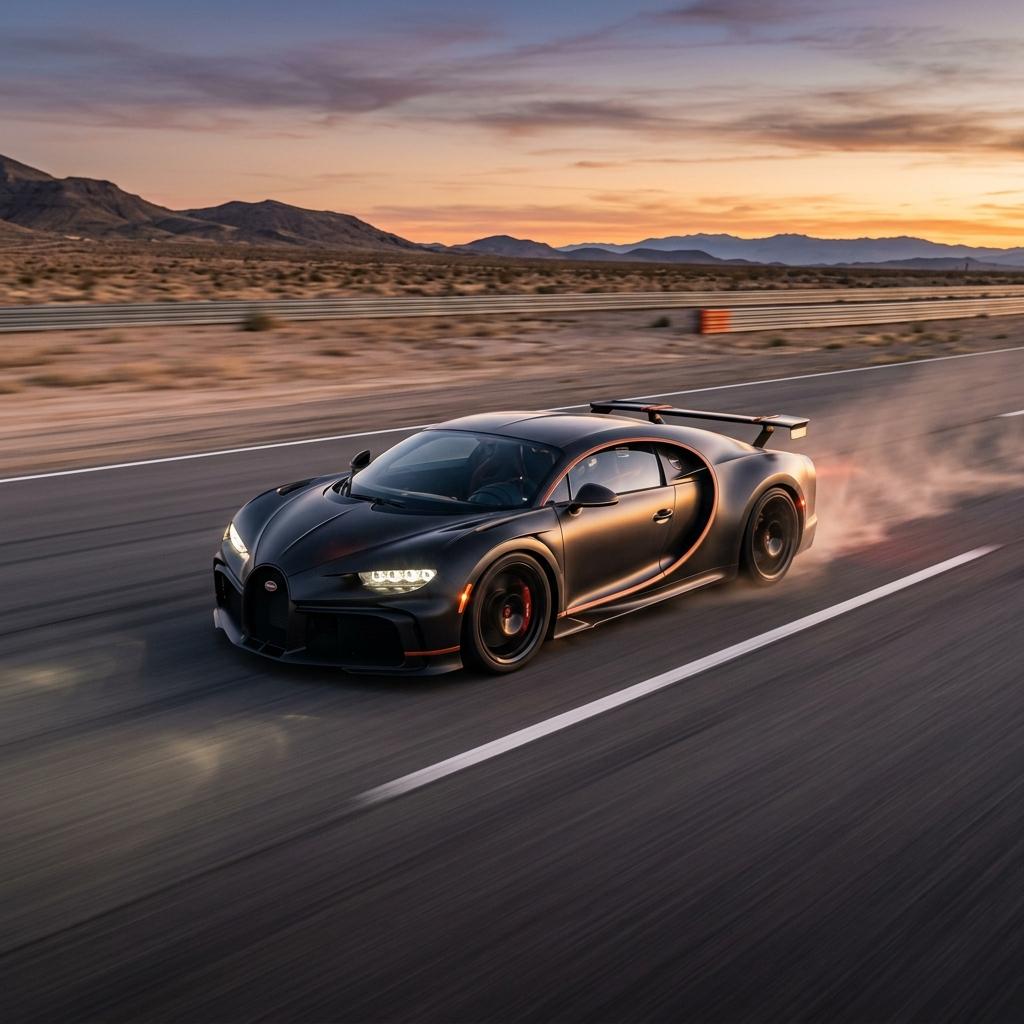
How Bugatti engineered a masterpiece of aerodynamics and power to shatter top speed records.
For over a century, the pursuit of top speed has been the ultimate crucible of automotive engineering. It is a quest that pushes the boundaries of physics, thermodynamics, and aerodynamics. In this rarified atmosphere, Bugatti has long been the reigning monarch. However, in 2019, they achieved something that many engineers believed to be impossible for a production road car: they broke the mythical 300 mph (482.8 km/h) barrier. The machine that accomplished this historic feat was the Bugatti Chiron Super Sport 300+, a hypercar that represents the absolute pinnacle of internal combustion engine development.
The Quest for Ultimate Speed
When the Bugatti Veyron achieved 253 mph in 2005, it shocked the world. Its successor, the Chiron, pushed that figure to 261 mph (electronically limited). But the allure of the 300 mph mark remained an elusive siren song for manufacturers like Koenigsegg, Hennessey, and Bugatti. Overcoming the immense aerodynamic drag and tire stress at those speeds requires exponential increases in power and radical engineering solutions. Bugatti decided to build a specialized version of the Chiron, unofficially dubbed the 'Thor', to conquer this barrier once and for all.
Engineering the 8.0L W16 Engine
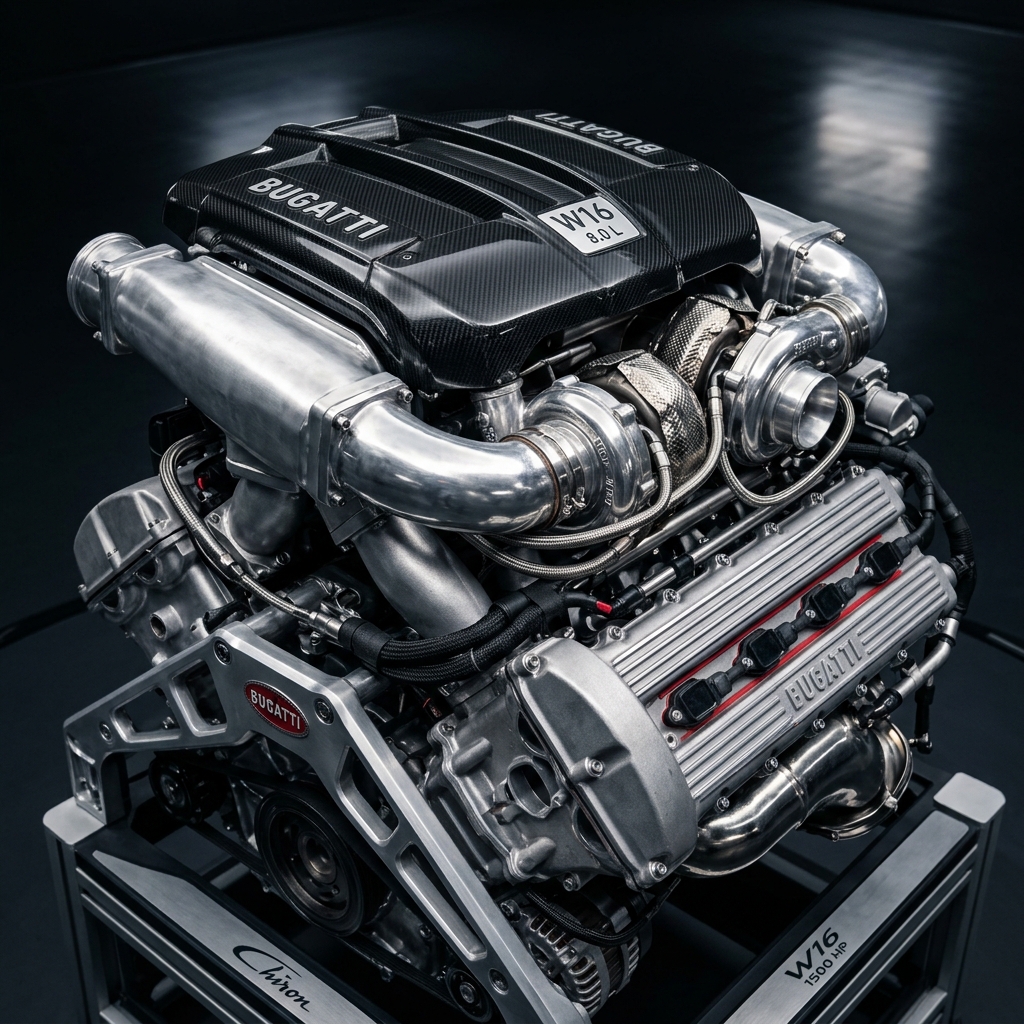
At the heart of the Chiron Super Sport lies Bugatti's masterpiece: the 8.0-liter, quad-turbocharged W16 engine. While the standard Chiron produced a staggering 1,479 horsepower, it wasn't enough for the 300 mph run. Bugatti's engineers pushed the W16 further, utilizing larger turbochargers, a new exhaust system, and a redesigned thermal management system to cope with the immense heat generated at maximum velocity. The result was a jaw-dropping 1,578 horsepower (1,600 PS).
This engine is an absolute marvel of modern engineering. At top speed, it consumes roughly 1,000 liters of air per second. The cooling system, which includes 10 separate radiators, circulates 800 liters of water through the engine every single minute just to prevent it from melting itself into a multi-million-dollar puddle of slag.
Aerodynamics for the 300mph Mark
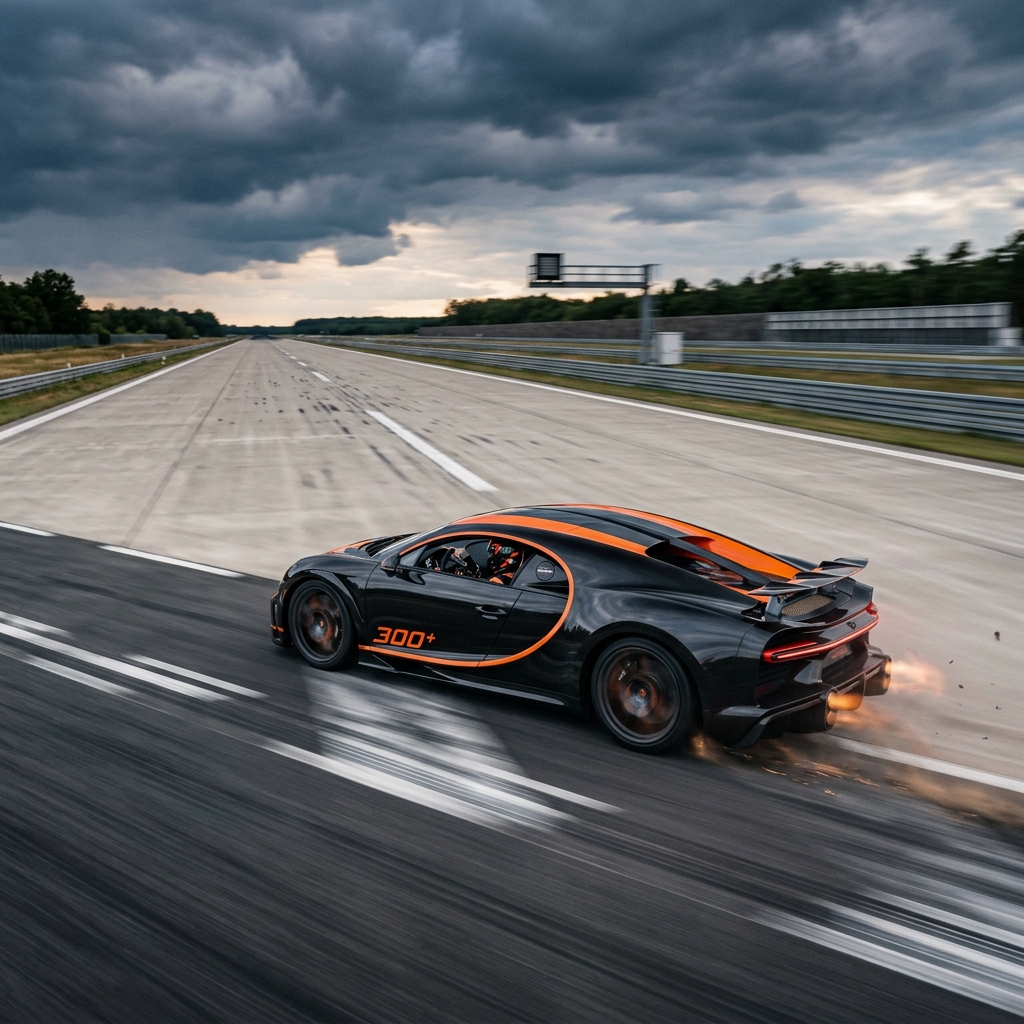
Power alone cannot overcome the physical wall of air resistance at 300 mph; aerodynamics are paramount. The Chiron Super Sport features a completely unique body compared to the standard Chiron, famously characterized by its "Longtail" rear end. Extended by 25 centimeters (nearly 10 inches), this elongated tail significantly reduces aerodynamic stall by allowing the laminar airflow to pass over the vehicle longer, reducing the massive wake that causes drag.
Furthermore, the exhaust pipes were re-positioned from the center to the corners of the rear fascia. This clever design decision prevented the high-velocity, high-temperature exhaust gases from disrupting the airflow exiting the massive rear diffuser, thereby increasing negative lift (downforce) without adding drag. The front end was also aggressively modified with a larger splitter and distinct air curtains to guide air cleanly around the front wheels.
The Record-Breaking Run at Ehra-Lessien
On August 2, 2019, at the Volkswagen Group's Ehra-Lessien test track in Germany—a facility with a massive 5.4-mile straightaway—history was made. With Bugatti test driver and former Le Mans winner Andy Wallace behind the wheel, the modified Chiron Super Sport prototype rocketed down the straight.
The run was meticulously planned. Wallace had to enter the straightaway precisely at 200 km/h (124 mph) out of the banking to maximize the distance available for acceleration. The telemetry confirmed the unbelievable: a V-MAX of 304.773 mph (490.484 km/h). The 300 mph barrier had officially been shattered by a street-legal (though highly modified) vehicle.
Michelin Tires: Holding It Together
Perhaps the unsung heroes of this record run were the tires. At 300 mph, a tire rotates nearly 4,100 times per minute. The centrifugal forces exerted on the tire carcass are so extreme that standard rubber would simply tear itself apart, stripping the tread from the casing.
Bugatti worked exclusively with Michelin to develop specialized Pilot Sport Cup 2 tires. These tires were reinforced with advanced carbon fiber belts capable of withstanding 5,300 Gs of force. Before the run, every single tire was X-rayed and subjected to aerospace-grade testing on a rig originally designed for testing Space Shuttle tires, ensuring there were absolutely no microscopic imperfections.
Interior Luxury at Hyper Speed
What truly separates Bugatti from other hypercar manufacturers is their refusal to compromise on luxury. While track-focused cars from competitors strip out sound deadening, air conditioning, and infotainment systems to save weight, the Chiron Super Sport remains a meticulously crafted grand tourer.
The interior is swathed in the finest leathers, exposed carbon fiber, and milled aluminum. There are no exposed wires or bare roll cages visible to the driver. The ability to travel at speeds exceeding a commercial airliner at takeoff while sitting in absolute, quiet comfort is the defining hallmark of the Bugatti ethos.
The End of the Combustion Hypercar Era
Bugatti produced just 30 customer examples of the Chiron Super Sport 300+. As the automotive industry pivots aggressively toward electrification, it is highly likely that the Chiron Super Sport represents the absolute zenith of the internal combustion engine's top-speed capabilities. It stands as a magnificent, thunderous monument to the genius of mechanical engineering—the machine that finally outran the wind.
Technical Specifications (Super Sport 300+)
- Engine: 8.0-liter W16, Quad-Turbocharged
- Valvetrain: DOHC, 4 valves per cylinder
- Power Output: 1,578 hp (1,600 PS) @ 7,000 rpm
- Torque: 1,180 lb-ft (1,600 Nm) @ 2,250 - 7,000 rpm
- Transmission: 7-speed Dual-Clutch Automatic
- Drivetrain: Haldex All-Wheel Drive system
- Chassis: Carbon fiber monocoque
- Weight: Approx. 1,978 kg (4,360 lbs)
- 0-60 mph (0-100 km/h): 2.3 seconds
- Top Speed: 304.77 mph (Record Prototype); Customer cars electronically limited to 273 mph (440 km/h)
Elena Shift
Elena Shift is a contributing writer for Primedealsearch, bringing refined insights and expertise to our readers.