Electrifying Performance: The Rise of the Rimac Nevera

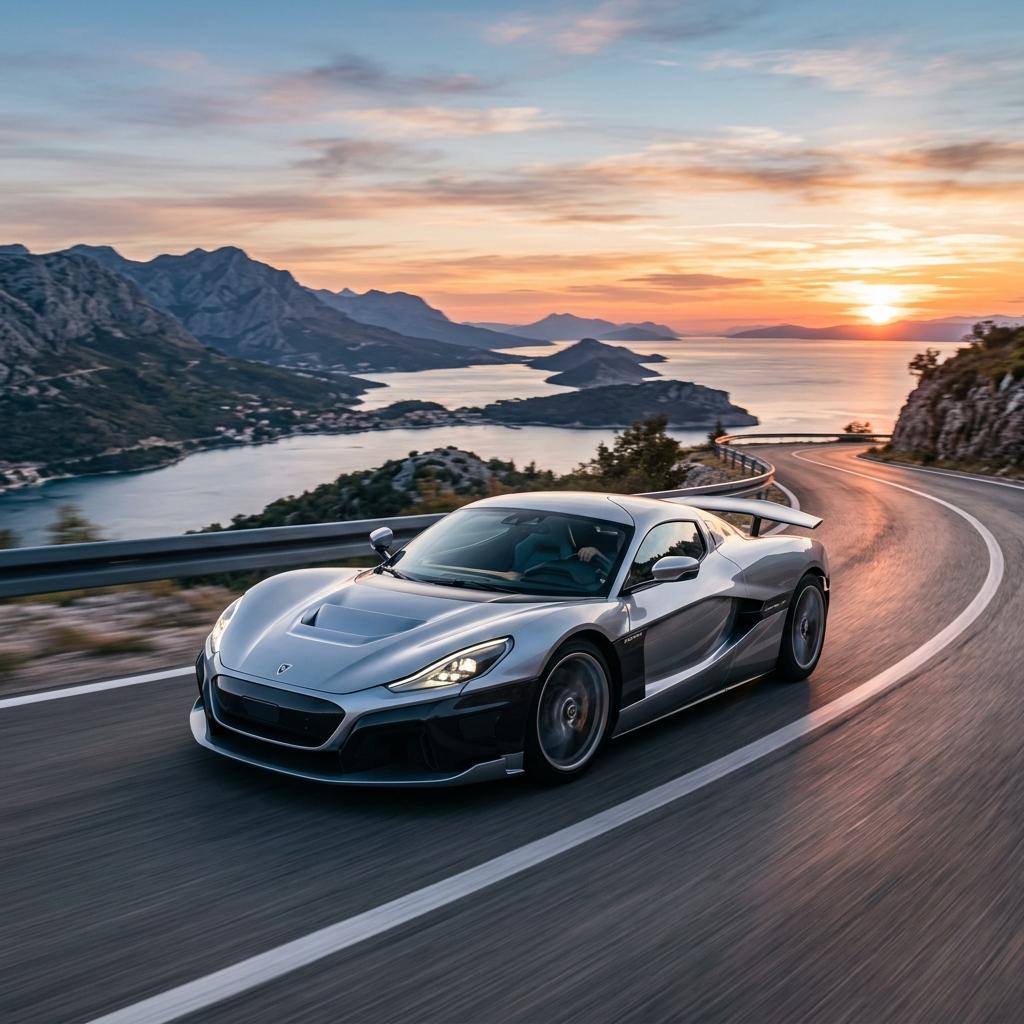
With nearly 2,000 horsepower, Rimac is proving that the electric future is anything but boring.
For over a century, the hypercar hierarchy was ruled by heritage brands like Ferrari, Porsche, and Bugatti, relying on loud, complex internal combustion engines. Then, seemingly out of nowhere, a small start-up from Croatia arrived and fundamentally rewrote the laws of automotive physics. That company is Rimac Automobili, and their masterpiece, the Nevera, is a fully electric hypercar that doesn't just challenge the combustion-engine establishment; it absolutely obliterates it. The Nevera represents the definitive turning point in automotive history, proving that the future of ultimate performance is undeniably electric.
Mate Rimac: The Prodigy from Croatia
The story of the Nevera is inseparable from its creator, Mate Rimac. While companies like Koenigsegg and Pagani took decades to establish themselves, Mate Rimac began his journey in 2009 by converting his 1984 BMW E30 into an electric drift car in his garage after the combustion engine blew up.
His obsession with electric propulsion led him to found Rimac Automobili. Operating out of a country with zero automotive manufacturing history, Rimac had to design and build almost everything from scratch. He focused not just on building cars, but on pioneering high-performance battery technology, electric motors, and control software, eventually becoming a supplier to major OEMs like Porsche and Aston Martin.
The Concept One: Proving the Critics Wrong
Rimac’s first foray into the hypercar world was the Concept_One, unveiled in 2011. Producing over 1,000 horsepower, it proved that electric cars didn't have to be slow, heavy commuter vehicles. It famously out-accelerated the Bugatti Veyron and the Porsche 918 Spyder in drag races, putting the world on notice. However, it was essentially a prototype, with only 8 units built. To truly disrupt the industry, Rimac needed a production-ready, homologated hypercar. That car was the Nevera.
The Nevera: Rewriting the Rules of Physics
Named after a fierce, sudden Mediterranean storm that races across the open sea off Croatia, the Nevera lives up to its moniker. Its performance statistics are so extreme they read like science fiction.
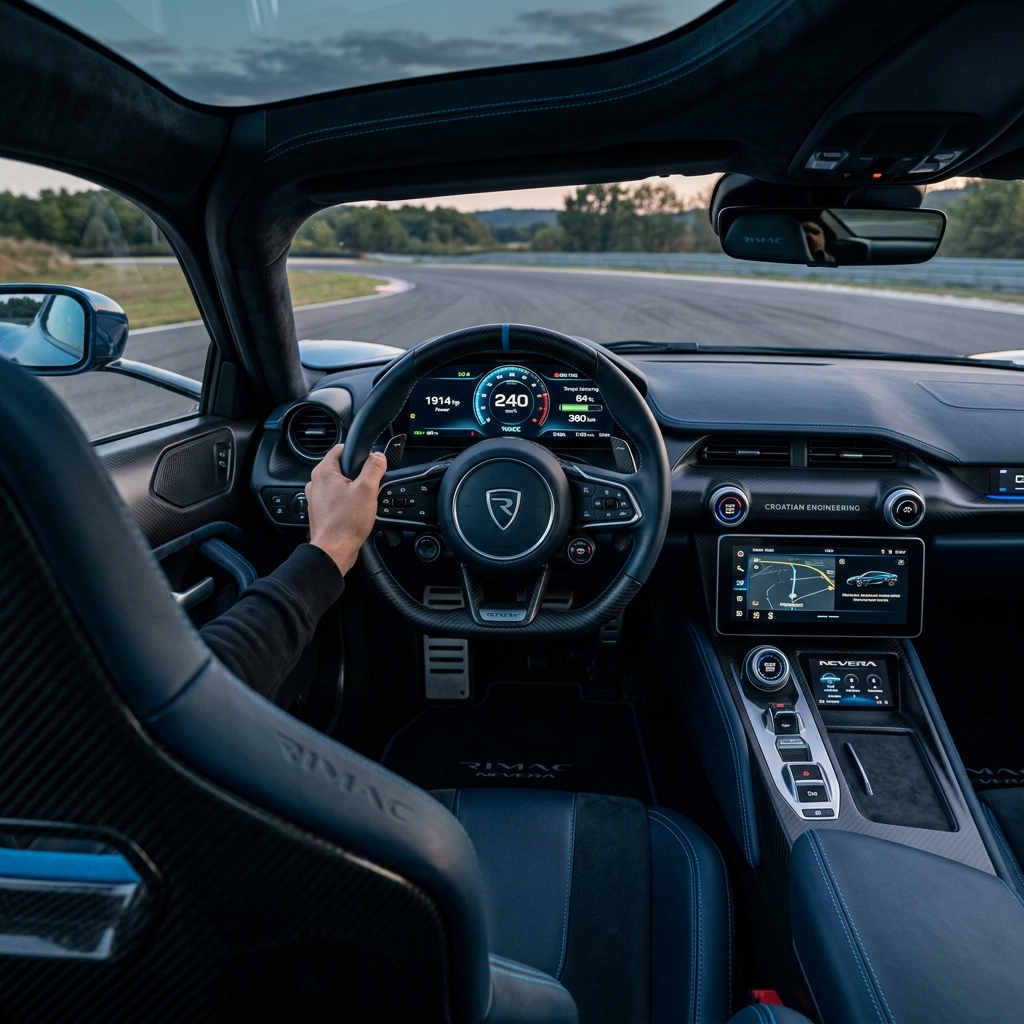
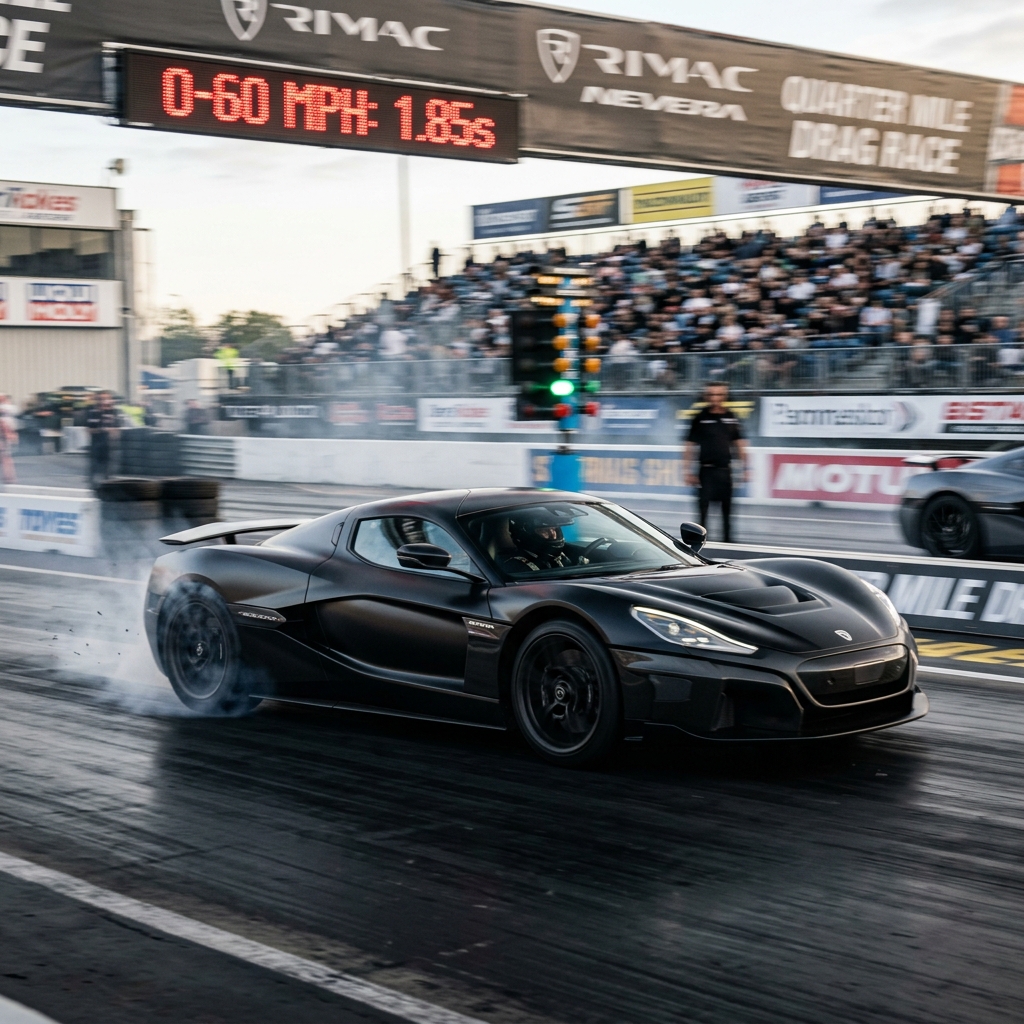
The Nevera produces a staggering 1,914 horsepower (1,408 kW) and 1,741 lb-ft (2,360 Nm) of torque—available instantaneously from zero RPM. Because electric motors do not need to spool up or shift gears, the acceleration is violent and relentless. It shatters the 0-60 mph sprint in an unbelievable 1.85 seconds and completes the quarter-mile in 8.58 seconds, making it the fastest accelerating production car on the planet.
The Quad-Motor Drivetrain Architecture
The secret to this mind-bending performance is the Nevera's quad-motor architecture. Unlike a traditional all-wheel-drive system driven by a single engine, the Nevera features four independent surface-mounted permanent magnet electric motors—one driving each wheel.
The front motors produce roughly 299 horsepower each, while the massive rear motors produce an astonishing 653 horsepower each. These motors are connected to the wheels via single-speed gearboxes (two independent gearboxes up front, two in the rear). This setup allows for granular, split-second control over exactly how much power is sent to each individual tire.
Advanced Battery Technology and Thermal Management
Powering these massive motors is a 120 kWh, H-shaped, liquid-cooled Lithium-Manganese-Nickel battery pack. Designed entirely in-house, the battery pack isn't just an energy source; it is a structural component of the car. Integrated into the carbon-fiber monocoque, it adds 37% structural stiffness to the chassis.
Managing the heat generated by discharging nearly 2,000 horsepower of electrical energy is a monumental engineering challenge. The Nevera utilizes a complex thermal management system that ensures the batteries and motors stay at optimal operating temperatures, allowing the car to perform multiple high-speed runs or aggressive track sessions without suffering the severe thermal throttling that plagues lesser EVs.
Software-Defined Performance: Rimac All-Wheel Torque Vectoring
The most revolutionary aspect of the Nevera is its brain. The Rimac All-Wheel Torque Vectoring 2 (R-AWTV 2) system replaces traditional Electronic Stability Control (ESC) and Traction Control.
Because each motor is independent, the software calculates exactly how much torque to apply to each wheel 100 times a second based on steering angle, G-forces, and wheel slip. If the driver is understeering in a corner, the system can instantly apply more power to the outside rear wheel to pivot the car. It allows the driver to select different modes, changing the car from an aggressive track weapon to a comfortable grand tourer, or even a pure rear-wheel-drive drift machine.
Aerodynamics and Cooling at 258 mph
While it is an EV, the Nevera still requires massive aerodynamic efficiency to reach its 258 mph (412 km/h) top speed. It features active aerodynamics, including moving flaps in the hood, an adjustable front splitter, and an active rear wing. These elements constantly adjust to prioritize either low drag for top speed runs or high downforce for cornering stability.
The Future of Hypercars
The Rimac Nevera represents a paradigm shift. It proves that the absence of a combustion engine does not mean the absence of emotion or performance. It is a technological tour de force that has forced every other supercar manufacturer to reevaluate their roadmaps. Mate Rimac's garage project has evolved into a powerhouse, culminating in Rimac recently taking control of Bugatti. The Nevera isn't just the pinnacle of current EV technology; it is the absolute bleeding edge of automotive performance.
Technical Specifications
- Powertrain: Four independent permanent magnet electric motors
- Battery: 120 kWh liquid-cooled Lithium-Manganese-Nickel
- Power Output: 1,914 hp (1,408 kW)
- Torque: 1,741 lb-ft (2,360 Nm)
- Transmission: Four independent single-speed gearboxes
- Drivetrain: Rimac All-Wheel Torque Vectoring (R-AWTV 2)
- Chassis: Carbon fiber monocoque with structural battery pack
- Weight: Approx. 2,150 kg (4,740 lbs)
- 0-60 mph (0-100 km/h): 1.85 seconds
- 1/4 Mile: 8.58 seconds
- Top Speed: 258 mph (412 km/h)
Marcus Gear
Marcus Gear is a contributing writer for Primedealsearch, bringing refined insights and expertise to our readers.