The Evolution of Aerodynamics in Formula 1

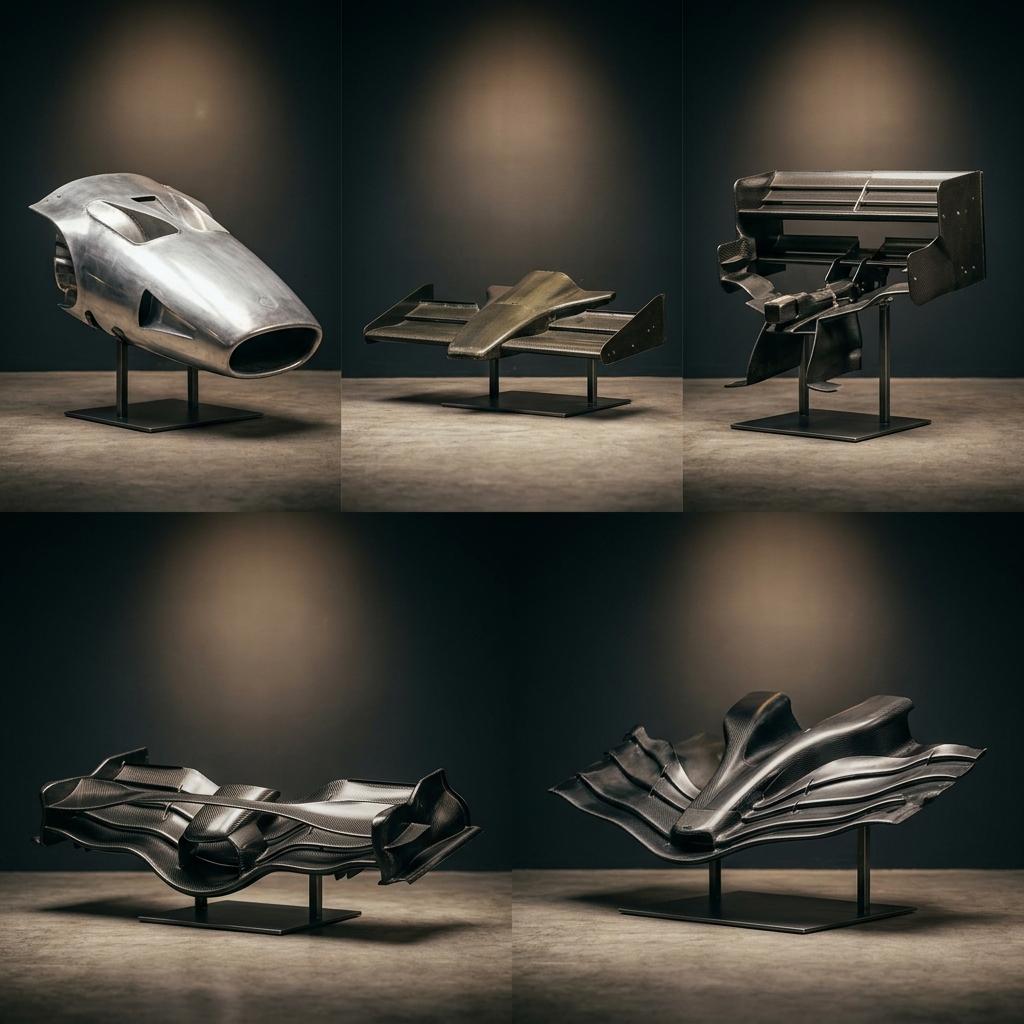
From the rudimentary wings of the 60s to the complex ground-effect floors of today.
In the relentless pursuit of speed in Formula 1, engine power and tire grip are only half the equation. The true defining factor that separates the backmarkers from the World Champions is the mastery of the invisible fluid surrounding the cars: air. Aerodynamics in Formula 1 has evolved from a dark art involving basic metal wings into a multi-million-dollar science utilizing supercomputers and advanced wind tunnels. Today, a modern F1 car is essentially an inverted fighter jet, designed not to fly, but to be crushed into the tarmac.
The Invisible Force
Aerodynamics serves two primary purposes in Formula 1: minimizing drag to increase top speed on straights, and generating downforce to push the car into the track, massively increasing cornering grip.
Until the late 1960s, F1 cars were cigar-shaped tubes designed solely to slip through the air with minimal resistance. Drivers relied entirely on mechanical grip from the tires. However, as engine power increased, the cars became terrifyingly unstable at high speeds, prone to lifting off the ground like airplane wings.
The Era of Wings and Downforce
The aerodynamic revolution truly began in 1968. Inspired by Jim Hall's Chaparral sports cars, Colin Chapman’s Team Lotus and Ferrari simultaneously introduced high-mounted aerofoils (wings) to their cars. These inverted airplane wings generated negative lift (downforce).
The results were instantaneous and dramatic. Cars could suddenly corner significantly faster, drastically reducing lap times. However, these early wings were fragile and mounted directly to the suspension on tall struts. Following several terrifying, high-speed structural failures, the FIA (the governing body) mandated that wings be rigidly attached to the chassis and restricted their size, beginning the endless cat-and-mouse game between ingenious engineers and strict regulators.
Ground Effect: The Lotus Revolution
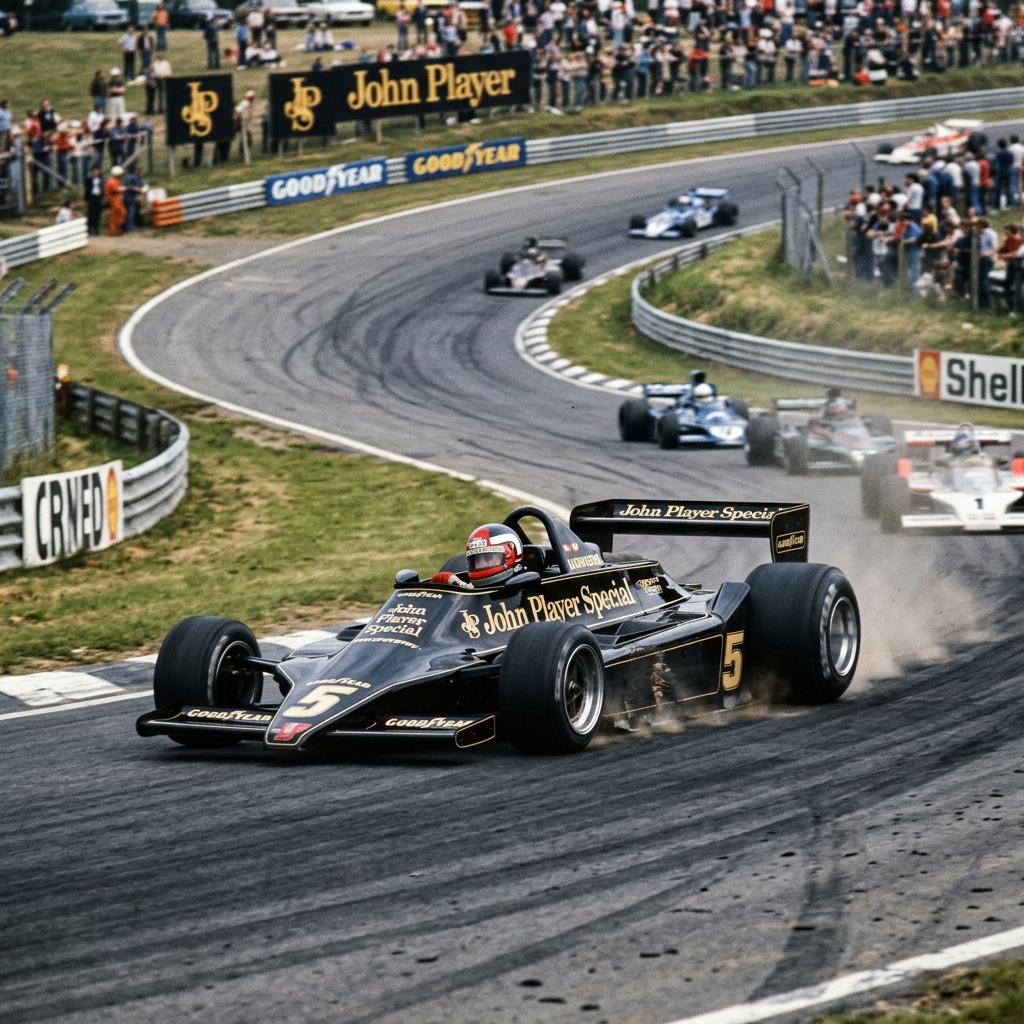
In the late 1970s, Colin Chapman and his brilliant engineer Peter Wright changed the game again with the Lotus 78 and 79. They discovered "Ground Effect" aerodynamics.
Instead of relying solely on top-mounted wings, they shaped the entire underside of the car into inverted wings (venturi tunnels). As air rushed underneath the car, the narrowing tunnels accelerated the airflow, creating a massive area of low pressure. This effectively sucked the car onto the track. "Skirts" along the sides of the car sealed the low-pressure area. The cornering speeds achieved by ground effect cars were astonishing, leading to driver blackouts from extreme G-forces. The FIA eventually banned side skirts and mandated flat bottoms in 1983 to curb cornering speeds.
The Aerodynamic Arms Race of the 2000s
Following the flat-bottom rules, aerodynamicists turned their attention to the upper surfaces of the car. The 1990s and 2000s saw an explosion of complex aerodynamic appendages. Cars sprouted winglets, bargeboards, turning vanes, and "T-wings" in every conceivable location.
Teams realized that managing the turbulent airflow ("dirty air") created by the spinning front tires was critical. The goal was to guide clean air to the rear diffuser and rear wing to maximize downforce. This era, dominated by aerodynamic geniuses like Adrian Newey, produced some of the fastest, yet most aerodynamically sensitive, cars in history.
Computational Fluid Dynamics (CFD) and Wind Tunnels
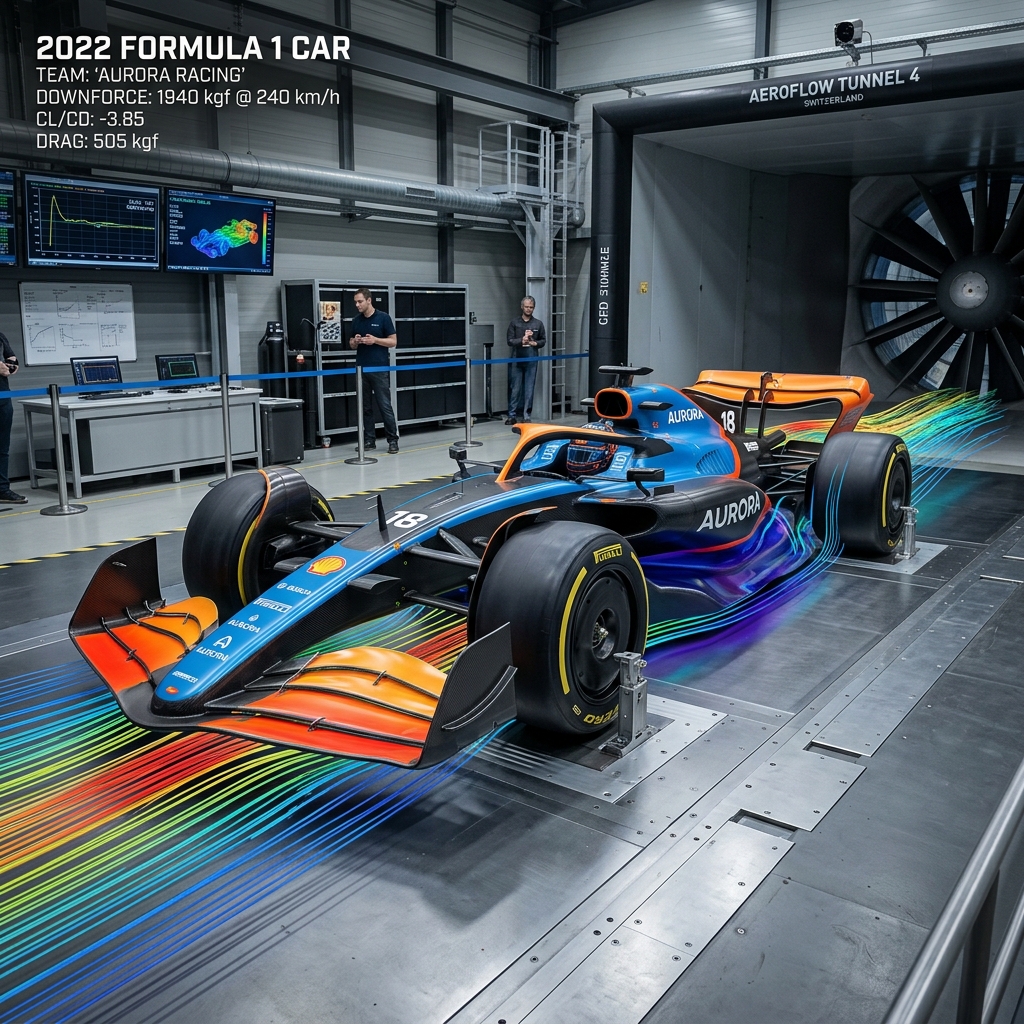
The development of F1 aerodynamics relies on two crucial tools. The first is the wind tunnel, where 60% scale models of the cars are tested on rolling roads. The second is Computational Fluid Dynamics (CFD)—immensely powerful supercomputers that simulate the flow of air over millions of virtual data points on the car's surface.
Today, aerodynamic efficiency is so crucial that the FIA strictly regulates the amount of wind tunnel time and CFD teraflops each team can use. In a bid to level the playing field, a sliding scale system was introduced, granting more testing time to the lowest-ranked teams and restricting the World Champions.
The Modern Era: Dirty Air and the 2022 Regulations
The highly complex aerodynamics of the 2010s created a significant problem for the sport: "dirty air." As a car punched a hole in the air, it left a wake of highly turbulent air behind it. When a following car entered this dirty air, it lost up to 50% of its aerodynamic downforce, making it incredibly difficult to follow closely and overtake.
To solve this, the FIA completely rewrote the aerodynamic rulebook for 2022. The new regulations banned complex upper-body winglets and, crucially, reintroduced ground effect venturi tunnels. By generating the majority of the downforce from underneath the car rather than over the top, the turbulent wake was directed upwards, allowing the following car to remain in clean air. This massively improved close racing.
The Future of F1 Aero
As Formula 1 looks toward the new engine and chassis regulations in 2026, aerodynamics will incorporate "active aero." This means the front and rear wings will physically change shape on the straights to shed drag and save electrical energy, then snap back to high-downforce configurations for the corners. The quest to manipulate the invisible force of air will remain the ultimate engineering battleground in motorsport.
Key Aerodynamic Components
- Front Wing: Dictates the airflow for the entire car; crucial for balancing the car and managing front tire wake.
- Bargeboards/Floor Edges: Guide turbulent air away from the car and seal the underfloor pressure.
- Venturi Tunnels (Underfloor): Generate the majority of the car's overall downforce efficiently with minimal drag.
- Diffuser: Expands the fast-moving air from under the car back to atmospheric pressure, creating "suction" at the rear.
- Rear Wing: Generates significant downforce to push the rear tires into the track, but also creates the most drag.
- DRS (Drag Reduction System): An adjustable flap on the rear wing that opens on straights to dump drag and aid overtaking.
Marcus Gear
Marcus Gear is a contributing writer for Primedealsearch, bringing refined insights and expertise to our readers.