American Muscle Heritage: The Ford Mustang Story

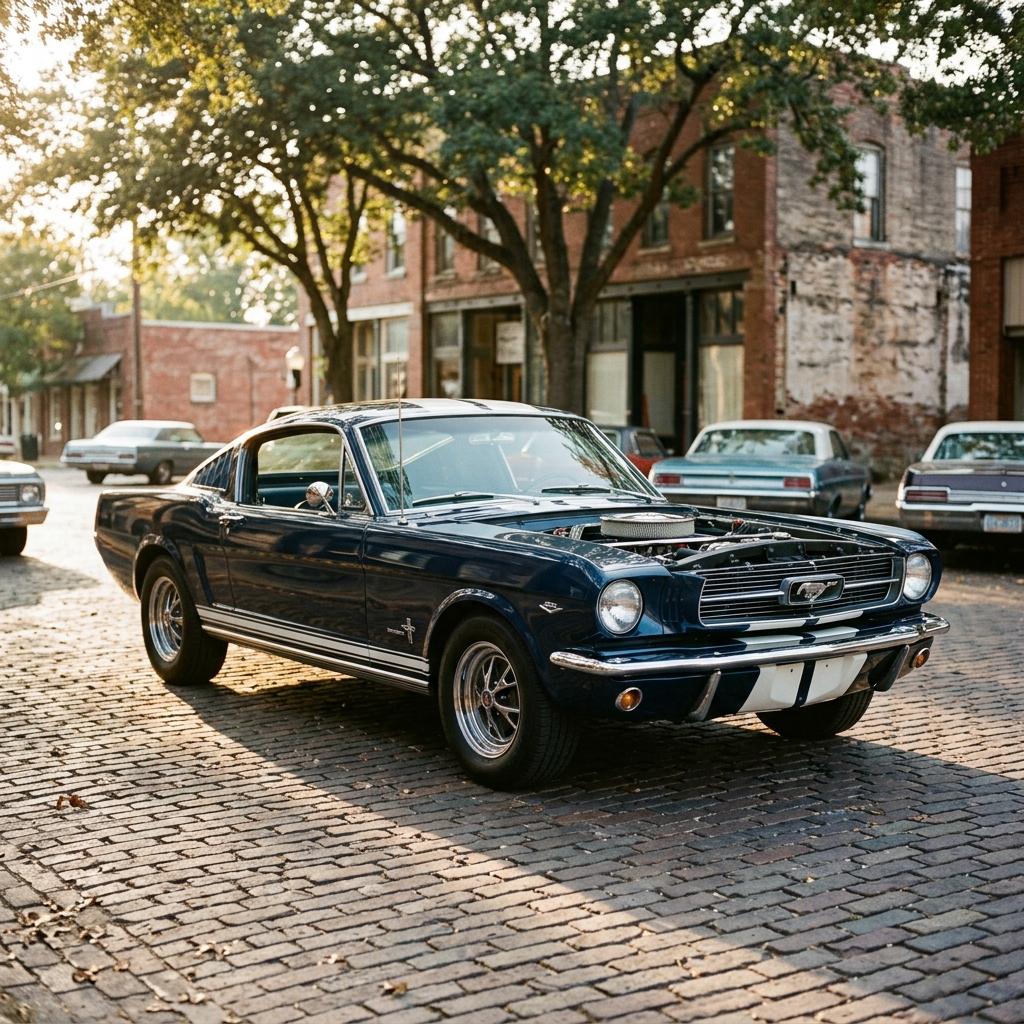
From the 1964 World's Fair to the modern Mach 1, the Mustang remains a symbol of accessible performance.
Few vehicles in automotive history have defined a genre, captured a culture, and maintained global relevance quite like the Ford Mustang. Introduced in the spring of 1964, the Mustang didn't just become a best-seller; it created an entirely new class of automobile known as the "Pony Car." Over nearly six decades and seven generations, the Mustang has survived oil crises, changing consumer tastes, and the looming threat of extinction, evolving from a stylish cruiser into a world-class, track-dominating sports car.
The Genesis of the Pony Car
In the early 1960s, Ford executive Lee Iacocca championed a visionary concept: a sporty, youthful, and affordable car aimed directly at the emerging "Baby Boomer" generation. The goal was to build a car that was stylish, highly customizable with a massive list of options, and built on an existing platform (the Ford Falcon) to keep development and production costs low.
When the Mustang was unveiled at the New York World's Fair on April 17, 1964, the response was unprecedented. Ford projected 100,000 sales in the first year; they sold over 400,000. It was an instant cultural phenomenon, appearing on magazine covers, in movies (most notably driven by Steve McQueen in Bullitt), and becoming the dream car for millions of young Americans. It was characterized by its "long hood, short deck" proportions—the defining aesthetic of the Pony Car.
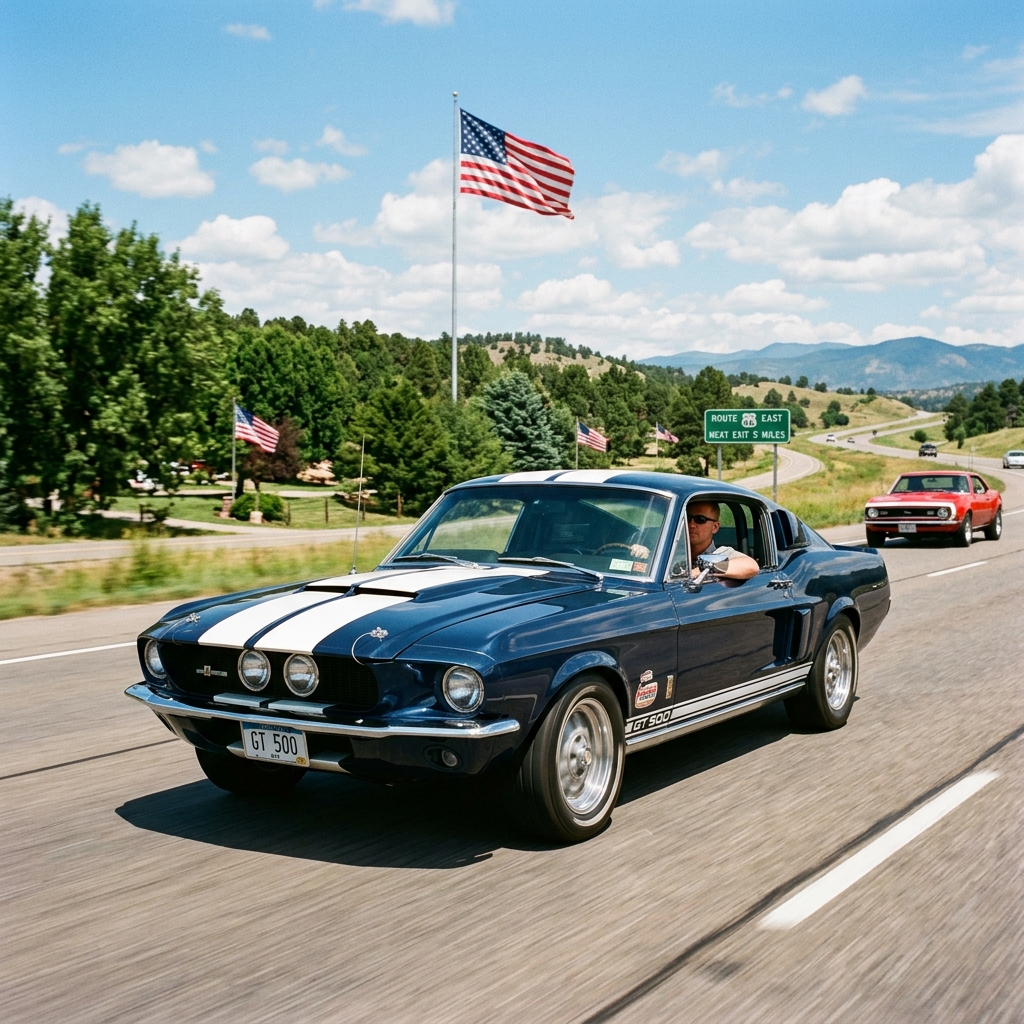
The First Generation: An Instant Classic (1964.5 - 1973)
The earliest Mustangs (often referred to as 1964½ models) were available with a modest inline-six or a 289 cubic inch V8. However, the hunger for performance quickly escalated. Legendary racer Carroll Shelby partnered with Ford to create the Shelby GT350 in 1965, transforming the stylish cruiser into a raw, loud, race-winning machine.
As the 1960s progressed, the "Muscle Car" wars heated up. The Mustang grew larger and heavier to accommodate massive big-block V8 engines, culminating in legendary models like the Boss 302, Boss 429, and the Mach 1. By the early 1970s, however, new emissions regulations and an impending oil crisis signaled the end of this golden era of unregulated horsepower.
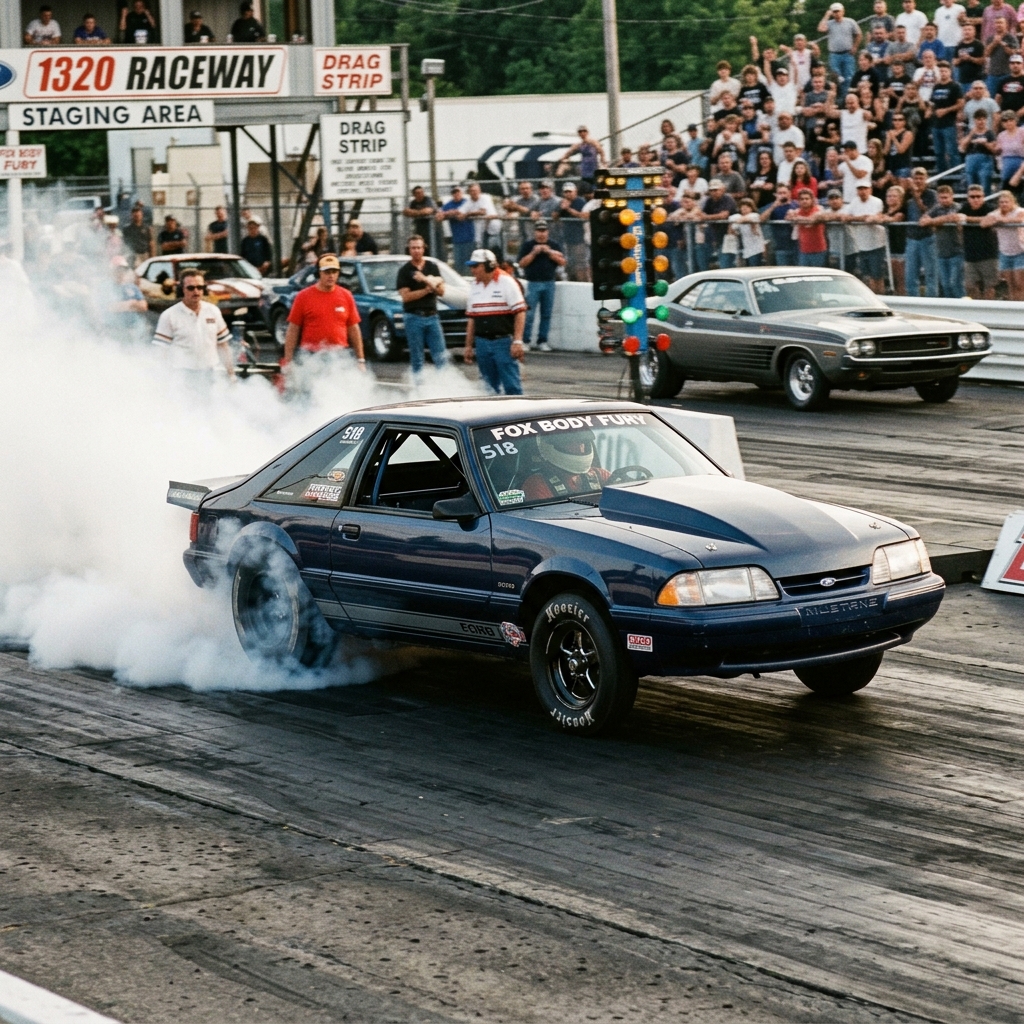
The Fox Body Era: Surviving the Malaise (1979 - 1993)
After the much-maligned Mustang II (which, despite criticism, sold incredibly well and kept the brand alive during the oil crisis), Ford introduced the "Fox Body" Mustang in 1979. Based on the versatile Fox platform, this generation returned performance to the lineup.
The defining moment for this generation came in 1982 with the return of the 5.0-liter (302 cubic inch) "High Output" V8. The Fox Body became incredibly popular in the grassroots drag racing scene due to its lightweight chassis and highly tunable engine. It proved that affordable American V8 performance could survive in the modern era.
The SN95 and New Edge: Modernizing the Muscle (1994 - 2004)
In 1994, the Mustang received its first major redesign in fifteen years. The SN95 generation rounded off the sharp angles of the Fox Body, paying homage to classic 1960s design cues like the running horse grille emblem and tri-bar taillights.
Under the hood, the major shift occurred in 1996 when Ford retired the legendary pushrod 5.0L V8, replacing it with the new overhead-cam 4.6-liter "Modular" V8. The high-water mark of this era was the 2003-2004 SVT Cobra, nicknamed "The Terminator." Featuring an Eaton supercharged V8 and independent rear suspension, it produced a wildly underrated 390 horsepower and became a legend on the street.
The S197: Retro-Futurism Revived (2005 - 2014)
Riding a wave of automotive nostalgia, Ford introduced the S197 Mustang in 2005. It was a brilliant execution of "retro-futurism," heavily inspired by the late-60s fastbacks. The squared-off nose, aggressive stance, and classic interior details were a massive hit.
This generation also saw the return of the legendary "Coyote" 5.0-liter V8 in 2011, putting the Mustang back on top of the horsepower wars against its eternal rival, the Chevrolet Camaro. Furthermore, the Shelby GT500 returned with a supercharged 5.4L (later 5.8L) V8, pushing horsepower outputs well past the 600 mark.
The S550: Independent Suspension and Global Appeal (2015 - 2023)
In 2015, for its 50th anniversary, the Mustang underwent its most significant engineering shift: it finally ditched the solid live rear axle in favor of a modern Independent Rear Suspension (IRS) across the entire lineup.
This change transformed the Mustang from a straight-line bruiser into a legitimate, world-class sports car capable of tackling twisting European roads and complex racetracks. Recognizing its new dynamic capabilities, Ford made the S550 the first Mustang to be sold globally, offering right-hand drive models for markets like the UK and Australia.
The Shelby Variants: GT350 and GT500
The S550 era produced two of the greatest Mustangs ever built. The Shelby GT350 featured the "Voodoo" engine—a 5.2-liter naturally aspirated V8 with a flat-plane crankshaft that revved to a shrieking 8,250 rpm, sounding more like a Ferrari than a Ford. Later, the S550 Shelby GT500 arrived with a supercharged "Predator" V8 producing 760 horsepower, paired with a lightning-fast dual-clutch transmission, making it capable of embarrassing European supercars on a road course.
The Mustang Legacy
As we look toward the future—which includes the all-electric Mustang Mach-E SUV and the seventh-generation S650 coupe—the core appeal of the Mustang remains unchanged. It is the democratization of performance. It represents freedom, rebellion, and the visceral joy of driving. It is the American Muscle Heritage, still galloping strong after six decades.
Technical Specifications (2021 Mustang Mach 1)
- Engine: 5.0-liter "Coyote" V8, Naturally Aspirated
- Valvetrain: DOHC, 4 valves per cylinder with Ti-VCT
- Power Output: 480 hp @ 7,000 rpm
- Torque: 420 lb-ft @ 4,600 rpm
- Transmission: Tremec TR-3160 6-speed manual (or 10-speed auto)
- Drivetrain: Rear-Wheel Drive with Torsen Limited-Slip Differential
- Suspension: MacPherson strut front, Integral-link independent rear (MagneRide)
- Weight: Approx. 1,748 kg (3,854 lbs)
- 0-60 mph (0-100 km/h): ~4.2 seconds
- Top Speed: 168 mph (270 km/h)
Elena Shift
Elena Shift is a contributing writer for Primedealsearch, bringing refined insights and expertise to our readers.