The Ultimate Driving Machine: The History of BMW M3

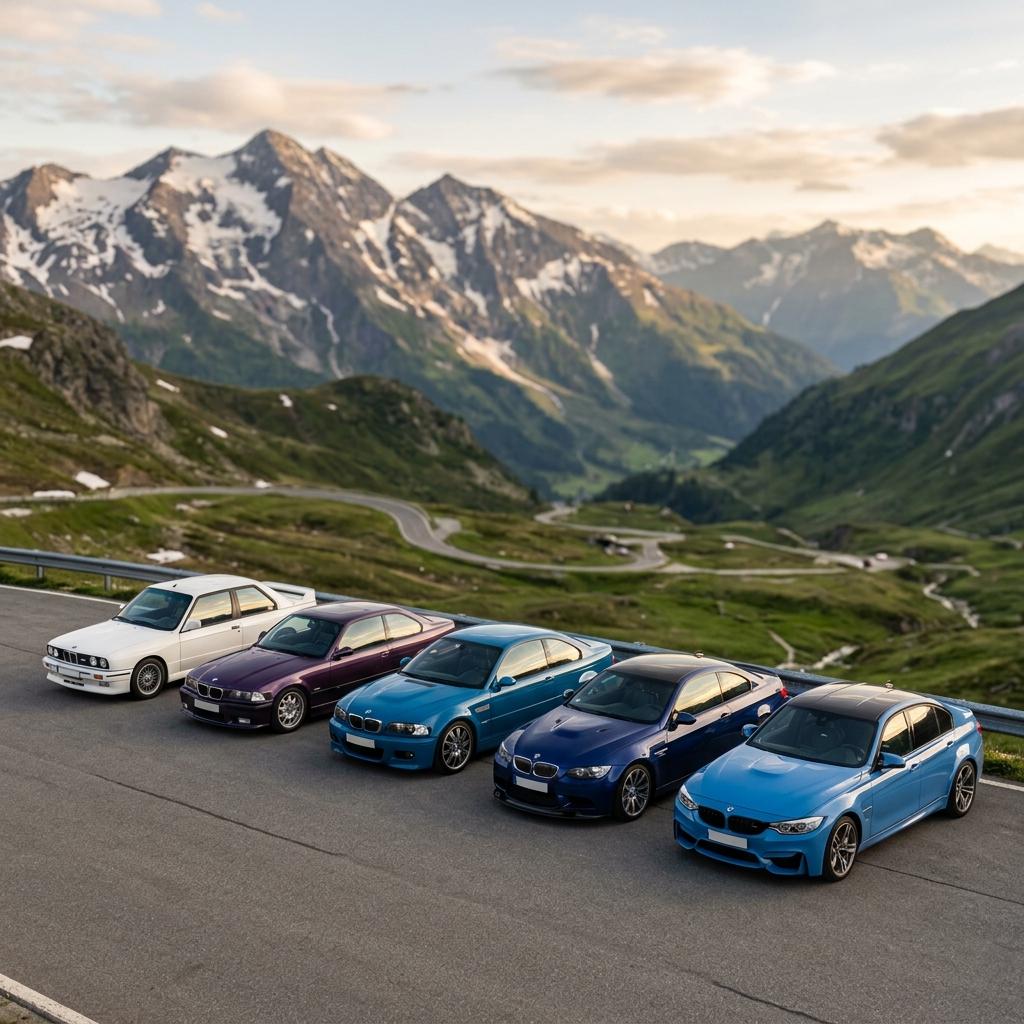
From the legendary E30 dominating the tracks to the highly debated G80, the M3 is always the benchmark.
The BMW M3 is more than just a performance car; it is a cultural phenomenon and the definitive benchmark by which all sports sedans and coupes are measured. Since its inception in 1986, the "M3" badge has represented the pinnacle of BMW’s "Ultimate Driving Machine" ethos, blending everyday practicality with motorsport-derived engineering. Across six distinct generations, the M3 has continually evolved, adapting to changing technologies and market demands while fiercely defending its title as the ultimate driver's car.
The E30 M3: Born for the Track (1986-1991)
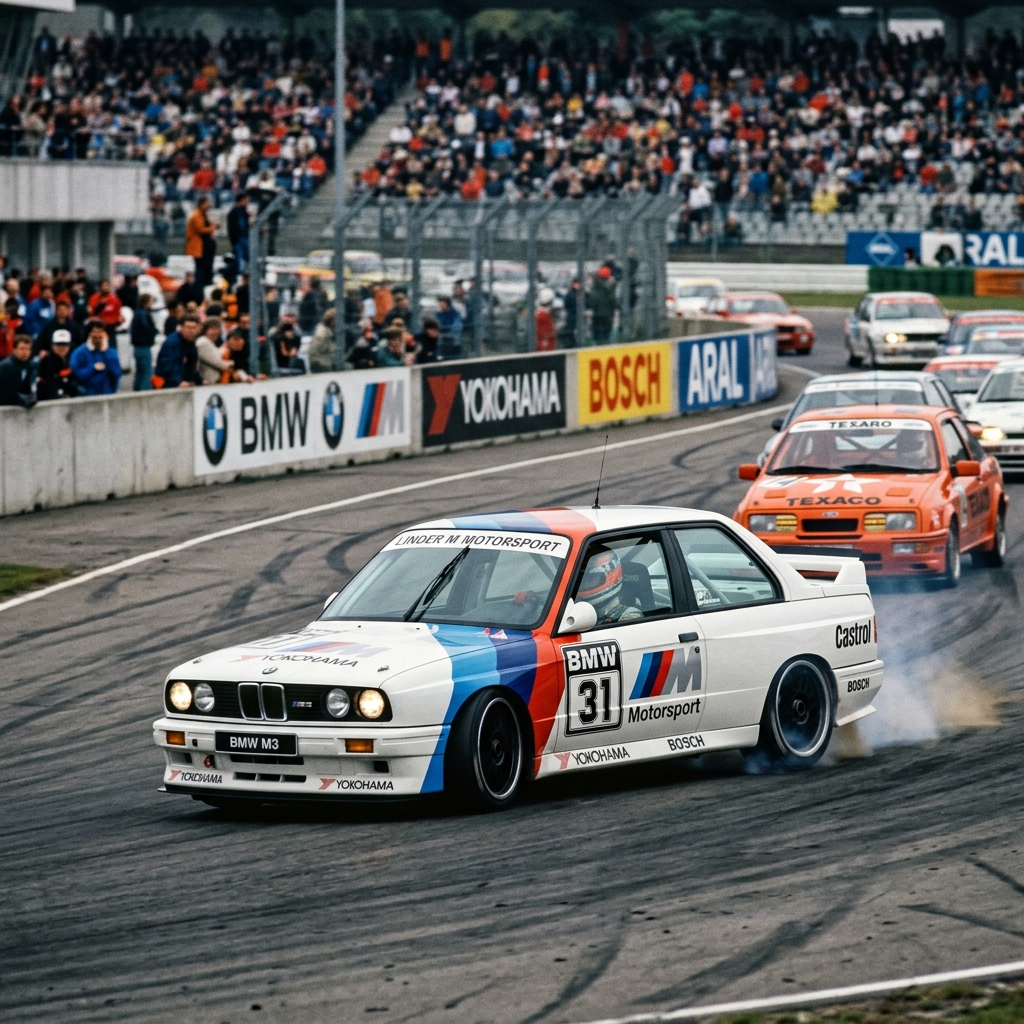
The story of the M3 begins with a necessity for homologation. In the mid-1980s, BMW wanted to dominate Group A touring car racing, specifically the fiercely competitive Deutsche Tourenwagen Meisterschaft (DTM). To compete, regulations required the manufacturer to build and sell 5,000 road-going versions of their race car. Thus, the E30 M3 was born.
Unlike later generations, the E30 M3 was a true race car slightly detuned for the street. It featured a bespoke, high-revving 2.3-liter (later 2.5-liter) naturally aspirated inline-four engine designated the S14. This engine, utilizing a shortened version of the cylinder head from the M1 supercar's inline-six, produced roughly 200 horsepower—a remarkable figure for the era.
Visually, the E30 M3 was distinguished by its aggressive, boxy "blister" fender flares, a deeper front splitter, and a distinctive rear wing. Under the skin, almost every aspect of the suspension and braking system was upgraded. The E30 M3 was raw, communicative, and exceptionally balanced, cementing its status as an absolute handling benchmark. It went on to become the most successful touring car in history, winning countless championships worldwide.
The E36 M3: Evolution into Refinement (1992-1999)
When the E36 M3 debuted in 1992, it represented a significant shift in philosophy. Moving away from the homologation special roots of the E30, the E36 was designed to be a more accessible, refined, and powerful grand tourer that retained exceptional handling characteristics.
The most notable change was the introduction of a silky-smooth, naturally aspirated inline-six engine (the S50, and later S52). Displacing 3.0 liters (later 3.2 liters), this powerplant delivered a substantial increase in power, producing up to 321 horsepower in European specification (though the North American market received a less powerful version to meet emissions standards).
The E36 M3 was available in coupe, convertible, and, for the first time, sedan body styles, broadening its appeal significantly. While purists initially criticized it for being softer and heavier than the E30, the E36 M3 proved to be a brilliant all-rounder, offering an intoxicating blend of performance, luxury, and everyday usability.
The E46 M3: Naturally Aspirated Perfection (2000-2006)
Widely considered the zenith of the M3 lineage, the E46 M3, introduced in 2000, combined the best attributes of its predecessors. It brought back the aggressive, flared wheel arches missing from the E36, signaling a return to a more focused, muscular aesthetic.
The heart of the E46 was the legendary S54 engine—a 3.2-liter naturally aspirated inline-six that revved to a screaming 8,000 rpm, producing 333 horsepower. This engine won International Engine of the Year awards multiple times and is revered for its razor-sharp throttle response and mechanical, metallic soundtrack.
The E46 M3 introduced technological advancements such as the optional SMG II (Sequential Manual Gearbox), bringing F1-style paddle-shifting to the masses. The chassis was brilliantly balanced, offering a level of dynamic precision that still embarrasses modern sports cars. The pinnacle of this generation was the ultra-rare, lightweight M3 CSL (Coupe Sport Leichtbau), which featured a carbon fiber roof and a distinctive intake roar, cementing its status as a highly sought-after collectible.
The E90/E92/E93 M3: The V8 Era (2007-2013)
By the mid-2000s, the horsepower wars were escalating, and BMW's response was to shoehorn a high-revving V8 into the engine bay. The E9x generation (E90 sedan, E92 coupe, E93 convertible) abandoned the iconic inline-six in favor of the S65—a 4.0-liter naturally aspirated V8 derived from the M5’s V10.
Producing 414 horsepower and revving to an astronomical 8,400 rpm, the S65 transformed the M3 into a howling, muscular beast. Despite the larger engine, the E9x maintained exceptional handling thanks to a highly sophisticated aluminum suspension and a carbon fiber roof (on the coupe) that lowered the center of gravity. This generation also saw the introduction of the lightning-fast 7-speed M-DCT (Dual Clutch Transmission), setting a new standard for automated shifting. The E9x represents a unique, emotionally charged chapter in the M3 history, revered for its dramatic V8 soundtrack.
The F80 M3: Turbocharged Performance (2014-2018)
Faced with increasingly stringent global emissions regulations, BMW M was forced to make a controversial decision: the F80 generation marked the return to an inline-six engine, but for the first time, it was turbocharged.
The S55 twin-turbocharged 3.0-liter engine produced 425 horsepower (later 444 hp in the Competition Package) and a massive 406 lb-ft of torque available from low in the rev range. This fundamentally altered the character of the M3. Gone was the need to wring the engine out to the redline; the F80 delivered brutal, effortless acceleration at almost any speed.
The F80 generation also formalized a split in nomenclature: the four-door sedan retained the "M3" badge, while the coupe and convertible were designated as the "M4". Despite initial complaints from purists regarding the artificial engine sound and slightly numb steering, the F80’s sheer capability, stiffened chassis, and menacing wide-body stance made it an undeniable force in the performance sedan market.
The G80 M3: Controversial Design, Unquestionable Power (2021-Present)
The current G80 generation M3 debuted with a highly polarizing exterior design, defined by its massive, vertical kidney grilles. However, once past the styling debates, the engineering underneath proved to be spectacular.
Powered by the new S58 twin-turbo inline-six, the G80 pushes performance into supercar territory, offering up to 503 horsepower in the Competition model (and even more in the CS variant). Crucially, the G80 generation introduced M xDrive—a rear-biased all-wheel-drive system—to the M3 for the very first time. This addition allows the car to effectively deploy its immense power, resulting in blistering 0-60 mph times under 3.5 seconds, while still offering a mode that completely disconnects the front axle for traditional rear-wheel-drive dynamics.
The Legacy of the M3
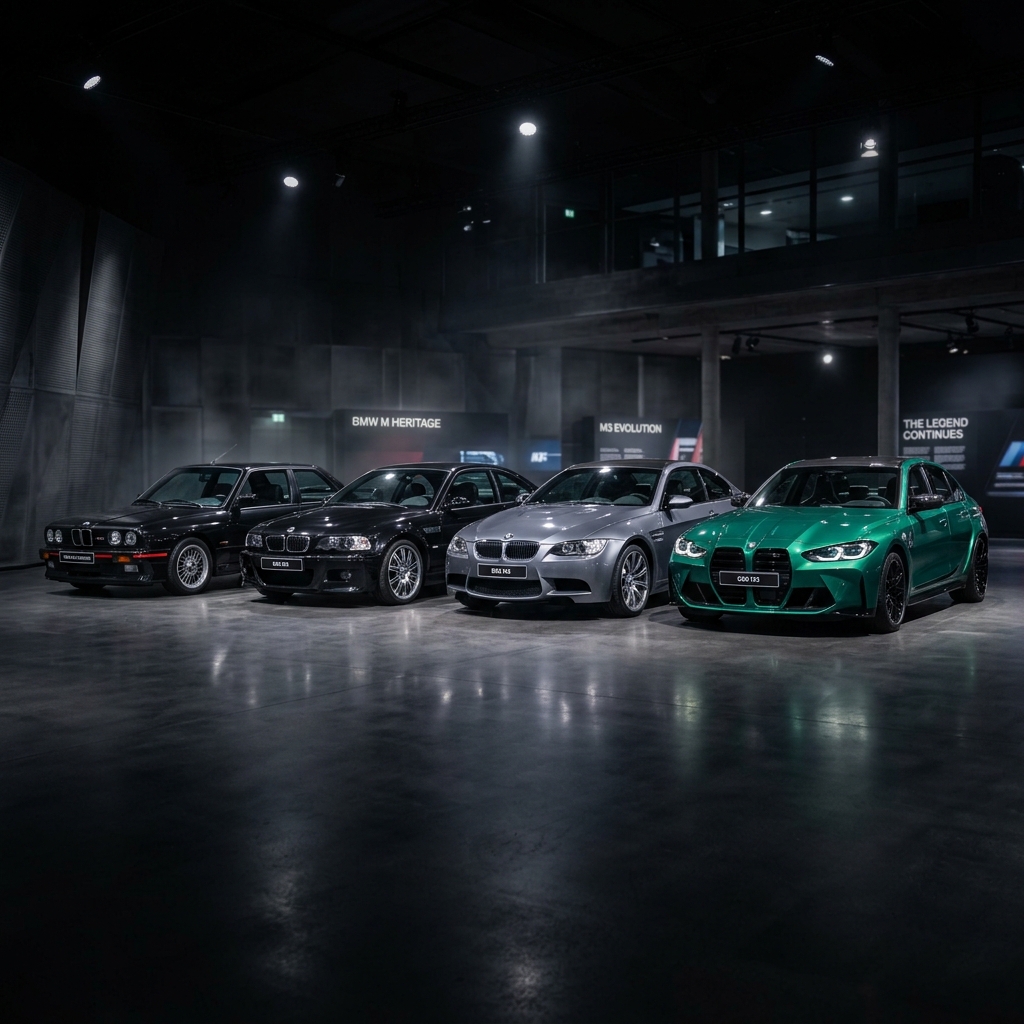
Through homologation specials, naturally aspirated straight-sixes, screaming V8s, and modern twin-turbo powerhouses, the BMW M3 has navigated nearly four decades of automotive evolution. While the recipe has changed significantly since the featherweight E30, the core objective remains intact: to provide an unmatched synthesis of daily drivability and ferocious track capability. The M3 isn't just a car; it is the gold standard of the sports sedan segment, consistently setting the bar that all competitors strive to clear.
Elena Shift
Elena Shift is a contributing writer for Primedealsearch, bringing refined insights and expertise to our readers.