The Last V12 Standing: Ferrari 812 Superfast

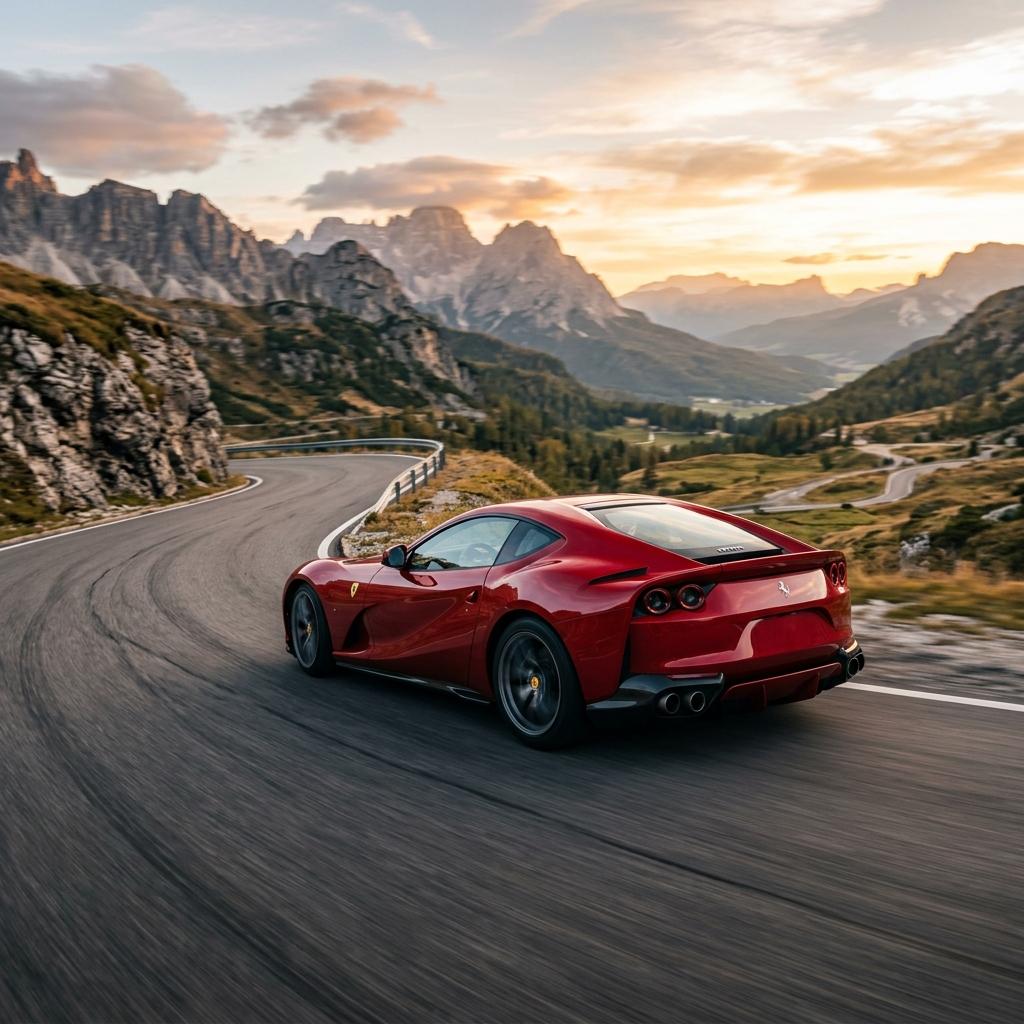
In an era of turbochargers and hybrid motors, Ferrari's naturally aspirated V12 remains the ultimate emotional weapon.
For Ferrari, the front-mounted, naturally aspirated V12 engine is not just a powertrain; it is a religion. It traces its lineage directly back to the very first car to wear the Prancing Horse badge, the 125 S of 1947. Over the decades, while competitors moved to mid-engine layouts, turbochargers, and hybrid systems, Ferrari continually refined their front-engine V12 grand tourers. The zenith of this unrelenting evolution is the Ferrari 812 Superfast. It is a masterpiece of aggressive elegance and mechanical purity, representing perhaps the glorious final chapter of the unassisted V12 engine.
The Pinnacle of the Front-Engine V12
Introduced in 2017 as the successor to the critically acclaimed F12berlinetta, the 812 Superfast revived a historic naming convention from the 1960s. The name wasn't marketing hyperbole; it was a factual statement. Ferrari set out to build the most powerful and fastest front-engine production car in the world.
To achieve this, Maranello’s engineers had to push the boundaries of internal combustion engine design, aerodynamics, and electronic chassis control to ensure that sending nearly 800 horsepower strictly to the rear wheels resulted in drivable exhilaration rather than terrifying wheelspin.
The 6.5-liter Naturally Aspirated V12
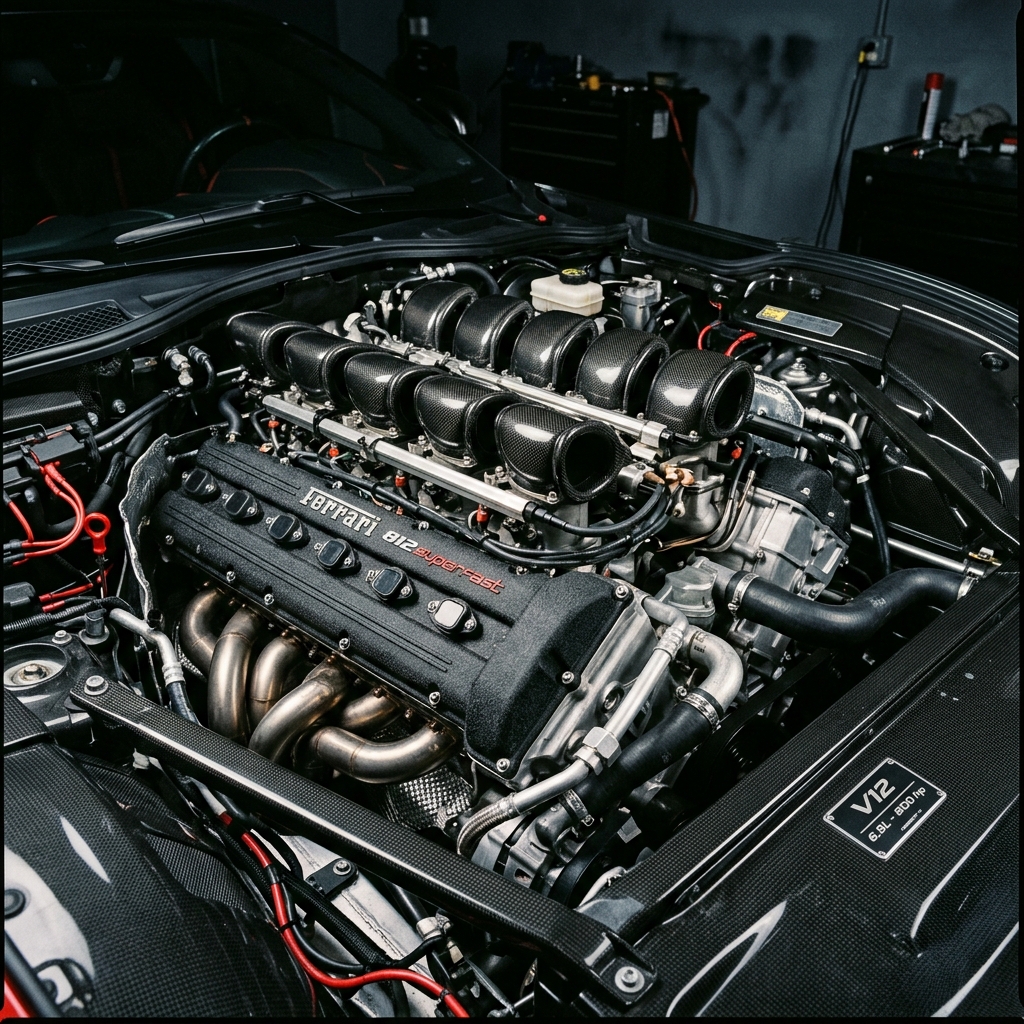
The defining element of the 812 Superfast is its engine, designated the F140 GA. In an era where emissions regulations forced nearly every manufacturer to adopt smaller displacement turbocharged engines, Ferrari stubbornly developed a massive 6.5-liter, naturally aspirated V12.
Without the aid of forced induction, extracting massive power required astronomical engine speeds and incredibly efficient airflow. The engine features a high-pressure (350-bar) direct fuel injection system and continuously variable-geometry intake tracts—technology directly derived from Formula 1.
The result is breathtaking: 789 horsepower (800 cv) at an ear-splitting 8,500 rpm. The power delivery is violently immediate and incredibly linear, rewarding the driver who revs the engine out to the redline. The exhaust note is a high-pitched, operatic wail that is considered one of the greatest sounds in modern automotive history.
Advanced Aerodynamic Integration
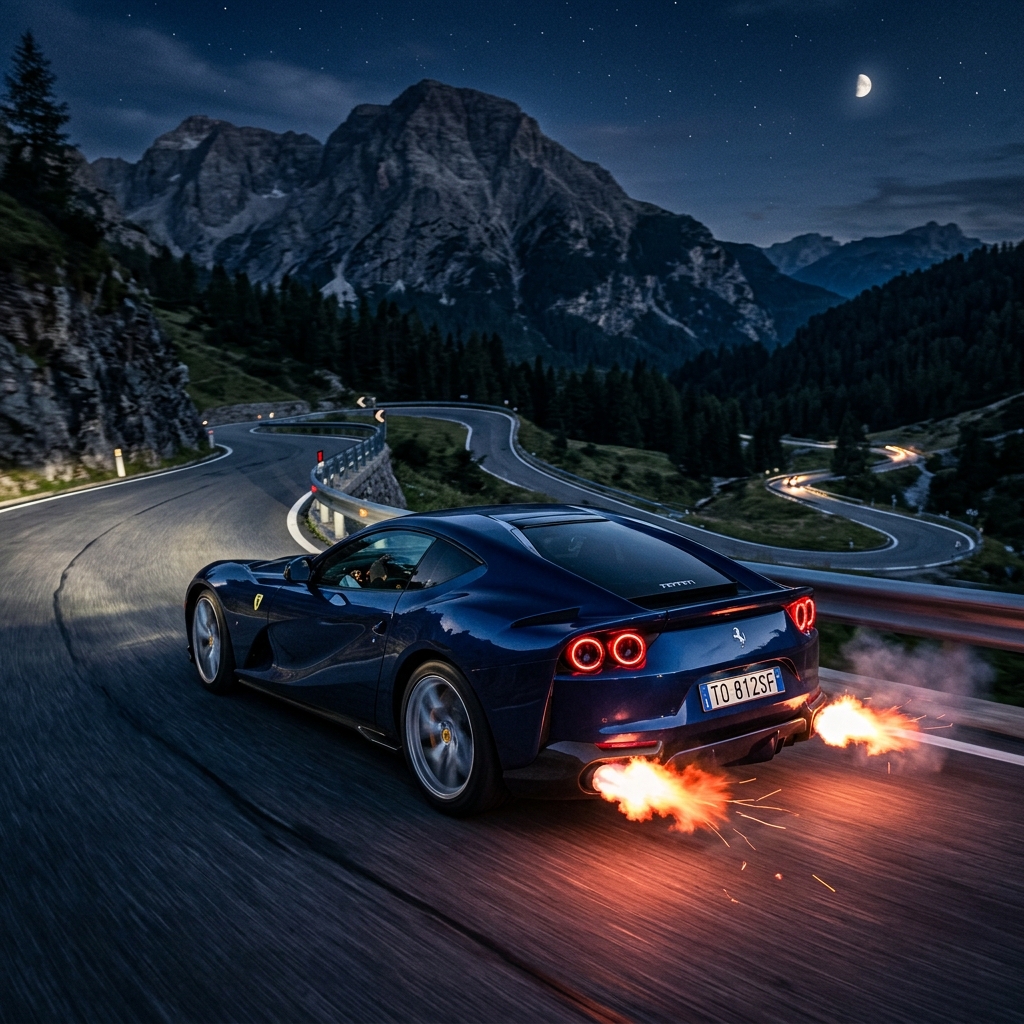
To keep a front-engine car stable at speeds exceeding 211 mph (340 km/h) without utilizing massive, unsightly rear wings, Ferrari had to weave aerodynamics directly into the car's aesthetic design. The 812 Superfast is a study in fluid dynamics.
The front bumper features active aerodynamic flaps that open at high speeds to stall the underbody airflow and reduce drag. The sides of the car feature distinct "scallops" behind the front wheels that suck high-pressure air out of the wheel wells, reducing lift. At the rear, an aggressive diffuser works in tandem with air channels integrated into the C-pillars (the "aero bridge") to generate massive downforce, effectively pushing the rear tires into the tarmac.
Virtual Short Wheelbase 2.0
Sending 789 horsepower to the rear wheels of a relatively large grand tourer creates significant handling challenges. To make the 812 Superfast agile, Ferrari introduced the second generation of their "Virtual Short Wheelbase" system (Passo Corto Virtuale).
This system integrates an electronic rear-wheel steering mechanism with the front electric power steering (a first for a Ferrari V12). At low speeds, the rear wheels turn slightly in the opposite direction to the front wheels, artificially "shortening" the wheelbase and making the car incredibly nimble in tight corners. At high speeds, they turn in the same direction, providing massive stability during rapid lane changes or high-speed sweeping corners.
Combined with the latest iteration of Ferrari’s Side Slip Control (SSC 5.0), the 812 is miraculously approachable. The electronics flatter the driver, allowing them to exploit the massive power and easily control slides without feeling entirely disconnected from the mechanical experience.
The End of an Era
The Ferrari 812 Superfast (and its even more extreme track-focused sibling, the 812 Competizione) stands as a monument to a fading era. As global legislation mandates electrification and severe emissions cuts, it is widely acknowledged that the 812 may be the last of its kind—a pure, unhybridized, naturally aspirated V12 flagship from Maranello.
It perfectly balances the comfort of a continent-crushing grand tourer with the ferocious, terrifying capability of a hypercar. It is a loud, unapologetic celebration of the internal combustion engine and a fitting tribute to Enzo Ferrari's enduring belief that the soul of a car is its V12 engine.
Technical Specifications (812 Superfast)
- Engine: 6.5-liter (6,496 cc) Naturally Aspirated 65° V12
- Valvetrain: DOHC, 4 valves per cylinder
- Power Output: 789 hp (588 kW) @ 8,500 rpm
- Torque: 530 lb-ft (718 Nm) @ 7,000 rpm
- Transmission: 7-speed Dual-Clutch Automatic
- Drivetrain: Rear-Wheel Drive with Electronic Rear Steering
- Chassis: Aluminum spaceframe
- Weight: Approx. 1,630 kg (3,594 lbs) curb weight
- 0-60 mph (0-100 km/h): 2.9 seconds
- Top Speed: 211 mph (340 km/h)
Elena Shift
Elena Shift is a contributing writer for Primedealsearch, bringing refined insights and expertise to our readers.