Birth of a Legend: The Jaguar E-Type

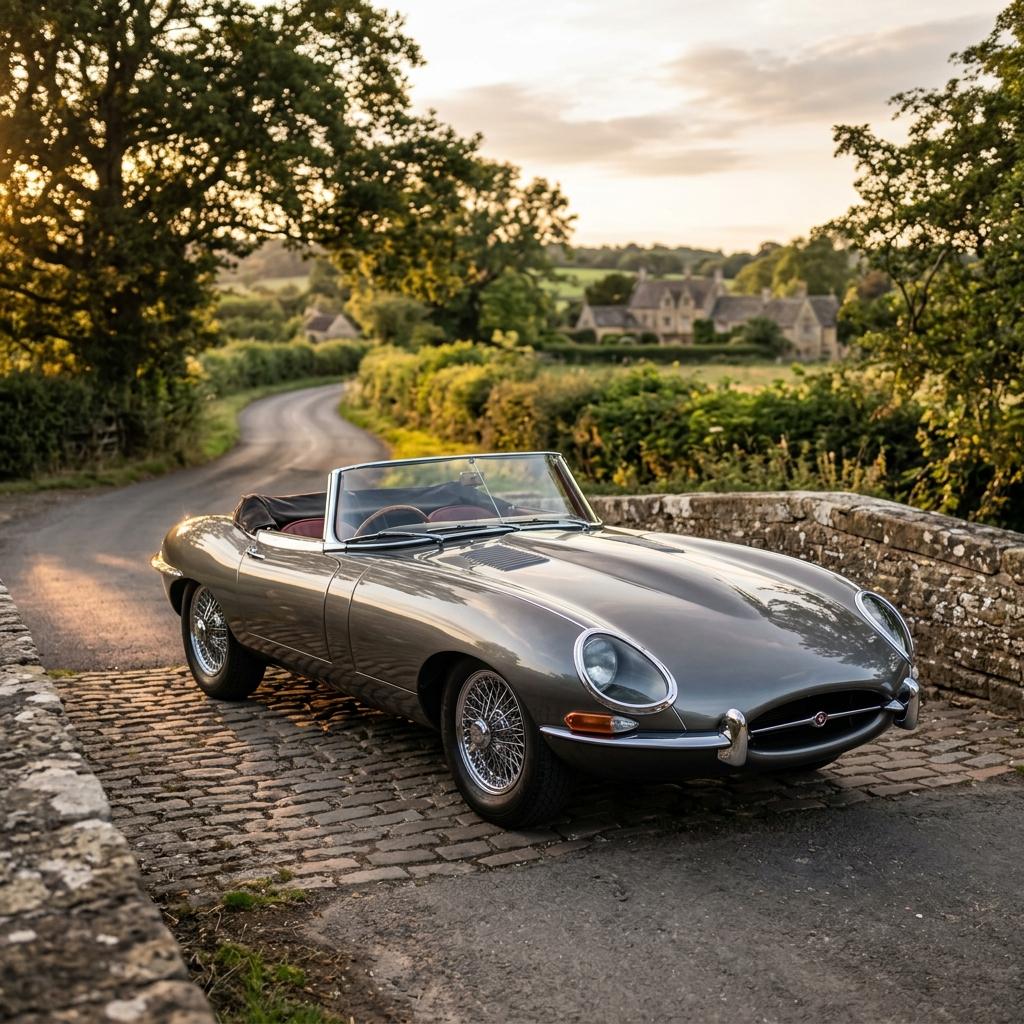
Enzo Ferrari called it the most beautiful car ever made. A look back at the definitive 60s sports car.
When the cover was pulled off the Jaguar E-Type at the 1961 Geneva Motor Show, it caused an absolute sensation. The automotive world stopped and stared. It was impossibly low, sleek, and possessed a hood that seemed to stretch into the horizon. It looked like a car from the future, yet it was available today. The E-Type didn't just redefine automotive styling; it fundamentally shifted the performance car market by offering supercar-beating performance at a fraction of the price of an Aston Martin or Ferrari.
Enzo Ferrari's Highest Praise
The visual impact of the E-Type cannot be overstated. Even Enzo Ferrari, a man not known for dispensing compliments to his rivals, famously and reportedly declared the Jaguar E-Type to be "the most beautiful car ever made."
Its beauty wasn't the result of a stylist trying to make a pretty car; it was the result of a brilliant aerodynamicist trying to make a fast car.
The Malcolm Sayer Aerodynamic Design
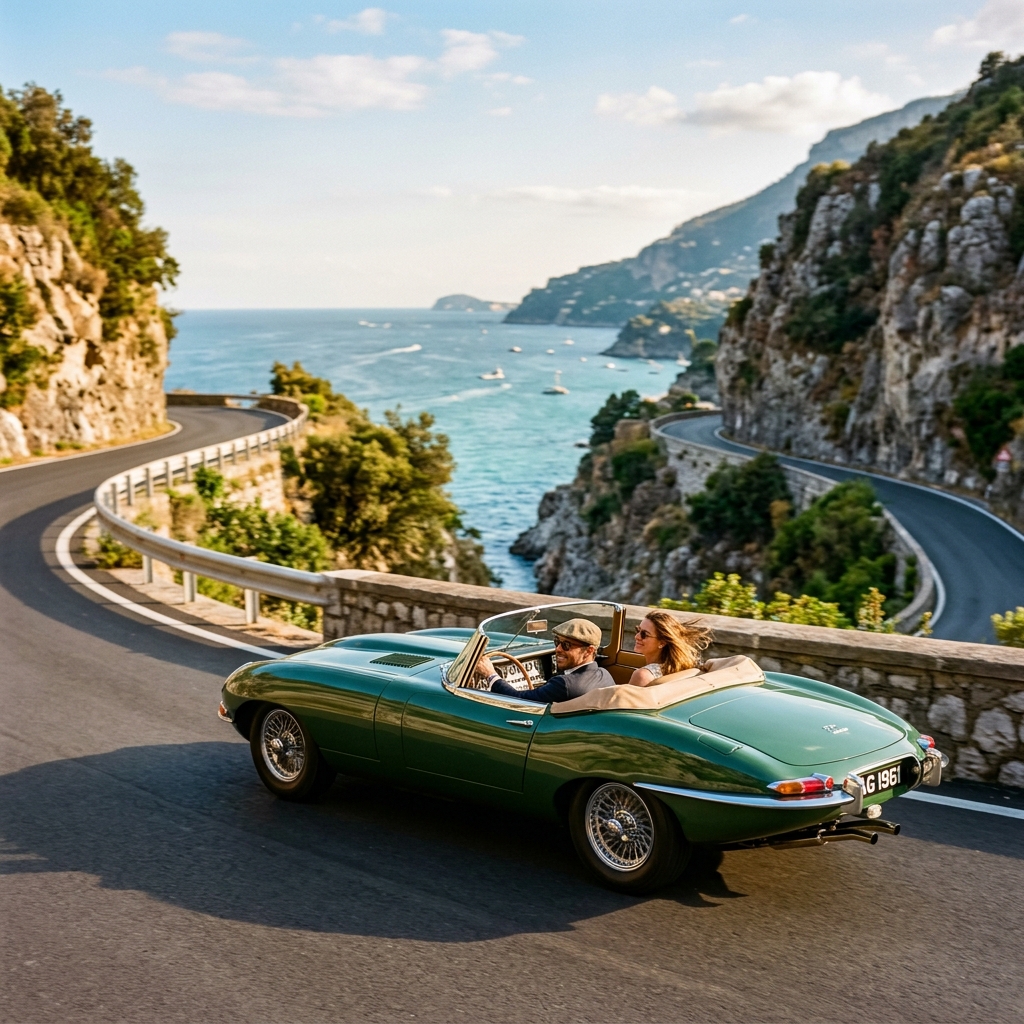
The E-Type was penned by Malcolm Sayer, an aviation engineer who applied principles learned during his time designing aircraft in World War II to automobiles. Sayer had previously designed the highly successful Jaguar C-Type and D-Type race cars, which had dominated the 24 Hours of Le Mans in the 1950s.
Sayer used complex mathematical formulas—long before the advent of computer-aided design (CAD)—to plot the curves of the E-Type. The result was a stunning, phallic shape characterized by glass-covered headlights, a small oval grille, and a perfectly tapering rear end. The body was constructed as a semi-monocoque, with a tubular steel subframe supporting the massive engine and front suspension, a direct descendant of the D-Type race car.
The 3.8-liter XK Engine
Lurking beneath that impossibly long, front-hinged clamshell hood was Jaguar's proven 3.8-liter (later expanded to 4.2-liter) XK inline-six engine. Featuring dual overhead camshafts and breathing through triple SU carburetors, this legendary powerplant produced a claimed 265 horsepower and 260 lb-ft of torque.
This power was enough to propel the E-Type to a verified top speed of 150 mph (241 km/h), making it the fastest production car in the world upon its release. It could complete the 0-60 mph sprint in under 7 seconds, figures that were absolutely staggering for 1961 and could embarrass contemporary Ferraris and Maseratis.
Independent Rear Suspension
While the engine and aerodynamics made it fast in a straight line, the E-Type's revolutionary suspension made it handle exceptionally well. Chief engineer Bob Knight designed a brilliant Independent Rear Suspension (IRS) unit.
Instead of a heavy, primitive live axle common to sports cars of the era, the E-Type’s IRS utilized the driveshafts as upper suspension links, saving weight and complexity. The rear disc brakes were mounted inboard (next to the differential rather than at the wheels) to drastically reduce unsprung weight, improving ride quality and handling response. This IRS system was so effective that Jaguar continued to use variations of it in their cars until the late 1990s.
A Supercar at a Bargain Price
What truly made the E-Type a global phenomenon was its price tag. When launched, the E-Type cost roughly £2,000 (about $5,800 in the US). A comparable Ferrari or Aston Martin DB4 cost more than double that amount, and neither was definitively faster.
Jaguar had democratized supercar performance. The E-Type became the must-have accessory for the elite of the "Swinging Sixties," owned by celebrities ranging from Frank Sinatra to George Harrison and Steve McQueen. It was a symbol of British cool and engineering prowess.
The E-Type's Enduring Legacy
The E-Type evolved through three distinct "Series" over its 14-year production run. Safety and emissions regulations in the US eventually forced the removal of the glass headlight covers, the addition of ugly rubber bumpers, and the replacement of the screaming inline-six with a smoother, heavier V12 engine in the Series III models.
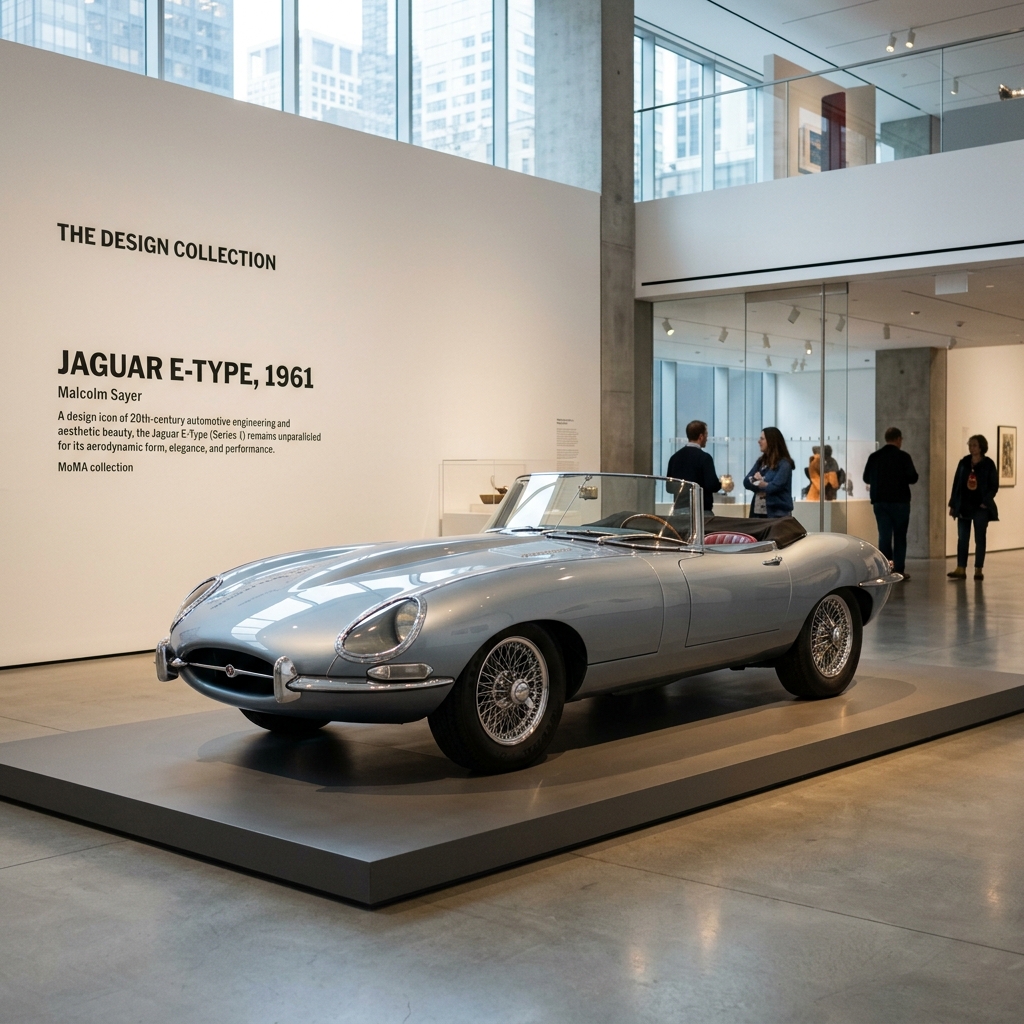
However, the purity of the original 1961 Series I Fixed Head Coupe (FHC) and Roadster remains the gold standard. In 1996, the Museum of Modern Art (MoMA) in New York City recognized the E-Type's significance by adding a blue Roadster to its permanent design collection, one of only a handful of cars ever to receive such an honor. The Jaguar E-Type stands immortal as the perfect intersection of art, engineering, and raw performance.
Technical Specifications (1961 Series 1 3.8L Coupe)
- Engine: 3.8-liter (3,781 cc) XK Inline-6
- Valvetrain: DOHC, 2 valves per cylinder
- Fuel Delivery: Three SU HD8 carburetors
- Power Output: 265 hp (198 kW) @ 5,500 rpm (Gross rating)
- Torque: 260 lb-ft (353 Nm) @ 4,000 rpm
- Transmission: 4-speed manual (non-synchromesh 1st gear)
- Drivetrain: Rear-Wheel Drive
- Chassis: Steel monocoque with front tubular subframe
- Suspension: Independent wishbones (front), Independent lower wishbone with driveshaft upper link (rear)
- Weight: Approx. 1,315 kg (2,900 lbs)
- 0-60 mph (0-100 km/h): ~6.9 seconds
- Top Speed: 150 mph (241 km/h)
Alex Driver
Alex Driver is a contributing writer for Primedealsearch, bringing refined insights and expertise to our readers.