Timeless Icon: The Six-Decade Era of the Porsche 911
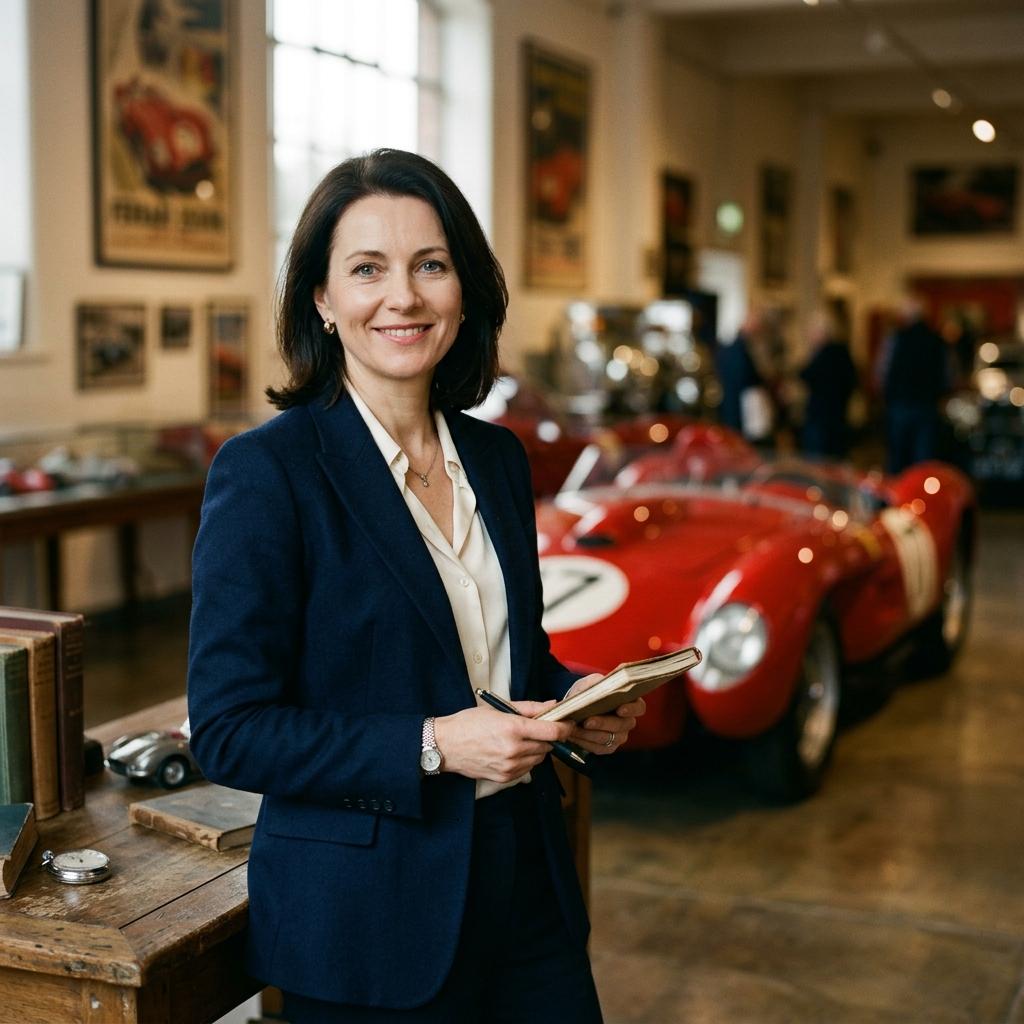
Few cars have maintained their original beauty and power for 60 years like the Porsche 911.
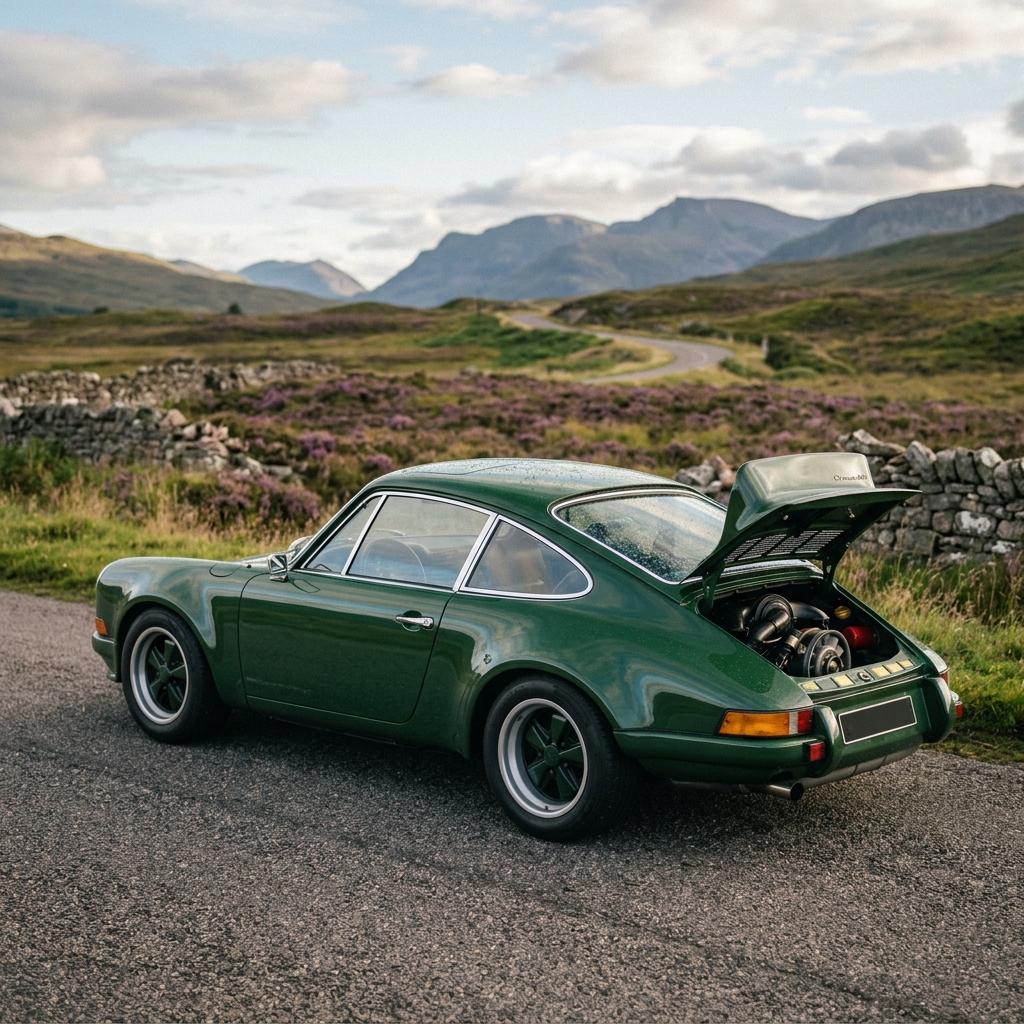
When Ferry Porsche's son, Ferdinand Alexander "Butzi" Porsche, designed the 911 in the early 1960s, he created something that would endure for over six decades with remarkably little change to its fundamental character. The 911's silhouette—that long, sloping hood, upright round headlights, and unmistakable fastback roofline—is as recognizable today as it was at its debut at the 1963 Frankfurt Motor Show. Through the years, the 911 evolved from a raw, air-cooled purist's sports car into a technologically advanced, water-cooled marvel of modern engineering, yet it always retained its essential DNA. No other car in history has maintained such consistent character over such a long production run.
The Genesis of an Icon (1963-1973)
The 911 was originally intended as a larger, more powerful, and more comfortable replacement for the company's first model, the four-cylinder 356. Initially designated the "901," a trademark dispute with Peugeot forced Porsche to change the name to "911," accidentally giving birth to the most famous three-digit number in automotive history.
The defining characteristic of the 911 was its rear-engine layout. By placing the newly developed 2.0-liter, air-cooled flat-six engine behind the rear axle, Porsche engineers achieved incredible traction under acceleration and excellent braking capabilities. However, this layout also created a distinct pendulum effect; if a driver lifted off the throttle mid-corner, the heavy rear end could swing around violently—a trait known as "snap oversteer." Mastering the early 911 required immense skill and respect.
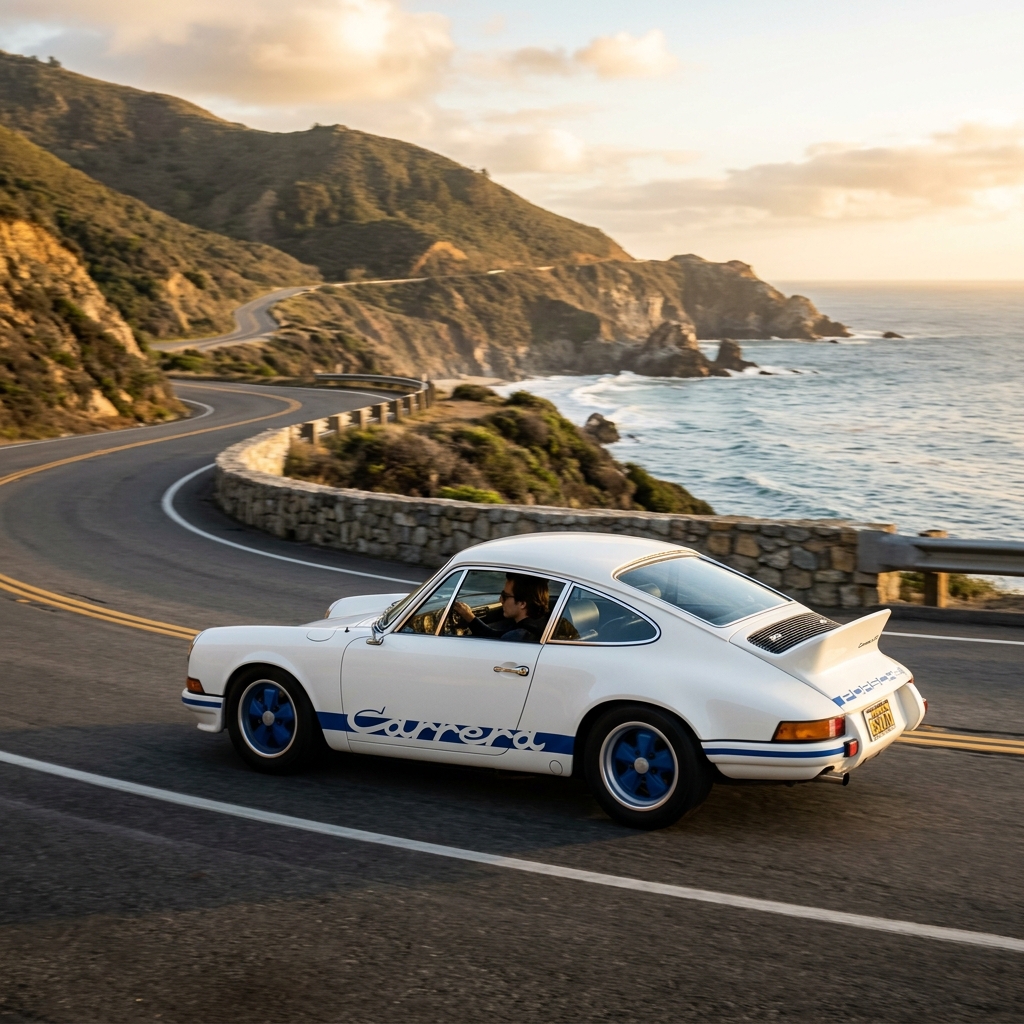
This era culminated in the legendary 1973 Carrera 2.7 RS (Rennsport). Built for homologation, it featured a larger engine, stiffer suspension, lighter weight, and the iconic "ducktail" spoiler to reduce rear lift. Today, the 2.7 RS is considered the holy grail of early 911s.
The G-Series and the Turbo Revolution (1974-1989)
The "G-Series" represented the longest-running generation in the 911's history. Introduced to comply with stringent new US safety regulations, it featured prominent, impact-absorbing bumpers that became a defining styling trait of the era.
In 1975, Porsche introduced a car that would change the automotive landscape: the 911 Turbo (internal code 930). By applying exhaust-driven turbocharging technology developed in their Can-Am racing program to a road car, Porsche created a monster. The 930 featured heavily flared wheel arches to accommodate wider tires and a massive "whale tail" (later "tea tray") rear spoiler to feed air to the intercooler and keep the rear tires planted.
With significant "turbo lag"—a delay in power delivery followed by a sudden, explosive surge of acceleration—the 930 earned a fearsome reputation as the "Widowmaker." It was demanding, dangerous, and incredibly fast, establishing the 911 Turbo as the ultimate supercar alternative.
Air-Cooled Perfection: The 964 and 993 (1989-1998)
By the late 1980s, the 911 desperately needed modernization. The 964 generation arrived in 1989, looking similar to its predecessor but featuring 85% new components. It introduced power steering, ABS brakes, and, crucially, an available all-wheel-drive system (the Carrera 4) to tame the inherent rear-engine handling quirks.
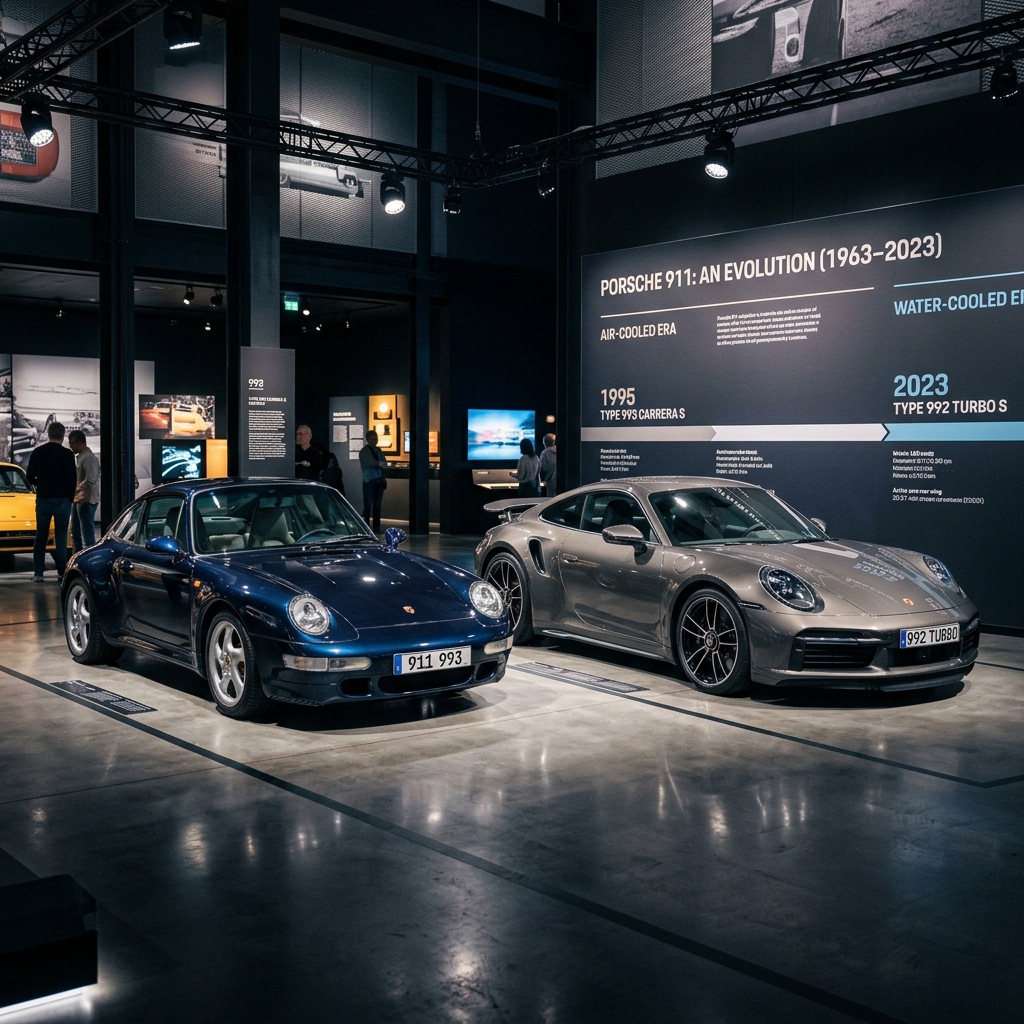
The final iteration of the air-cooled era arrived in 1993 with the 993. Widely considered the most beautiful and perfect expression of the classic 911, the 993 featured smoothed-out, integrated bumpers and flared fenders across the entire range. An all-new multi-link rear suspension finally cured the snap-oversteer characteristics that had plagued the 911 for thirty years. The 993 Turbo introduced twin-turbocharging and all-wheel drive as standard, making immense performance accessible and safe. For purists, the 993 remains the peak of the 911 experience.
The Water-Cooled Era: The 996 Controversy (1998-2004)
In 1998, Porsche made the most controversial decision in its history: to meet strict new emissions and noise regulations, the air-cooled flat-six was replaced by a completely new water-cooled engine in the 996 generation.
The 996 shared its front-end structure and controversial "fried egg" headlights with the entry-level Boxster, outraging traditionalists. Despite the visual and auditory changes, the 996 was objectively a superior automobile—faster, stiffer, more spacious, and safer. It also introduced the GT3 model, a track-focused, naturally aspirated variant that would become the darling of driving enthusiasts worldwide.
Refining the Formula: The 997, 991, and 992
Porsche listened to the criticism and returned to traditional round headlights for the 997 generation (2004). The 997 struck a perfect balance between modern technology and classic feel, introducing direct fuel injection and the revolutionary PDK dual-clutch transmission, which provided lightning-fast gear changes.
The 991 generation (2011) saw the 911 grow larger and adopt electric power steering. While some bemoaned a slight loss of steering feel, the car became devastatingly capable. For the first time, turbocharged engines were introduced to the standard Carrera models, prioritizing efficiency and low-end torque.
Today's 992 generation is a wide, muscular technological tour de force. Offering over 600 horsepower in the Turbo S variant, it utilizes active aerodynamics, rear-wheel steering, and sophisticated torque-vectoring to bend the laws of physics, all while remaining as usable for a daily commute as a standard luxury sedan.
Motorsport Pedigree
The 911's legacy is inseparable from motorsport. From the grueling Dakar Rally to the 24 Hours of Le Mans, the 911 has won practically every major endurance race on the planet. Porsche's philosophy of racing what they sell means that innovations developed on the track—such as turbocharging, aerodynamics, and advanced braking systems—directly trickle down to the road cars. The track-focused GT models (GT3, GT3 RS, GT2 RS) are the purest distillations of this racing heritage.
Why the 911 Endures
Other sports cars may be flashier, louder, or more exotic, but the Porsche 911 endures because of its unparalleled breadth of capability. It is the only true high-performance sports car that can reliably be driven to the office every day, taken to a racetrack on the weekend to set blistering lap times, and then driven home in total comfort.
The rear-engine layout, once a liability, has been engineered into the car's greatest asset, providing a unique driving rhythm and exceptional traction. The Porsche 911 is not just a car; it is a continuously evolving engineering masterpiece that has defied convention to become the definitive sports car of the modern era.
Technical Specifications (992 Carrera S)
- Engine: 3.0-liter Twin-Turbocharged Flat-Six, Rear-Mounted
- Valvetrain: DOHC, 4 valves per cylinder with VarioCam Plus
- Power Output: 443 hp (330 kW) @ 6,500 rpm
- Torque: 390 lb-ft (530 Nm) @ 2,300 - 5,000 rpm
- Transmission: 8-speed PDK Dual-Clutch (or 7-speed manual)
- Drivetrain: Rear-Wheel Drive
- Chassis: Aluminum-steel hybrid unibody
- Suspension: MacPherson strut front, Multi-link rear
- Weight: Approx. 1,515 kg (3,340 lbs)
- 0-60 mph (0-100 km/h): 3.5 seconds (with Sport Chrono package)
- Top Speed: 191 mph (308 km/h)
Elena Shift
Elena Shift is a contributing writer for Primedealsearch, bringing refined insights and expertise to our readers.