Rally's Radical Predator: The Era of the Lancia Stratos HF

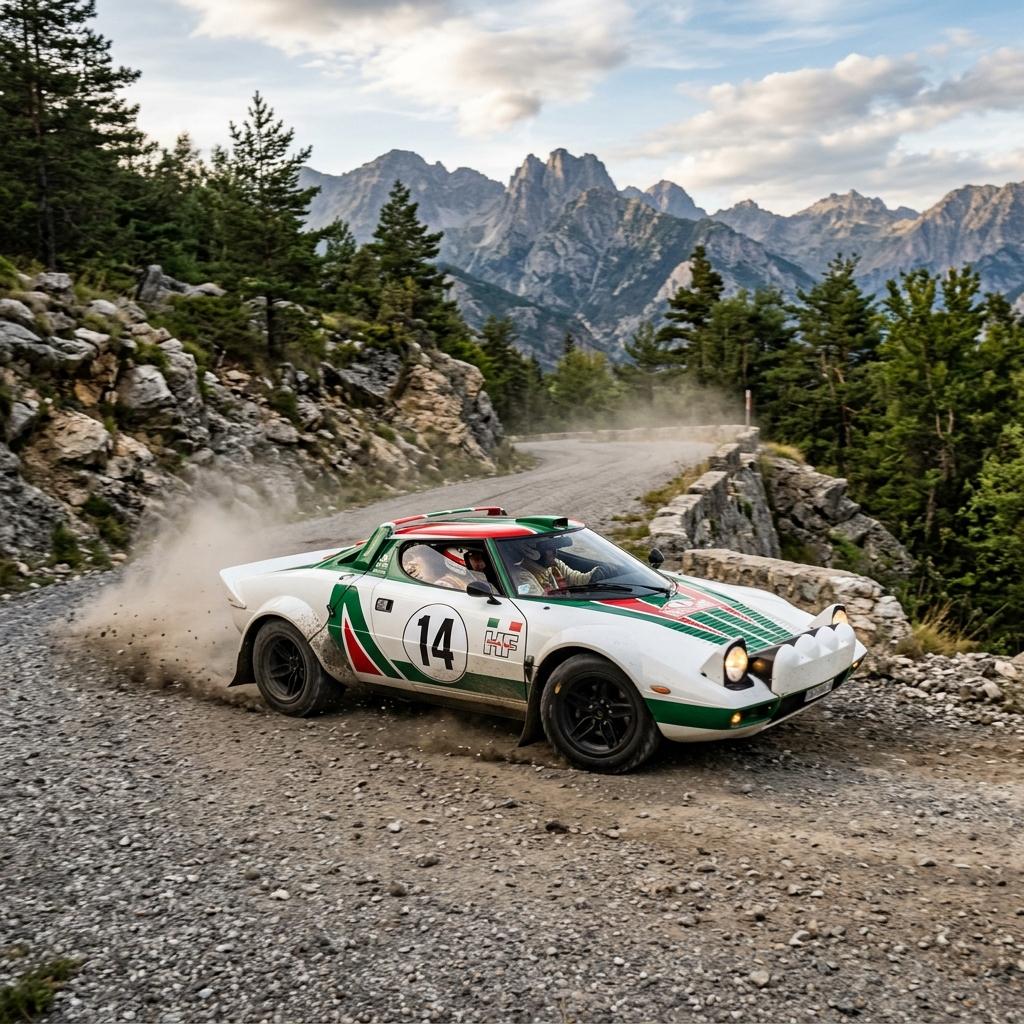
In the annals of automotive history, there are machines that transcend standard definitions to become legends.
The Lancia Stratos HF is unequivocally one of the most significant and radical machines ever to grace the stages of the World Rally Championship (WRC). Born in an era when rally cars were largely derived from standard road-going production sedans, the Stratos shattered the mold. It was conceived from a blank sheet of paper with a singular, uncompromising objective: to conquer the rallying world. This purpose-built philosophy not only changed the trajectory of Lancia’s motorsport division but also forever altered the fundamental approach manufacturers took toward rally car design.
The Genesis of a Rally Legend
The story of the Lancia Stratos began in 1970 at the Turin Motor Show, where the design house Bertone unveiled the Stratos Zero concept car. This incredibly low, wedge-shaped prototype was more an exercise in extreme futuristic design than a practical vehicle. However, it caught the eye of Cesare Fiorio, the manager of Lancia's rally team. Fiorio recognized that the mid-engine layout, compact dimensions, and lightweight philosophy could be the perfect foundation for Lancia's next rally weapon to replace the aging Fulvia HF.
Fiorio convinced Lancia management to pursue the project, and Bertone was tasked with designing a more practical, yet still radical, prototype. The result was the Lancia Stratos HF (High Fidelity) prototype, presented in 1971. It maintained the striking wedge shape but was optimized for the grueling demands of rallying. The project was given the green light, but a critical hurdle remained: securing a suitable powerplant.
Design and Engineering: The Bertone Wedge
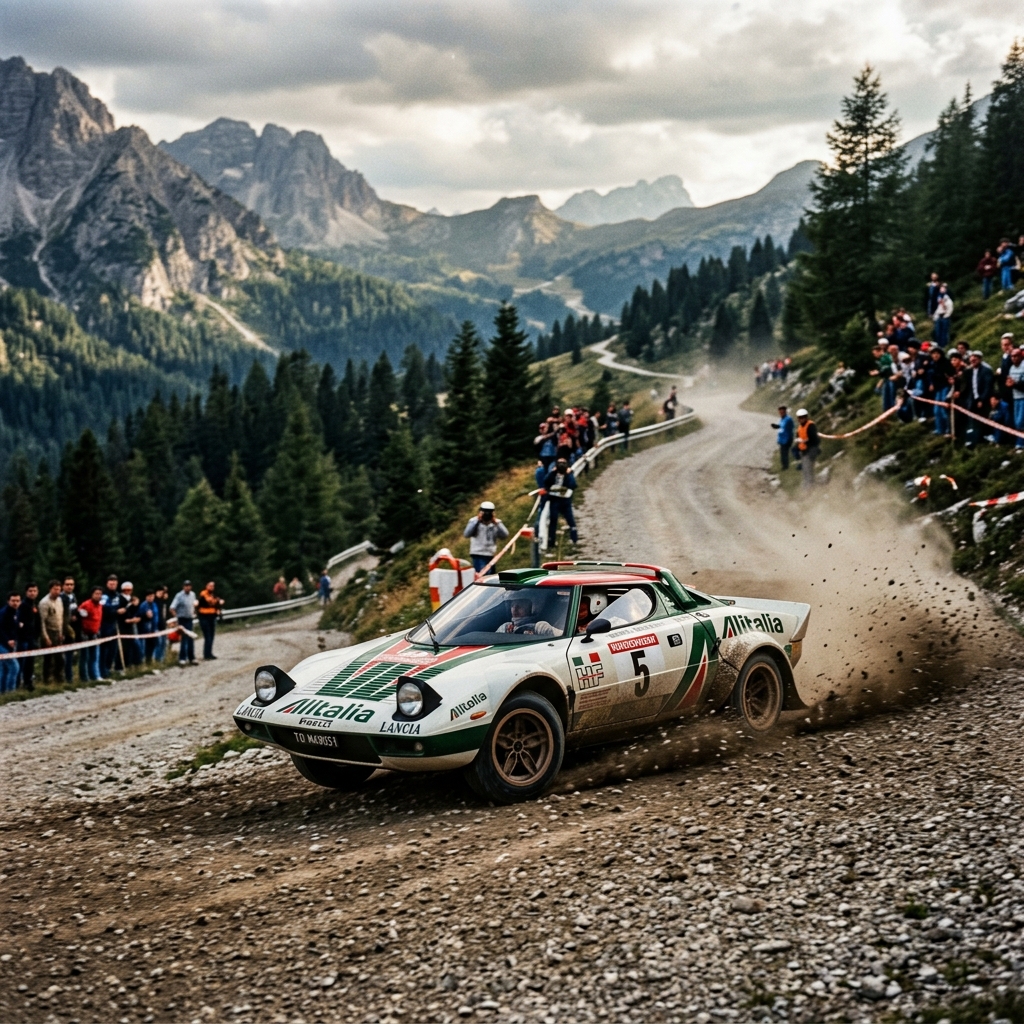
Marcello Gandini, the legendary designer at Bertone responsible for the Lamborghini Miura and later the Countach, penned the Stratos. The design was dictated entirely by function. The ultra-short wheelbase of just 2,180 mm (85.8 inches) ensured unparalleled agility on tight, twisting rally stages. The wide track provided stability, while the heavily wrapped windshield offered exceptional forward visibility—a crucial element for navigating treacherous mountain roads at breakneck speeds.
The chassis was built around a central steel monocoque tub, with tubular steel subframes at the front and rear to support the suspension and engine. This construction allowed for quick repairs and the easy replacement of entire sections during rally service intervals. The bodywork was crafted from lightweight fiberglass, keeping the overall weight well under 1,000 kilograms (approximately 2,160 lbs) in rally trim.
Inside, the Stratos was a cramped, noisy, and hot environment. It featured distinctive helmet pockets sculpted into the inner door panels, allowing the driver and co-driver to fit inside the tiny cabin while wearing their mandatory safety gear. Comfort was nonexistent; this was a purpose-built weapon.
The Ferrari Dino V6 Powertrain
To dominate the WRC, the Stratos needed an exceptional engine. Cesare Fiorio set his sights on the 2.4-liter, naturally aspirated V6 engine from the Ferrari Dino 246. Securing this engine was no easy feat. Enzo Ferrari was initially reluctant to supply engines to a competitor, even though both brands were part of the broader Fiat empire.
After much negotiation, and reportedly a bit of corporate maneuvering, Lancia secured an initial batch of 500 engines. The Dino V6 was a masterpiece of Italian engineering, featuring dual overhead camshafts per bank and three Weber carburetors. In the road-going Stratos 'Stradale', it produced a very healthy 190 horsepower. However, in full Group 4 rally specification, output was boosted to roughly 275 horsepower, and later 12-valve versions produced nearly 320 horsepower.
Mounted transversely behind the cabin, the engine provided the Stratos with phenomenal traction and a power-to-weight ratio that overwhelmed the competition. The accompanying soundtrack—a raspy, aggressive howl that echoed through the forests and mountains of Europe—became one of the most iconic noises in motorsport history.
WRC Dominance (1974 - 1976)
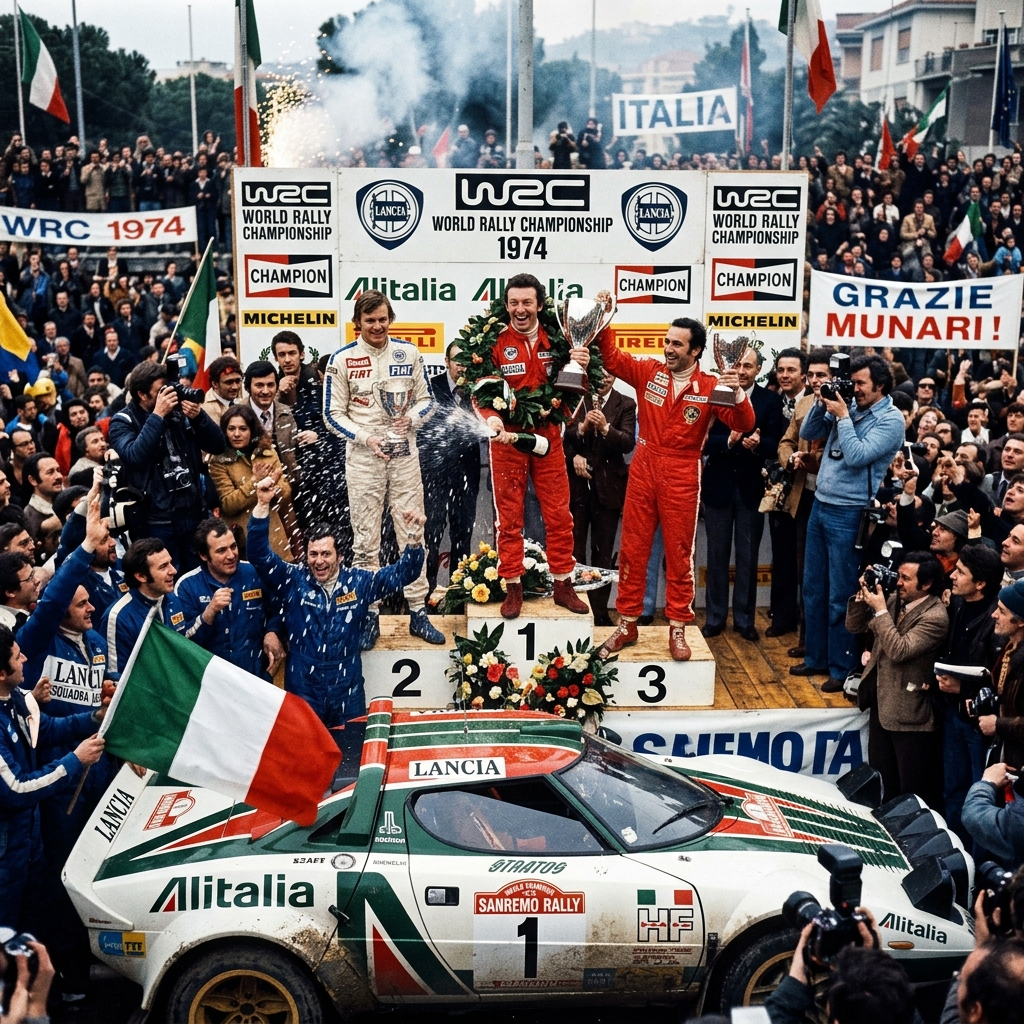
The Lancia Stratos HF officially entered WRC competition following its homologation in late 1974. Its impact was immediate and devastating to the opposition. The Stratos won its very first international event, the 1974 Tour de France Automobile, and quickly began racking up victories on gravel, snow, and tarmac.
From 1974 to 1976, the Lancia Stratos was absolutely unstoppable, claiming three consecutive World Rally Championship Constructors' titles. It dominated legendary events such as the Monte Carlo Rally, the Tour de Corse, and the Rallye Sanremo. The car's exceptional agility allowed it to dance through tight hairpins, while its Ferrari-sourced V6 provided blistering acceleration on the straights.
The Stratos essentially forced other manufacturers to rethink their rallying strategies. Production-based sedans were no longer enough to win consistently; the era of the bespoke, purpose-built rally car had arrived, paving the way for the monstrous Group B cars of the 1980s.
The Drivers Who Tamed the Beast
While the Stratos was incredibly fast, it was also notoriously difficult to drive. The extremely short wheelbase, combined with a mid-engine layout and abundant power, created a vehicle that was prone to sudden, violent oversteer. It required immense skill, lightning-fast reflexes, and total commitment to extract its maximum potential.
A select group of legendary drivers proved capable of taming the beast. Sandro Munari, the charismatic Italian driver, became synonymous with the Stratos, utilizing his smooth, precise driving style to claim numerous victories, including three consecutive Monte Carlo wins. Björn Waldegård, the brilliant Swedish driver, also achieved immense success, proving the Stratos was capable of winning on the loose surfaces of Scandinavia. Markku Alén and Bernard Darniche further cemented the car's legacy with their spectacular performances.
Legacy and Collector Value
By the late 1970s, internal politics within the Fiat Group dictated that the rallying focus would shift to the Fiat 131 Abarth, a car more closely related to high-volume production models. Despite this, privateer teams continued to campaign the Stratos with success into the early 1980s.
Today, the Lancia Stratos HF stands as an automotive icon. Its uncompromising design, Ferrari heart, and unmatched competition pedigree make it one of the most desirable collector cars in the world. With only around 492 examples ever built (including both rally cars and the 'Stradale' homologation specials), genuine Stratos models rarely come up for sale. When they do cross the auction block, prices routinely exceed one million euros, a testament to the enduring mystique of this radical Italian masterpiece.
The Stratos represents a golden, unregulated era of motorsport—a time when passion, engineering audacity, and a singular focus on victory produced one of the greatest automotive predators the world has ever seen.
Technical Specifications (Stradale Version)
- Engine: 2.4-liter (2,418 cc) Ferrari Dino 65° V6, Naturally Aspirated
- Valvetrain: DOHC, 2 valves per cylinder
- Fuel Delivery: Three Weber 40 IDF carburetors
- Power Output: 190 hp (142 kW) @ 7,000 rpm
- Torque: 166 lb-ft (226 Nm) @ 4,000 rpm
- Transmission: 5-speed manual, rear-wheel drive
- Chassis: Steel central monocoque with tubular subframes
- Suspension: Independent double wishbones front and rear
- Weight: Approx. 980 kg (2,161 lbs)
- 0-60 mph (0-100 km/h): ~6.8 seconds
- Top Speed: Approx. 144 mph (232 km/h)
Alex Driver
Alex Driver is a contributing writer for Primedealsearch, bringing refined insights and expertise to our readers.