The Wedge Revolution: Lamborghini Countach

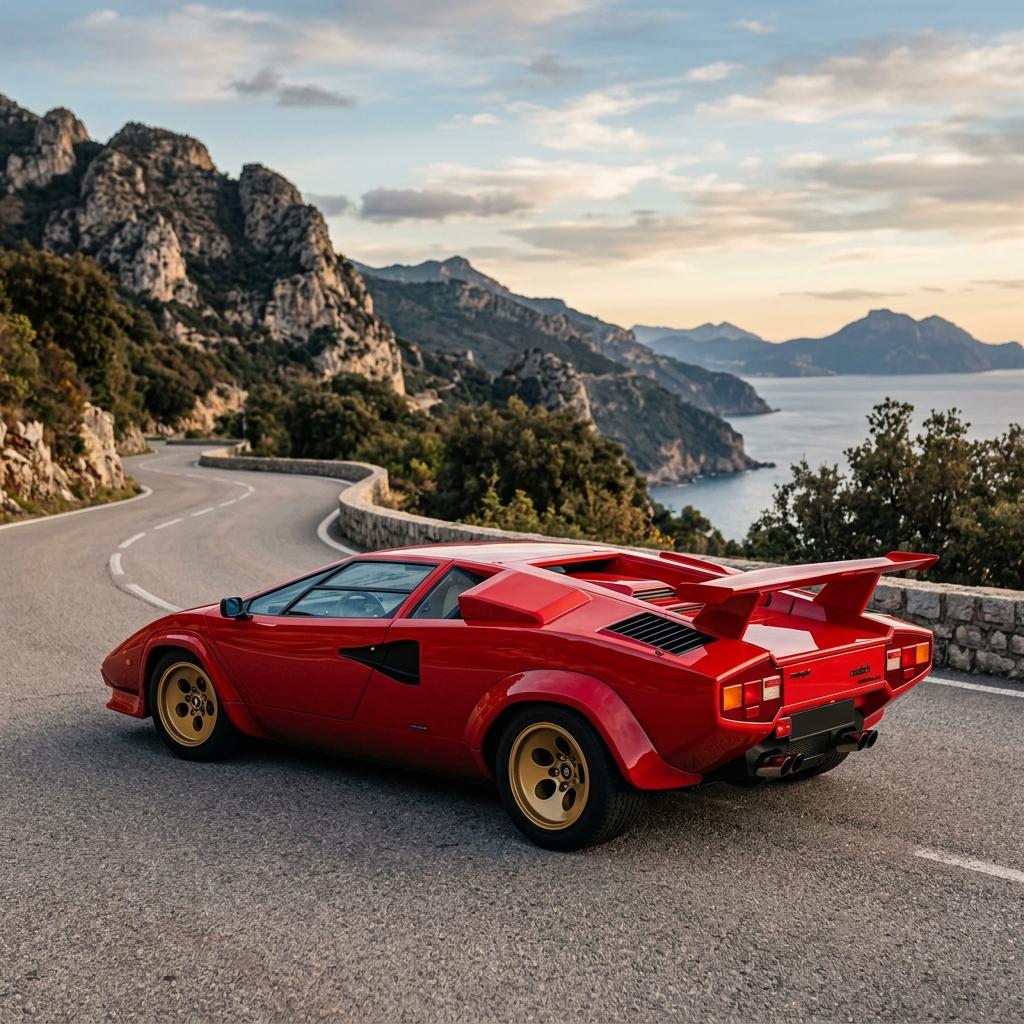
Marcello Gandini's design changed the supercar world forever. A look back at the radical Countach.
When the automotive world thinks of a "supercar," the image that almost universally springs to mind is a wide, impossibly low, aggressive, and outrageous wedge shape. That aesthetic archetype was entirely created by one car: the Lamborghini Countach. It didn't just change Lamborghini; it fundamentally altered the trajectory of automotive design forever. For sixteen years, it stood as the ultimate poster car, defining the extravagance and excess of the 1970s and 1980s.
The Marcello Gandini Wedge Masterpiece
Following the immense success of the beautiful, flowing Lamborghini Miura—widely considered the first true supercar—the pressure was on to create a successor. Ferruccio Lamborghini tasked the brilliant young designer Marcello Gandini at Bertone with the job. Gandini decided to completely abandon the curvaceous lines of the 1960s.
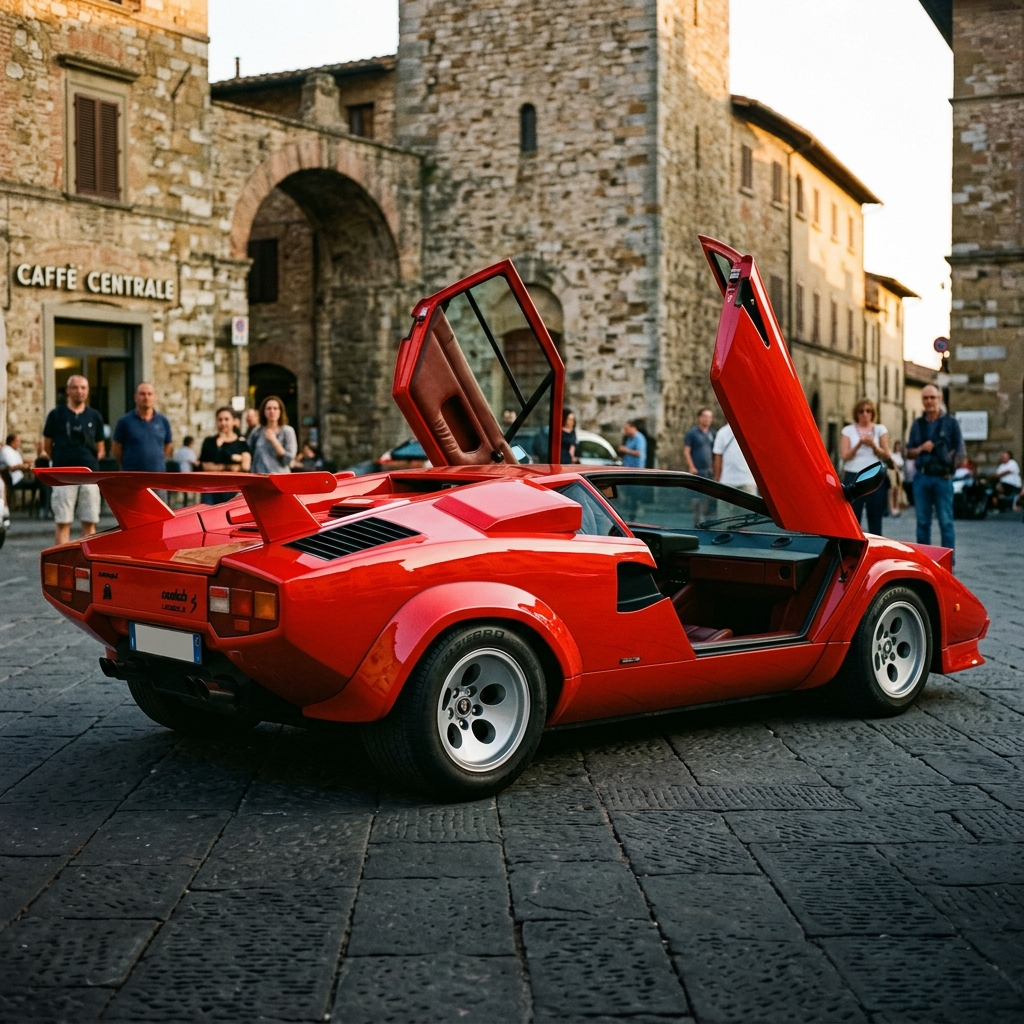
Instead, he drew inspiration from his earlier Alfa Romeo Carabo concept, utilizing a "wedge" design philosophy. The resulting car was a collection of flat, trapezoidal panels, sharp angles, and aggressive geometry. It featured a cab-forward design with a tiny windshield that seamlessly flowed into the ultra-low nose. Most famously, Gandini introduced the "scissor doors" (doors that swing up and forward), a feature so iconic it is now synonymous with the Lamborghini brand.
Shocking the World: The LP500 Prototype (1971)
The Countach prototype, designated LP500, was unveiled at the 1971 Geneva Motor Show. The reaction was absolute shock. The story goes that when a Piedmontese factory worker first laid eyes on the radical prototype, he exclaimed "Countach!"—a local dialect exclamation of astonishment or awe (roughly translating to "Heavens!" or "Wow!"). The name stuck, breaking Lamborghini's tradition of naming cars after fighting bulls.
The LP500 was so impossibly low and wide it looked like a spaceship. However, turning Gandini's radical concept into a functional production vehicle proved incredibly difficult. The massive 5.0-liter V12 engine constantly overheated in the enclosed bay, requiring engineers to add prominent air scoops and NACA ducts that somewhat compromised Gandini's perfectly clean original lines.
The LP400 "Periscopio": The Purest Form
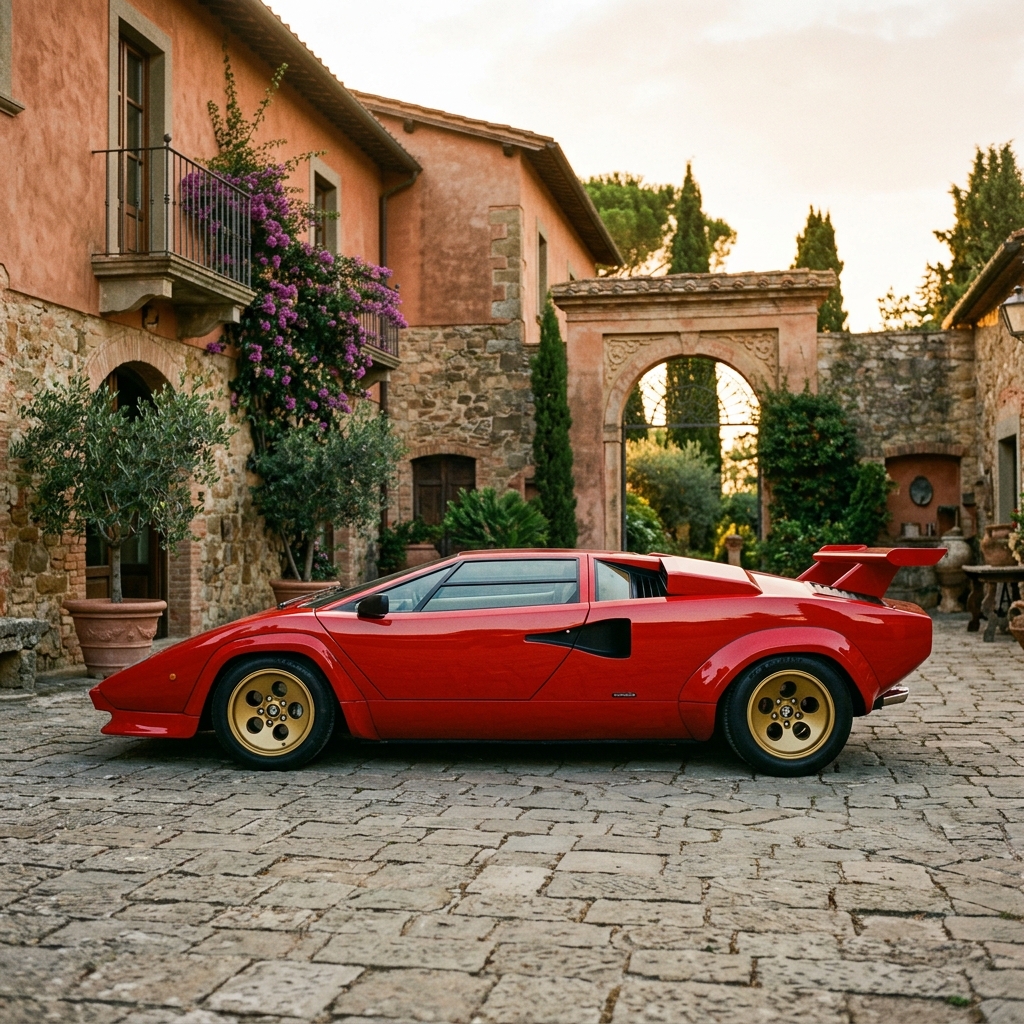
The first production model, the LP400, arrived in 1974. It is often referred to as the "Periscopio" because early models featured a groove cut into the roof and a complex mirror system intended to provide rearward visibility (which was practically non-existent).
Powered by a 4.0-liter version of the legendary Bizzarrini-designed V12 engine, it produced around 370 horsepower. Mounted longitudinally (Longitudinale Posteriore, hence the "LP") behind the driver, the engine featured the gearbox mounted in front of it, right between the driver and passenger seats, which centralized the mass but created a massive, cramped center console. The LP400 rode on incredibly narrow tires by modern standards, making it the purest, fastest, and most aerodynamically clean iteration of the Countach.
Wider and Wilder: LP400 S and LP5000 QV
As the 1970s turned into the 1980s, the Countach evolved to match the era of excess. The LP400 S (1978) introduced massive fiberglass wheel arch extensions to accommodate aggressively wide Pirelli P7 tires, fundamentally changing the car's stance. It also introduced the iconic, massive rear wing. While the wing added zero aerodynamic downforce and actually slowed the car down due to drag, it looked so aggressive that nearly every customer demanded it.
In 1985, Lamborghini introduced the LP5000 Quattrovalvole (QV). The engine was bored out to 5.2 liters and received four valves per cylinder (Quattrovalvole), boosting power to an immense 455 horsepower in European specification. To fit the massive Weber carburetors on top of the engine, a distinct "hump" had to be added to the engine cover, further destroying rear visibility but adding to the car's brutal aesthetic.
The 25th Anniversary Edition: The Final Extravagance
To celebrate the company's silver anniversary in 1988, Lamborghini released the 25th Anniversary Edition. Horacio Pagani (who would later found Pagani Automobili) was heavily involved in restyling the car. He added extensive aerodynamic strakes, integrated the bumper elements, and enlarged the air intakes. While some purists argue it was overly heavily styled, it became the best-selling version of the Countach, perfectly embodying the "Wall Street" era of 1980s wealth.
The V12 Heartbeat
Beyond its looks, the Countach was defined by its engine. The naturally aspirated V12 was a masterpiece of mechanical engineering. It fed via six massive dual-choke Weber carburetors (in Euro-spec cars), providing immediate throttle response and an absolutely terrifying, mechanical roar that resonated through the cabin.
Driving a Countach was an athletic event. The steering was unassisted and incredibly heavy. The clutch required massive leg strength. Visibility was terrible, and the cabin was brutally hot. Reversing notoriously required the driver to open the scissor door and sit on the sill to look backward. Yet, the visceral thrill, the noise, and the sheer event of driving one overshadowed all ergonomic flaws.
The Countach Legacy: Creating the Poster Car
Production ended in 1990, replaced by the Diablo. However, the Countach's legacy is unassailable. It defined an era and became the ultimate automotive status symbol. It adorned millions of bedroom walls worldwide, inspiring a generation of automotive enthusiasts. The Lamborghini Countach wasn't just a car; it was a cultural touchstone that proved that sometimes, pure aesthetic shock and awe are more important than ergonomic perfection or aerodynamic efficiency.
Technical Specifications (LP5000 Quattrovalvole)
- Engine: 5.2-liter (5,167 cc) V12, Naturally Aspirated
- Valvetrain: DOHC, 4 valves per cylinder (Quattrovalvole)
- Fuel Delivery: Six Weber 44 DCNF carburetors (European spec)
- Power Output: 455 hp (335 kW) @ 7,000 rpm
- Torque: 369 lb-ft (500 Nm) @ 5,200 rpm
- Transmission: 5-speed manual
- Drivetrain: Rear-Wheel Drive
- Chassis: Tubular steel spaceframe with aluminum and fiberglass panels
- Weight: Approx. 1,490 kg (3,285 lbs)
- 0-60 mph (0-100 km/h): ~4.8 seconds
- Top Speed: 182 mph (293 km/h)
Kenji Sato
Kenji Sato is a contributing writer for Primedealsearch, bringing refined insights and expertise to our readers.