Apex Predator: The Glorious and Insane Era of the Mazda RX-7

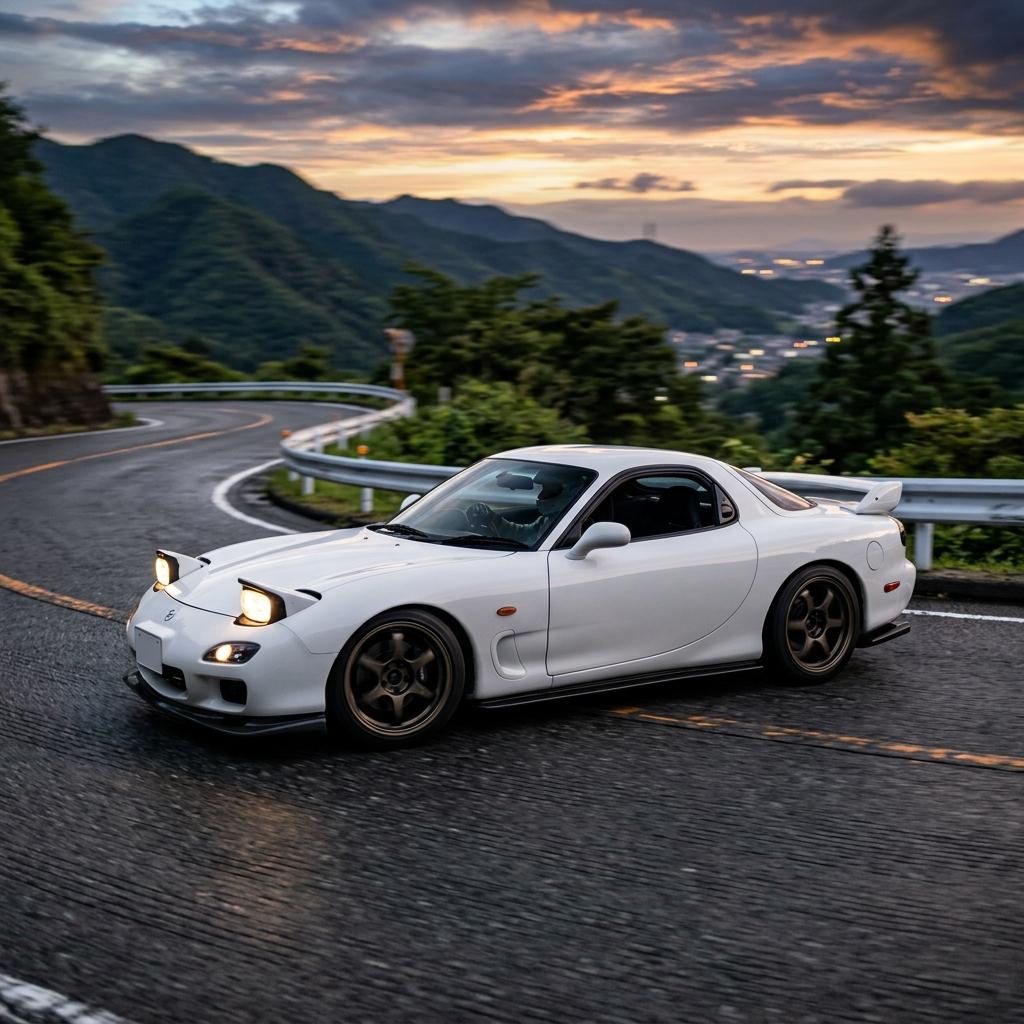
Engineering audacity and pure passion. The RX-7 is a statement of performance and the legendary Wankel engine.
The Mazda RX-7 stands as a brilliant testament to engineering courage, unyielding passion, and a refusal to accept the conventional. While practically every other major automotive manufacturer abandoned the Wankel rotary engine as too thirsty, unreliable, and difficult to tame regarding emissions, Mazda persevered. Over three distinct generations, Mazda refined this unique technology into one of the most beloved and visually striking sports cars in history. The RX-7 isn't just a car; it is a statement of mechanical purity and the ultimate realization of rotary performance.
The Rotary Engine: Mazda’s Bold Gamble
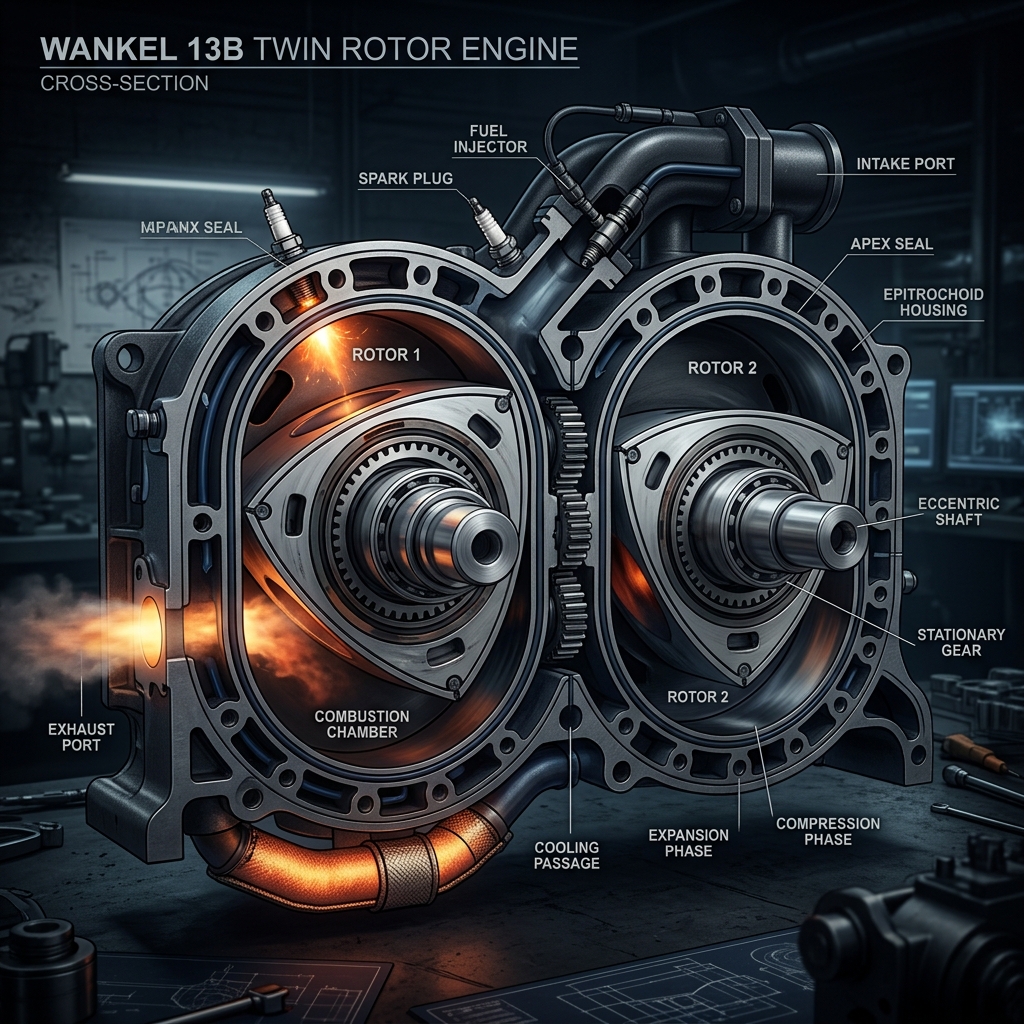
To understand the RX-7, one must understand the heart that beats within it: the Wankel rotary engine. Invented by Felix Wankel in the 1950s, the engine completely discards traditional pistons and cylinders. Instead, it utilizes triangular rotors that spin in an epitrochoidal (figure-eight-like) housing.
This design offers incredible advantages: there are very few moving parts, it is incredibly compact and lightweight, and because there is no reciprocal motion (pistons moving up and down), the engine is phenomenally smooth and loves to rev to the stratosphere. However, it also came with severe challenges, namely poor fuel economy, high oil consumption (by design, oil is injected to lubricate the rotor seals), and difficulties meeting strict emissions standards. While giants like General Motors and Mercedes-Benz experimented with and eventually discarded the rotary, Mazda made it their corporate identity.
The SA22/FB: A Lightweight Pioneer
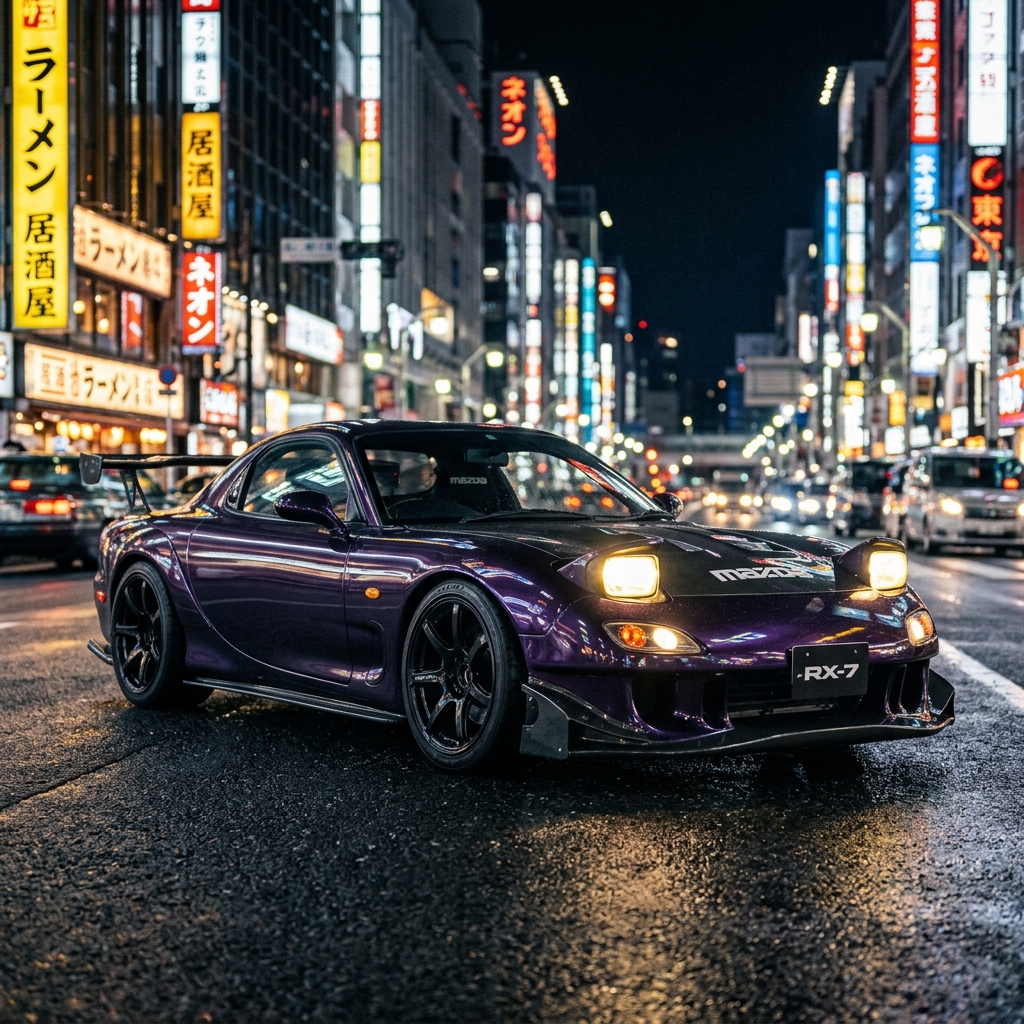
The story of the RX-7 began in 1978 with the first generation, internally designated as the SA22C (later the FB in North America). Designed under the leadership of Matasaburo Maeda, the original RX-7 was conceived as an affordable, lightweight sports car to rival the Porsche 924 and Datsun Z-cars.
The RX-7 capitalized entirely on the rotary engine's compact size. The tiny 1.1-liter (12A) engine was mounted deep behind the front axle, creating a true "front-mid-engine" layout. This resulted in a perfect 50/50 weight distribution and a phenomenally low center of gravity.
Producing around 100 horsepower, the original RX-7 wasn't overwhelmingly powerful, but because the car weighed barely 1,000 kg (2,200 lbs), it was genuinely quick and handled with a joyful, communicative agility. Its sleek wedge styling, complete with pop-up headlights, made it an instant sales success, putting the rotary sports car firmly on the global map.
The FC3S: Maturing into a Grand Tourer
Introduced in 1985, the second-generation RX-7, the FC3S, represented a shift in philosophy. Taking clear styling inspiration from the Porsche 944, the FC grew larger, heavier, and more refined, transitioning from a pure, raw sports car into a capable grand tourer.
The major technological leap for the FC was the introduction of turbocharging. While naturally aspirated versions were available, the Turbo II model utilized a 1.3-liter (13B) rotary engine equipped with a twin-scroll turbocharger. This pushed horsepower output to roughly 182 hp (and over 200 hp in later iterations). To handle the increased power and weight, the FC introduced the Dynamic Tracking Suspension System (DTSS), a passive rear-wheel steering mechanism that induced toe-in under heavy cornering loads to improve stability.
The FD3S: The Pinnacle of Rotary Performance
If the FC was a calculated step toward refinement, the third generation, the FD3S (1992-2002), was an uncompromising leap back to absolute, raw performance. The FD RX-7 is widely considered not just the pinnacle of rotary engine development, but one of the greatest sports cars of the 1990s and arguably one of the most beautiful automotive designs ever penned.
Chief Designer Yoichi Sato and his team created a body that was aerodynamically brilliant, completely devoid of hard edges, and visually stunning. It appeared to be stretched tightly over the wheels, looking fast even when standing still. The iconic pop-up headlights remained, seamlessly integrated into the organic curves of the front fascia.
The Complex Sequential Twin-Turbo System
Under the hood was the legendary 13B-REW engine. This 1.3-liter twin-rotor powerhouse was the world’s first mass-produced sequential twin-turbocharger system exported from Japan.
The system was incredibly complex. It utilized two Hitachi turbochargers: a smaller primary turbo that spooled up quickly to provide boost at low RPMs (around 1,800 rpm), and a larger secondary turbo that came online at 4,000 rpm to provide massive high-end power. When the transition occurred, the FD delivered a seamless, explosive surge of acceleration that lasted all the way to its 8,000 rpm redline. Officially rated at 252 horsepower (climbing to 276 hp in later Japanese-market versions), the rotary engine delivered power with a unique, turbine-like smoothness and a shrieking exhaust note unlike anything else on the road.
The 13B-REW Engine: Power and Fragility
While the 13B-REW was capable of incredible performance, it was also notoriously fragile. The complex network of vacuum hoses ("the rat's nest") controlling the twin turbos was prone to failure due to the immense heat generated by the rotary engine. Furthermore, the engine was highly intolerant of poor maintenance or engine knocking (detonation), which could easily shatter the delicate apex seals at the tips of the rotors. Owning an FD RX-7 required a level of mechanical sympathy, strict maintenance routines, and deep understanding that went far beyond typical sports car ownership.
Handling and Chassis Dynamics
Mazda engineered the FD's chassis with an obsessive focus on weight reduction. Engineers drilled holes in pedals and hollowed out suspension components. The result was a curb weight of roughly 1,270 kg (2,800 lbs).
Combined with forged aluminum double-wishbone suspension at all four corners, a nearly perfect weight distribution, and a rigid chassis, the FD RX-7 offered handling that bordered on telepathic. It was incredibly responsive, demanding respect but rewarding skilled drivers with cornering capabilities that rivaled supercars costing drastically more.
The End of an Era and Collector Status
Strict emissions regulations and a global economic downturn forced Mazda to pull the RX-7 from the US market in 1995, though it continued to be produced and refined for the Japanese domestic market until 2002. It marked the end of the line for the turbocharged rotary sports car.
Today, the Mazda RX-7 FD3S is recognized as a masterpiece of 1990s JDM culture. Because so many were heavily modified, poorly maintained, or crashed, pristine, unmodified examples are incredibly rare and command massive premiums in the collector car market. The RX-7 remains a monument to Mazda's daring engineering spirit—a flawed, fragile, but utterly magnificent apex predator.
Technical Specifications (FD3S Series 8)
- Engine: 1.3-liter (1,308 cc) 13B-REW Twin-Rotor, Sequential Twin-Turbocharged
- Fuel Delivery: Electronic Fuel Injection
- Power Output: 276 hp (280 PS) @ 6,500 rpm
- Torque: 231 lb-ft (314 Nm) @ 5,000 rpm
- Transmission: 5-speed manual
- Drivetrain: Rear-Wheel Drive with Torsen Limited-Slip Differential
- Chassis: Steel unibody with aluminum hood
- Suspension: Independent double-wishbone front and rear
- Weight: Approx. 1,280 kg (2,822 lbs)
- 0-60 mph (0-100 km/h): ~5.0 seconds
- Top Speed: Approx. 155 mph (250 km/h) electronically limited
Alex Driver
Alex Driver is a contributing writer for Primedealsearch, bringing refined insights and expertise to our readers.