The Mitsubishi Lancer Evolution: Japan's Rally Weapon

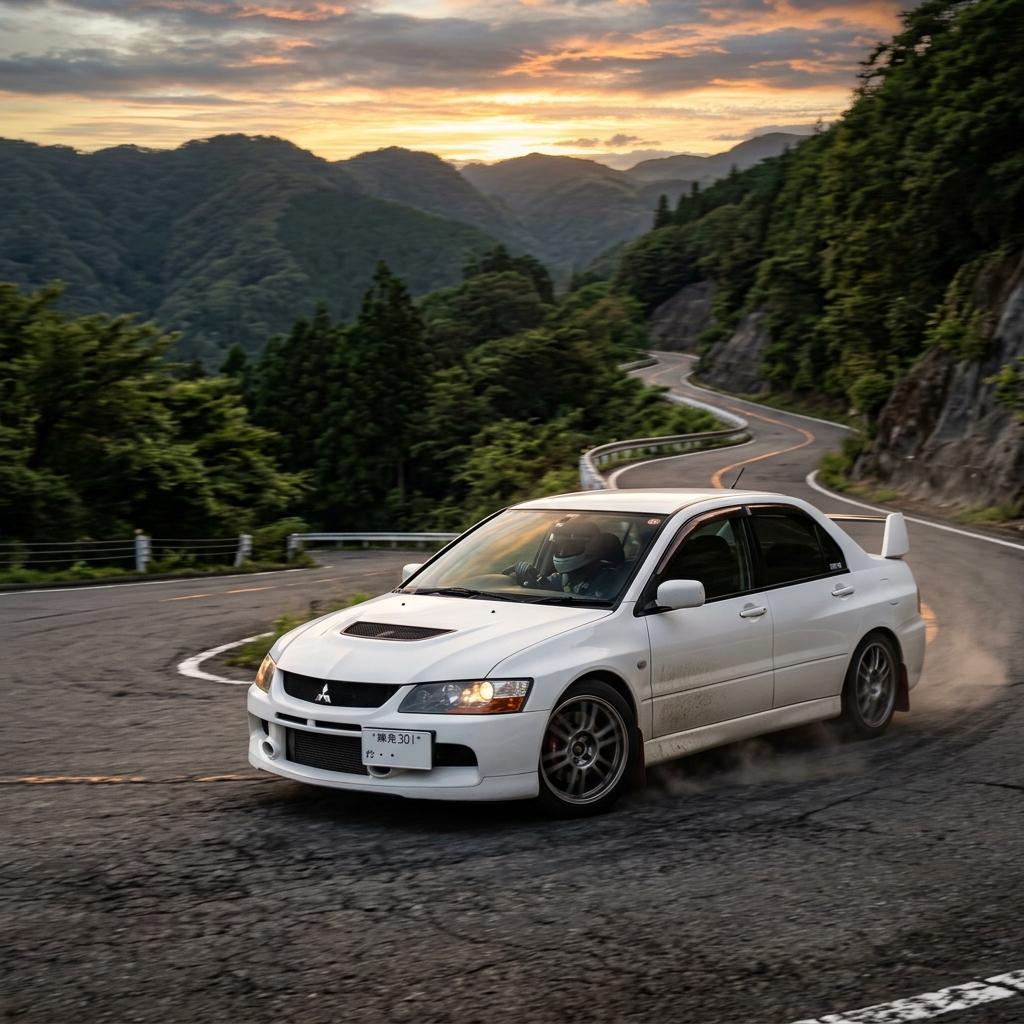
How a humble family sedan became one of the most feared all-wheel drive turbocharged weapons on road and rally stage.
In the 1990s and early 2000s, the battleground for automotive supremacy wasn't on the smooth tarmac of the Nürburgring; it was on the treacherous, gravel-strewn mountain passes and snow-covered forests of the World Rally Championship. From this crucible emerged one of the most beloved and highly capable performance sedans ever created: the Mitsubishi Lancer Evolution. Colloquially known as the "Evo," it was a working-class hero that utilized aggressive aerodynamics, a seemingly unburstable turbocharged engine, and highly advanced all-wheel-drive technology to embarrass supercars costing five times as much.
Homologation for the WRC
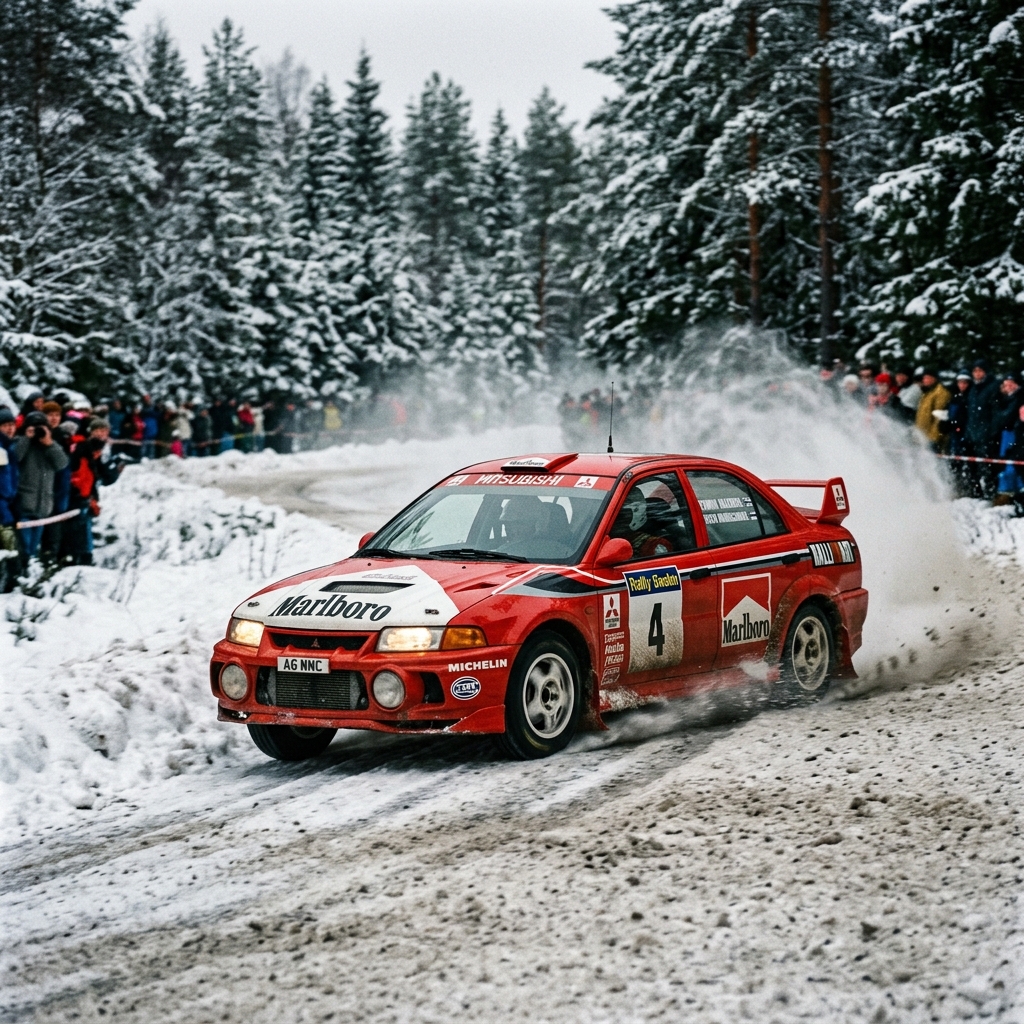
The Lancer Evolution was born out of absolute necessity. Following the banning of the terrifying Group B rally cars in 1986, the FIA introduced the Group A regulations. To compete, manufacturers had to build rally cars based strictly on mass-produced road cars. Furthermore, they had to build and sell a minimum of 2,500 homologation specials to the public.
Mitsubishi needed a platform smaller and lighter than their Galant VR-4, so they stuffed the Galant's powerful drivetrain into the compact chassis of the humble Lancer economy sedan. In 1992, the Lancer Evolution I was born. It was raw, aggressive, and incredibly fast.
The Legendary 4G63T Engine
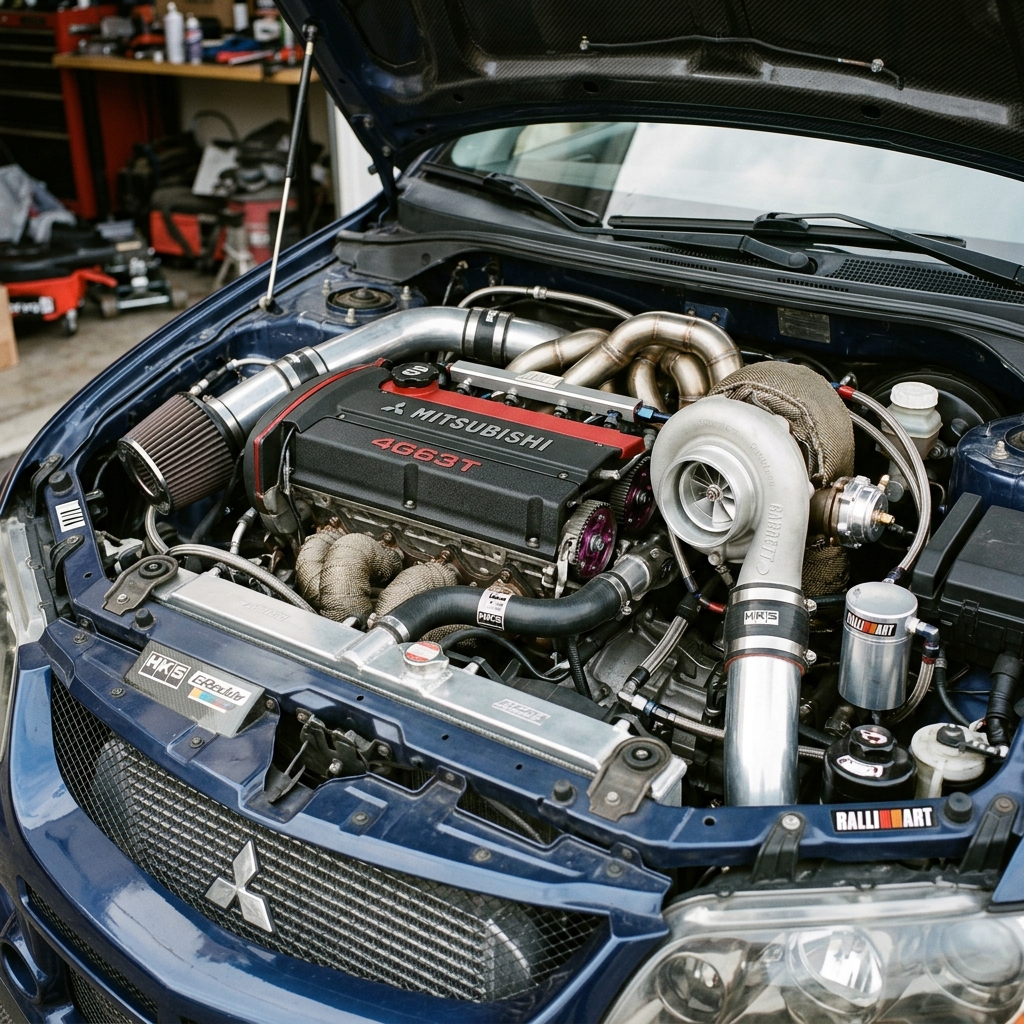
For the first nine generations of the Evolution, the beating heart of the car was the legendary 4G63T engine. This 2.0-liter, turbocharged inline-four cylinder engine with a cast-iron block is revered in the tuning community with the same religious fervor as Toyota's 2JZ.
Due to the Japanese "Gentleman's Agreement," the engine was officially rated at 276 horsepower (280 PS) from the Evo IV onwards, though real-world figures were often higher. The true magic of the 4G63T was its unbelievable durability. The cast-iron block and robust internals meant that owners could easily double the horsepower with larger turbochargers, upgraded fueling, and ECU tuning without ever needing to open the engine. It delivered power with a violent, sudden surge of turbo boost that pushed drivers deep into their Recaro bucket seats.
Super All-Wheel Control (S-AWC)
While the engine provided the brute force, it was Mitsubishi's all-wheel-drive technology that made the Evo a giant-killer. Mitsubishi engineers viewed the drivetrain as an active handling tool, not just a mechanism for traction.
Beginning with the Evo IV, Mitsubishi introduced the Active Yaw Control (AYC) system on the rear differential. Using input from steering angle, throttle position, and G-sensors, the AYC system could actively vector torque between the left and right rear wheels. If the car was understeering in a corner, the system would instantly send more power to the outside rear wheel, forcing the nose of the car to pivot sharply into the apex.
Later generations introduced the Active Center Differential (ACD), creating the comprehensive "Super All-Wheel Control" (S-AWC) system. This allowed the driver to select modes for Tarmac, Gravel, or Snow. The result was a car that defied physics, generating immense mechanical grip and allowing for cornering speeds that left contemporary Porsche and Ferrari owners baffled.
The Tommi Mäkinen Era
The Lancer Evolution’s global reputation was cemented by the brilliant Finnish rally driver Tommi Mäkinen. Driving the red Marlboro-liveried Ralliart Mitsubishi Evos, Mäkinen was absolutely unstoppable, winning four consecutive World Rally Championship Drivers' Titles from 1996 to 1999 (driving the Evo III, IV, V, and VI).
To celebrate his unprecedented success, Mitsubishi released the legendary Lancer Evolution VI Tommi Mäkinen Edition (often referred to as the Evo 6.5) in 2000. Featuring a more responsive titanium turbocharger, lowered tarmac suspension, and an aggressive front bumper, the TME is widely considered the absolute pinnacle of the analog Evo generations and is highly sought after by collectors today.
The Evolution Lineage
The Evo progressed through ten distinct generations, denoted by Roman numerals. The Evo VIII (2003) was the first generation officially exported to the United States, sparking a fierce, decades-long rivalry with the Subaru Impreza WRX STI that defined the modern tuner car culture.
The final generation, the Evo X (2007-2016), represented a significant departure. It utilized a completely new, all-aluminum engine (the 4B11T) and featured a more refined, heavier chassis with a sophisticated dual-clutch transmission option (TC-SST). While highly capable, purists often felt it lacked the raw, aggressive edge of the 4G63-powered predecessors.
Technical Specifications (Evo IX MR)
- Engine: 2.0-liter (1,997 cc) 4G63T Inline-4, Turbocharged
- Valvetrain: DOHC, 4 valves per cylinder with MIVEC
- Power Output: 286 hp (213 kW) @ 6,500 rpm (US Spec)
- Torque: 289 lb-ft (392 Nm) @ 3,500 rpm
- Transmission: 6-speed manual
- Drivetrain: S-AWC All-Wheel Drive with Active Center Differential and Active Yaw Control
- Chassis: Steel unibody with aluminum roof and hood
- Weight: Approx. 1,490 kg (3,285 lbs)
- 0-60 mph (0-100 km/h): ~4.5 seconds
- Top Speed: 155 mph (250 km/h)
Sarah Velocity
Sarah Velocity is a contributing writer for Primedealsearch, bringing refined insights and expertise to our readers.