Supra Secrets: Unlocking the 2JZ-GTE

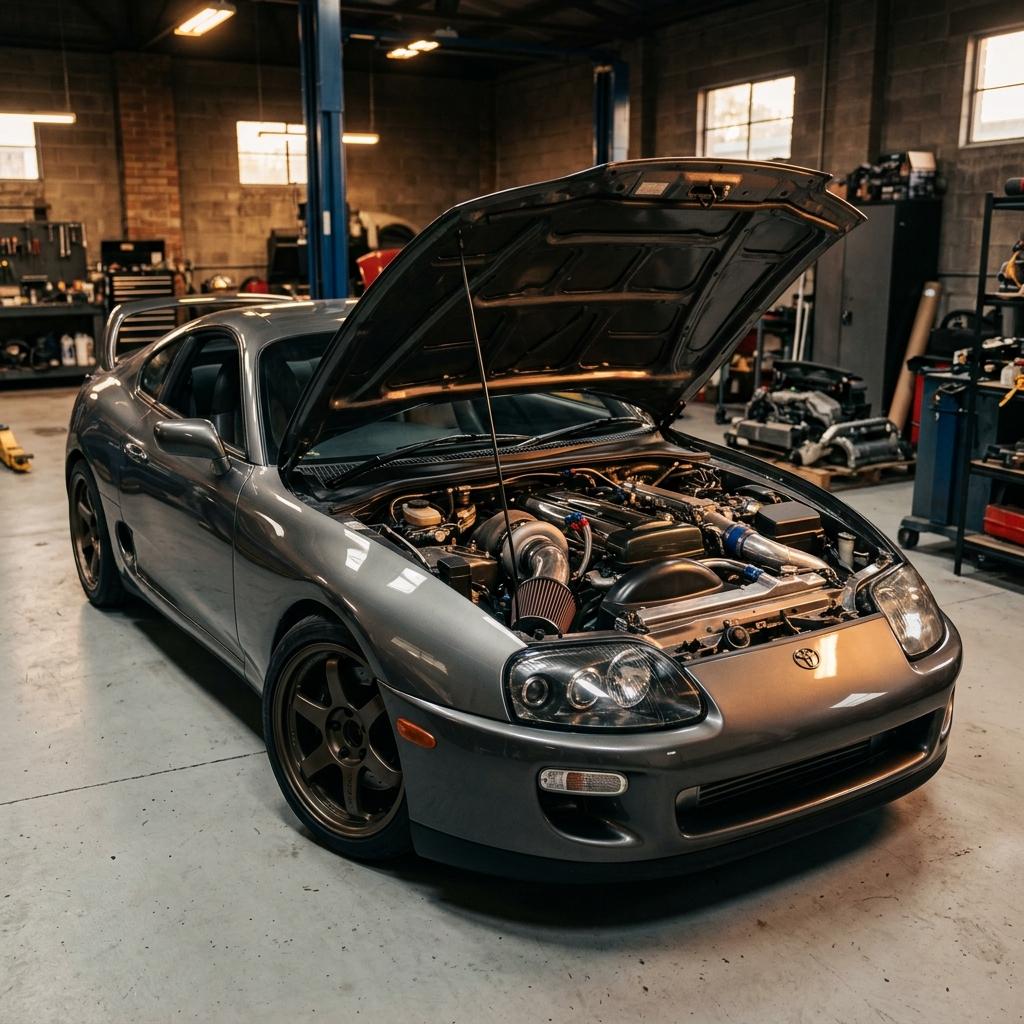
Why the fourth-generation Supra's engine remains one of the most tunable blocks ever created.
In the pantheon of Japanese performance cars, the fourth-generation Toyota Supra (A80/Mk4) occupies a uniquely exalted position. Unveiled in 1993, the Mk4 Supra was a radical departure from its heavy, grand-touring predecessors. It was sleek, heavily influenced by aerodynamics, and devastatingly fast. But the car's enduring, almost mythical legacy is not primarily due to its exterior design or its handling; it is almost entirely attributed to the indestructible chunk of cast iron sitting under its hood: the legendary 2JZ-GTE engine.
The Over-Engineered Masterpiece
In the late 1980s and early 1990s, Japan was experiencing a massive economic boom. This "bubble economy" allowed Japanese automakers to pour virtually unlimited research and development budgets into their halo cars. Nissan had the RB26DETT in the Skyline GT-R, and Toyota needed an answer.
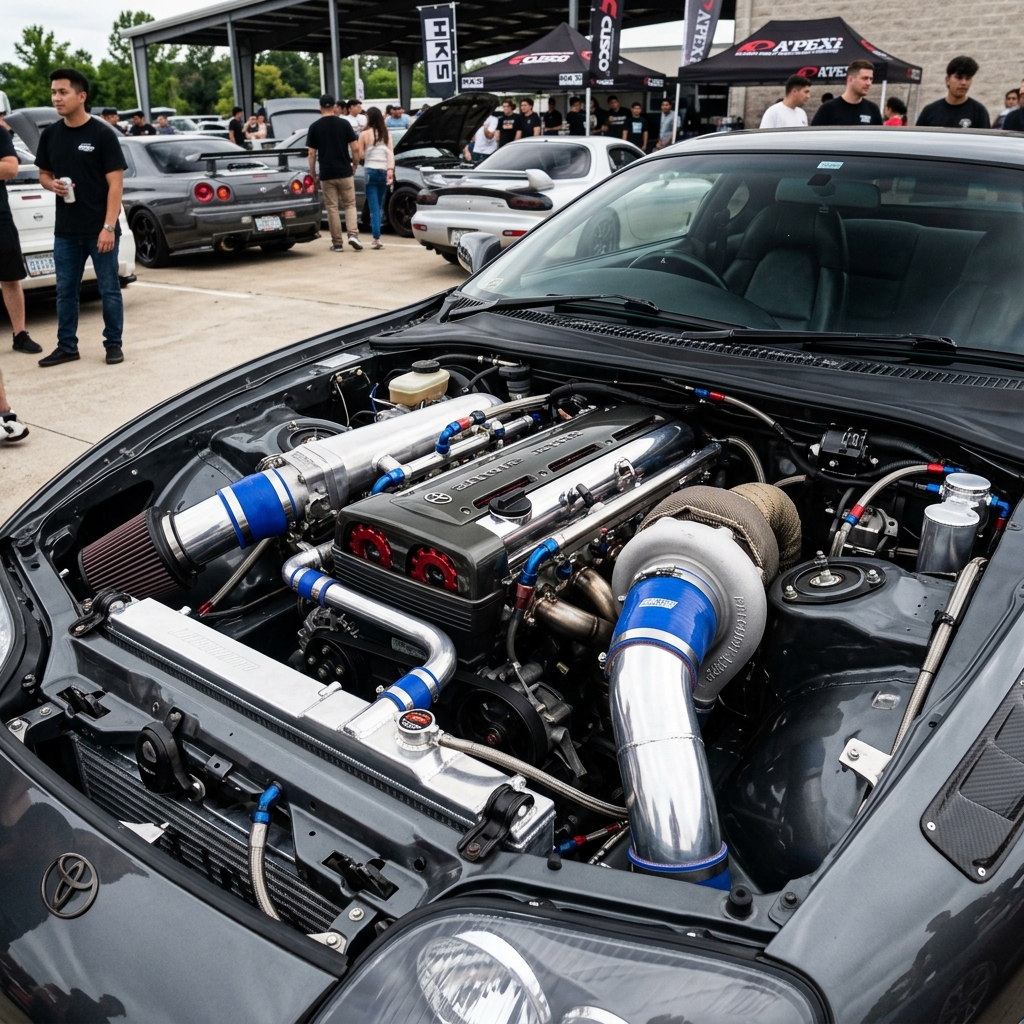
Their response was the 2JZ-GTE. Designed to be Toyota’s flagship performance engine, engineers were given a blank check to build the most robust, reliable, and powerful inline-six imaginable. The result was a masterpiece of severe over-engineering. Toyota didn't just build an engine; they built a fortress.
The Iron Block Foundation
The secret to the 2JZ's legendary strength is its foundation: a massively thick, closed-deck cast-iron engine block. While aluminum blocks were becoming popular for weight savings, Toyota stuck to cast iron for absolute rigidity.
Inside this block, Toyota installed incredibly strong forged steel connecting rods, a fully counterweighted forged steel crankshaft, and high-quality cast aluminum pistons with oil squirters to keep them cool under immense pressure. The engine block is so strong that it can withstand cylinder pressures that would literally shatter the engine blocks of lesser sports cars.
Sequential Twin Turbochargers
In its factory configuration, the 3.0-liter 2JZ-GTE utilized an advanced sequential twin-turbocharger system. Unlike parallel systems where two identical turbos spool simultaneously, Toyota's system used two different-sized Hitachi turbos.
At low RPMs, exhaust gases were routed exclusively to the smaller primary turbocharger, resulting in quick spool-up and eliminating the dreaded "turbo lag" common in 90s sports cars. At 4,000 RPM, valves opened to route exhaust to the larger secondary turbocharger, providing a massive surge of high-end power. Officially, the engine was rated at 320 horsepower (276 hp in Japan due to the 'Gentleman's Agreement'), but it was widely known that the engine produced significantly more from the factory.
The Tuner's Dream: 1,000+ Horsepower
While the factory sequential turbos were excellent, the true legend of the 2JZ began when aftermarket tuners got their hands on it. They quickly discovered a shocking reality: the internal components of the 2JZ-GTE were so over-engineered that they did not need to be replaced to handle massive power increases.
By discarding the complex factory sequential turbos and bolting on a single, massive aftermarket turbocharger, upgrading the fuel injectors, and installing a programmable ECU, tuners could easily extract 600 to 800 horsepower from a completely stock, unopened engine block. If owners decided to upgrade the internal components with aftermarket forged parts, the 2JZ could reliably produce well over 1,000 horsepower, and even 2,000 horsepower in extreme drag racing applications.
The Fast and the Furious Phenomenon
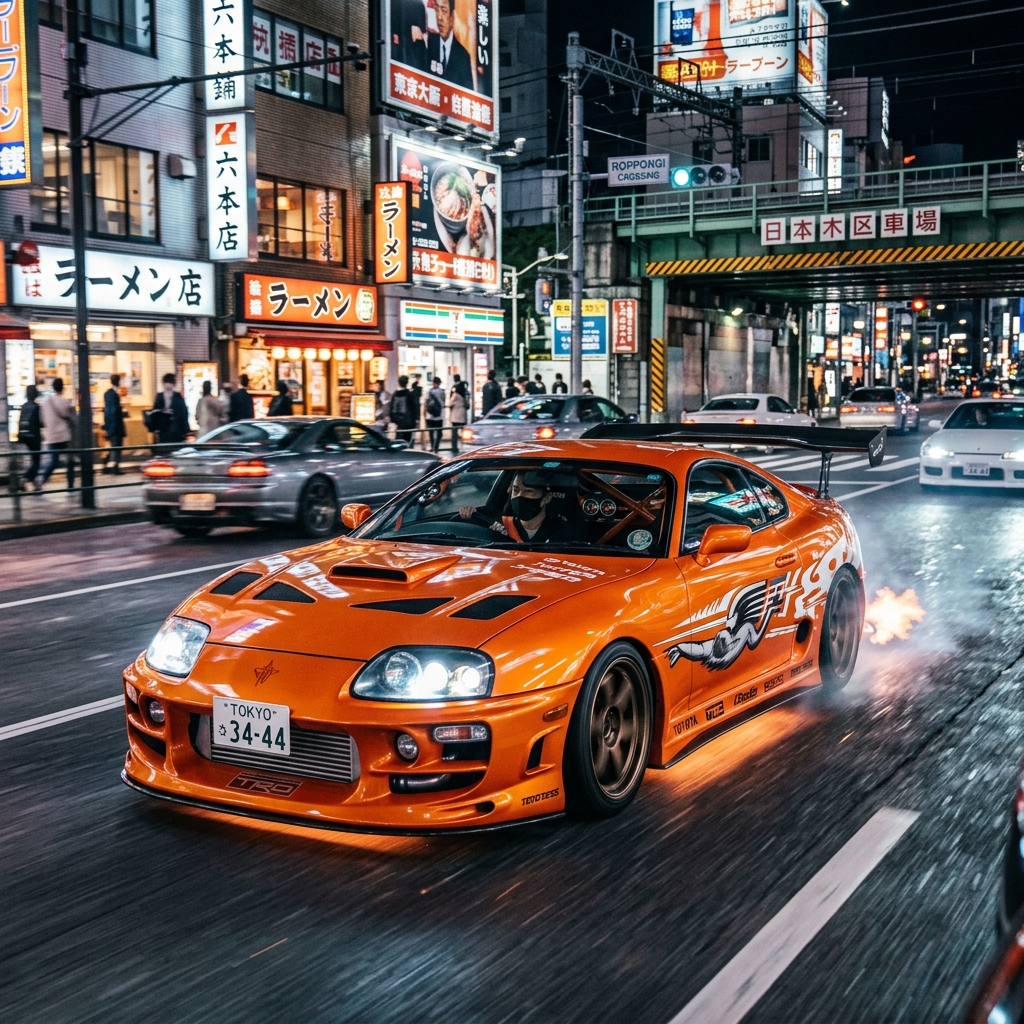
The Mk4 Supra was a respected sports car in the 1990s, but it was catapulted into global superstardom in 2001 with the release of the film The Fast and the Furious.
Driven by the late Paul Walker's character, Brian O'Conner, the heavily modified, bright orange "10-second car" captured the imagination of a generation. The film showcased the Supra outrunning a Ferrari, cementing the car's reputation as a giant-killer. The Supra became the ultimate symbol of the tuner culture, causing resale values to skyrocket—a trend that continues to this day, with pristine, low-mileage examples regularly selling for over $150,000.
The Mk4 Supra Legacy
Production of the Mk4 Supra ceased in 2002. When Toyota finally revived the Supra nameplate in 2019 (the A90/Mk5), they partnered with BMW to share the chassis and engine. While the modern B58 engine is highly capable, the decision to outsource the engine alienated many purists who believe that a true Supra must be powered by a Toyota-built inline-six.
The Mk4 Supra and its 2JZ-GTE engine represent a bygone era of Japanese automotive dominance—a time when engineers prioritized absolute mechanical integrity and limitless potential over cost-cutting and efficiency. It is the definitive tuner car, an unkillable legend of the street.
Technical Specifications (1993-1998 Supra Turbo)
- Engine: 3.0-liter (2,997 cc) 2JZ-GTE Inline-6
- Valvetrain: DOHC, 4 valves per cylinder
- Induction: Sequential Twin-Turbocharged with Intercooler
- Power Output: 320 hp (239 kW) @ 5,600 rpm (US/Euro Spec)
- Torque: 315 lb-ft (427 Nm) @ 4,000 rpm
- Transmission: Getrag V160 6-speed manual
- Drivetrain: Rear-Wheel Drive with Torsen Limited-Slip Differential
- Chassis: Steel unibody
- Weight: Approx. 1,565 kg (3,450 lbs)
- 0-60 mph (0-100 km/h): 4.6 seconds
- Top Speed: 155 mph (250 km/h) electronically limited (capable of ~177 mph without limiter)
Elena Shift
Elena Shift is a contributing writer for Primedealsearch, bringing refined insights and expertise to our readers.