The People's Porsche: Volkswagen Golf GTI Through the Decades

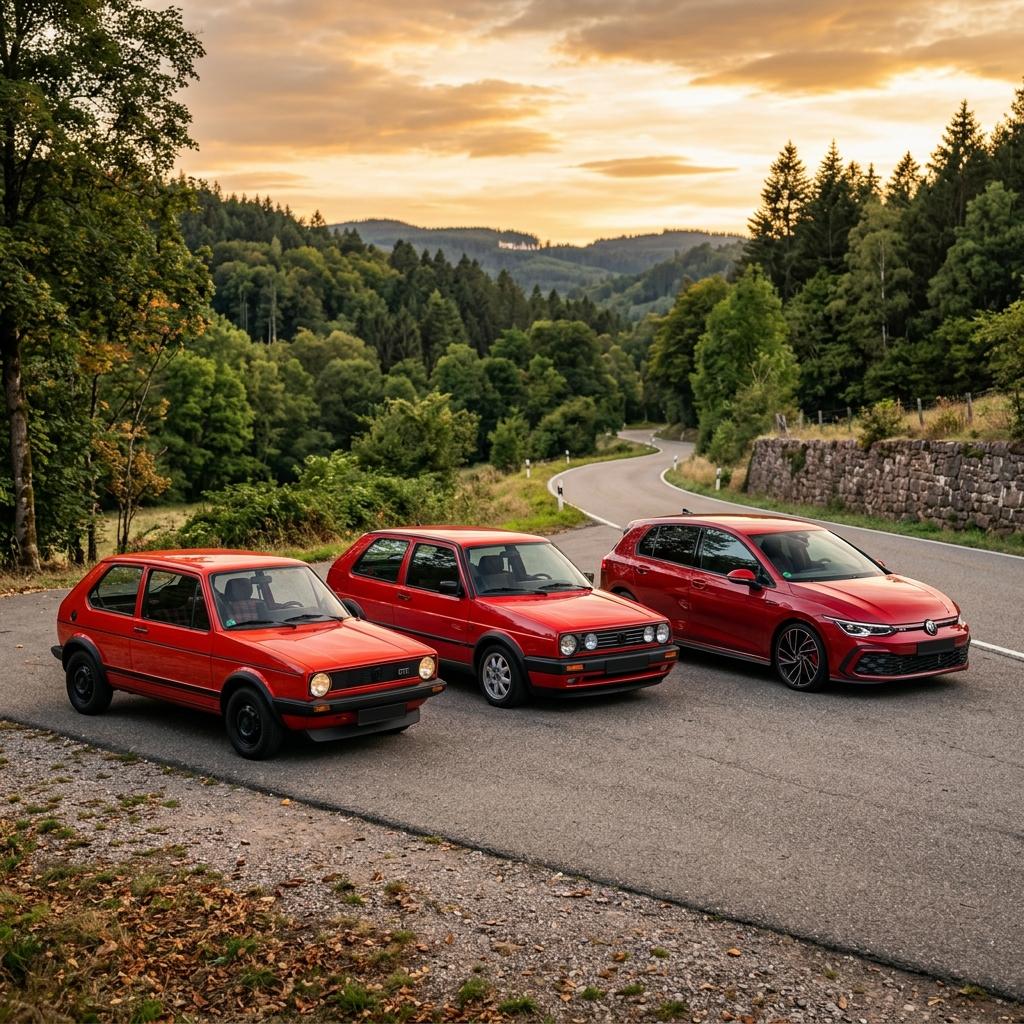
Since 1976, the Golf GTI has defined what a hot hatchback should be — affordable, fun, and supremely capable.
In the mid-1970s, sports cars were typically characterized as impractical, uncomfortable, two-seat roadsters that were prone to breaking down and incredibly expensive to maintain. Volkswagen, a company renowned for building sensible, economical cars for the masses, changed that paradigm completely. In 1976, they introduced the Golf GTI. It didn't have a massive V8, rear-wheel drive, or a sleek Italian body. Instead, it was a practical front-wheel-drive hatchback that was secretly engineered to be an absolute joy to drive on a twisting road. The Golf GTI didn't just become a success; it created an entirely new automotive genre: the "Hot Hatch."
The Birth of the Hot Hatch
By 1974, Volkswagen was transitioning away from the aging, air-cooled, rear-engine Beetle towards a modern, front-engine, front-wheel-drive layout with the launch of the Giorgetto Giugiaro-designed Golf (Rabbit in North America). The standard Golf was an economical, practical family car.
However, a small, passionate group of VW engineers and marketing executives saw untapped potential in the lightweight Golf chassis. Working secretly after hours and on weekends—a true "skunkworks" project—they set out to build a "Sport Golf."
A Skunkworks Project
The team's goal was to combine the practicality of a hatchback with the performance and handling of a sports car. They took the 1.6-liter engine from the Audi 80 GTE, equipped it with Bosch K-Jetronic mechanical fuel injection, and dropped it into the Golf. They significantly upgraded the suspension with stiffer springs and thicker anti-roll bars, added ventilated front disc brakes, and fitted wider tires.
When they presented the prototype to the Volkswagen board of directors, the response was hesitant. Management didn't believe there was a market for a sporty economy car and initially approved a production run of just 5,000 units strictly to homologate the car for Group One touring car racing. They were spectacularly wrong.
The Original Mk1 GTI
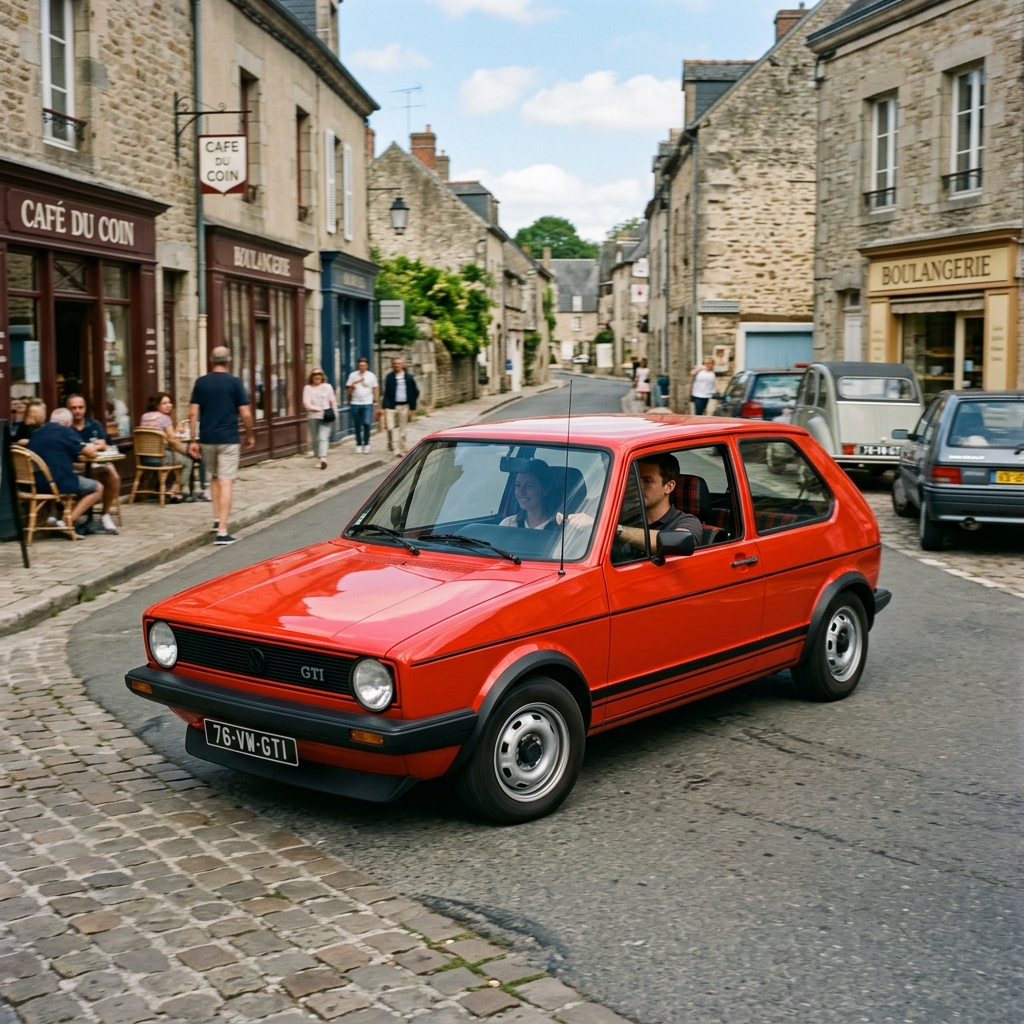
Launched at the Frankfurt Motor Show in 1975 and hitting the streets in 1976, the Golf GTI (Grand Touring Injection) was an instant revelation. Weighing an incredibly light 810 kg (1,785 lbs), the 110-horsepower injected engine provided lively, eager acceleration. It could hit 60 mph in roughly 9 seconds and reach a top speed of 113 mph—figures that allowed it to keep pace with significantly more expensive sports cars of the era.
But straight-line speed wasn't the point. The magic was in the handling. The lightweight front-wheel-drive chassis was brilliant. If you lifted off the throttle mid-corner (lift-off oversteer), the rear end would gently slide out, helping pivot the car into the apex. It was communicative, forgiving, and endlessly entertaining.
Aesthetically, the GTI was distinguished by subtle but iconic details: a red pinstripe outlining the front grille, aggressive front chin spoiler, black plastic wheel arch extensions, a "golf ball" shift knob, and the now-legendary tartan plaid ("Clark") seat upholstery.
The Evolution of the GTI
The immense success of the Mk1 GTI forced every other major manufacturer to scramble and create their own hot hatches (like the Peugeot 205 GTI and Ford Escort XR3). Volkswagen had to keep innovating.
- Mk2 (1984): The GTI grew slightly larger and heavier but gained a more refined chassis and eventually a potent 16-valve engine, cementing its status as the benchmark.
- Mk5 (2004): After a few generations where the GTI became somewhat bloated and soft (Mk3 and Mk4), the Mk5 represented a glorious return to form. It introduced a turbocharged 2.0L engine, a brilliant multi-link independent rear suspension, and the revolutionary DSG dual-clutch transmission, offering lightning-fast shifts.
- Mk7 and Mk8: Modern iterations of the GTI have perfected the formula, utilizing the advanced MQB platform and electronic locking front differentials (VAQ) to completely eliminate front-wheel-drive understeer, making them formidable track cars that can still comfortably commute to the office.
The Perfect Balance
The genius of the Volkswagen Golf GTI is its dual personality. It is the automotive equivalent of a tailored suit that you can run a marathon in. You can fold the rear seats down to transport furniture on a Tuesday, and carve through a mountain canyon road with precision on a Sunday. It democratized performance driving, proving that you don't need a massive budget or a compromised exotic car to experience pure driving joy. The GTI remains the definitive hot hatch, the standard by which all others are measured.
Technical Specifications (1976 Mk1 Golf GTI 1.6)
- Engine: 1.6-liter (1,588 cc) Inline-4, Naturally Aspirated
- Valvetrain: SOHC, 2 valves per cylinder
- Fuel System: Bosch K-Jetronic Mechanical Fuel Injection
- Power Output: 110 hp (81 kW) @ 6,100 rpm
- Torque: 103 lb-ft (140 Nm) @ 5,000 rpm
- Transmission: 4-speed manual (early models), later 5-speed
- Drivetrain: Front-Wheel Drive
- Chassis: Steel unibody
- Suspension: MacPherson strut front, Twist-beam rear
- Weight: Approx. 810 kg (1,785 lbs)
- 0-60 mph (0-100 km/h): ~9.0 seconds
- Top Speed: 113 mph (182 km/h)
Elena Shift
Elena Shift is a contributing writer for Primedealsearch, bringing refined insights and expertise to our readers.